Is It Normal for Boiler Pressure to Drop? A Practical Troubleshooting Guide
Learn when boiler pressure drop is normal, identify common causes, and follow safe, practical steps to diagnose and prevent future pressure loss. A Boiler Hub guide for homeowners and facility managers.


A slight boiler-pressure drop can be normal during heating cycles or after bleeding radiators, but a rapid or persistent drop is a warning sign. If your gauge falls below the recommended range (usually 1–1.5 bar when cold and 1.5–2 bar when hot) or continues dropping, stop the boiler and perform a safe check or call a pro.
Understanding Boiler Pressure and Normal Ranges
Boiler pressure is read on a gauge measured in bar, and it indicates how hard the water is pushed through your heating system. A popular question is, is it normal for boiler pressure to drop? The short answer is: it can be normal during heating cycles, but a sustained or rapid drop should not be ignored. According to Boiler Hub, knowing typical pressure ranges helps homeowners identify when something is off. In most sealed domestic heating systems, the pressure should sit within a safe band: commonly around 1 bar when the system is cold, rising to about 1.5–2 bar when the boiler is hot. If you see readings outside this range, or if the pressure repeatedly falls after you refuel, you’re dealing with a problem that warrants a closer look.
Several factors influence pressure behavior:
- Expansion and contraction during heat cycles
- Small leaks in radiators, pipes, or boiler seals
- An aging or undercharged expansion vessel
- An overly aggressive automatic fill valve or air bleed device
- Recent radiator bleeding or repairs
Understanding these factors helps you order your checks methodically rather than guessing. The goal is to keep pressure within the manufacturer’s recommended range to ensure efficient heating and prevent frost damage in cold months. If your system begins to oscillate between readings or you notice stabilizing at a much lower level, it’s time to dive deeper into diagnosis.
Causes That Most Often Cause Pressure Drops
Pressure in a sealed boiler system can fall for several reasons; some are easy to fix, others require professional intervention. The most common culprits include:
- Leaks: A tiny pinhole in a radiator or a crack in a joint can drain pressure over time. Even small damp patches on walls or around joints can indicate a leak.
- Faulty expansion vessel: The expansion tank is designed to absorb extra pressure as the water expands. If its charge is lost or the diaphragm ruptures, pressure can fall and stay low.
- Filling loop left open or misadjusted: If the fill loop is partially open or the regulator is faulty, you can accidentally lose pressure or fail to maintain it.
- Pressure relief valve problems: A faulty valve can vent water and air, causing pressure to dip.
- Radiator bleeding done too aggressively: After bleeding, the system may temporarily sit at a lower pressure while air equalizes.
- Pump or valve issues: A failing circulating pump or blocked valves can hamper pressure distribution, leading to apparent drops.
This block helps you anticipate where to look first when you notice pressure dropping.
How to Check Safely: Quick Home Checks
Safety first. Before touching boilers, switch off the boiler and let it cool if you can. Then do these checks:
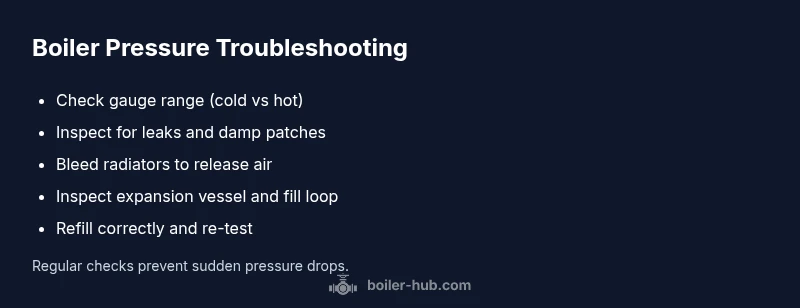
- Read the gauge carefully: note the current pressure when the system is cold versus when hot.
- Look for visible leaks: damp patches around joints, beneath boilers, or in the basement.
- Inspect radiators: check for cold spots indicating circulation problems and feel for warmth across the sections.
- Check the expansion vessel and fill loop: ensure the filling loop is fully closed after refilling, and inspect the air charge on the expansion vessel; if you cannot access it safely, call a pro.
- Check the pressure relief valve: a small amount of water on the floor near the boiler can indicate a leak through the valve.
- Bleed radiators if needed: trapped air can masquerade as pressure issues; pour back slowly until the boiler stabilizes.
If you discover a clear leak or the pressure remains outside the safe band after these checks, escalation is necessary.
Diagnostic Flow: Symptom to Solution
- Symptom: Pressure drops after heating cycle or during constant operation.
- Likely causes: Leaks (high), expansion vessel issues (medium), filling loop problems (medium), faulty gauge (low).
- Typical fixes: Patch leaks, recharge expansion vessel, verify fill loop, replace faulty gauge, or consult a professional.
Follow the flow: start with the simplest checks (visible leaks, bleed radiators) and proceed to more involved diagnostics (expansion vessel and filling loop). If the symptom remains unresolved after steps you can perform, the issue might require a professional assessment or boiler service.
Step-by-Step Fix for the Most Common Issue
If the pressure drop is caused by an undercharged expansion vessel or a partially open fill loop, follow these steps:
- Turn off the boiler and let it cool completely.
- Inspect for leaks and fix as needed.
- Check the filling loop: close fully and ensure the valve is not letting water in.
- Refill the system to the correct pressure using the filling loop, then close and purge air by bleeding radiators.
- Check expansion vessel air charge using a pressure tester; top up if necessary (or replace the vessel if the diaphragm is ruptured).
- Refit the valve and seals, restart the boiler, and monitor pressure while it heats up.
Tip: If you’re not confident, this is a good time to contact a licensed heating engineer to handle expansion tank checks and recharging.
Time estimate: 30–60 minutes for a typical fix, longer if leaks are found.
Safety First: Warnings, Prevention, and When to Call a Pro
Safety is paramount when dealing with boilers. Never ignore a persistent pressure drop, especially if you smell gas or notice water on the floor. Keep sparks and flames away from the appliance, and never attempt to rebuild pressure vessels yourself. Use proper PPE, and ensure the area is well ventilated. Prevention tips include scheduling annual boiler service, checking for corrosion and leaks, and ensuring the expansion vessel is correctly charged. For most homeowners, a professional service is recommended if pressure continues to drop after performing basic checks. Regular maintenance can prevent many common pressure-related problems and keep your system running reliably.
Steps
Estimated time: 30-60 minutes
- 1
Power down and cool the boiler
Turn off the boiler and allow it to cool completely before inspecting. This reduces burn risk and makes bleed checks safe.
Tip: Always use protective gloves and avoid touching hot surfaces. - 2
Check for leaks and note locations
Scan around the boiler, under pipes, and radiator connections for damp patches or pooling water. Leaks are common culprits for pressure loss.
Tip: Take photos or mark leak sites for reference. - 3
Inspect the filling loop and close it
Locate the filling loop, verify both valves are fully closed, and confirm the regulator isn’t letting water into the system.
Tip: Do not force valves; use gentle, straight turns. - 4
Repressurize using the filling loop
With the boiler still off, open the filling loop gradually to raise pressure to the recommended cold range, then close the valve firmly.
Tip: Monitor pressure dial closely to avoid overfilling. - 5
Bleed radiators to remove air
Starting from the top floor, bleed each radiator until all air is released and water runs steadily.
Tip: Keep a cloth ready for any drips and recheck system pressure after bleeding. - 6
Test and monitor after restart
Restart the boiler and observe pressure as it heats. If it drifts downward again, a professional assessment is advised.
Tip: Document readings and times to share with a technician.
Diagnosis: Boiler pressure drops after heating cycle
Possible Causes
- highVisible or hidden leaks in radiators, joints, or pipes
- mediumFaulty expansion vessel or air charge lost
- mediumFilling loop left open or misadjusted
- lowFaulty pressure relief valve
- lowPressure gauge is faulty
Fixes
- mediumRepair leaks and refill system to the recommended pressure
- mediumRecharge expansion vessel or replace it
- easyClose fill loop and properly recharge using the filling loop
- hardReplace faulty pressure relief valve
- easyReplace faulty pressure gauge
Questions & Answers
Is it dangerous if boiler pressure drops rapidly?
A rapid or persistent pressure drop can indicate a leak or faulty component. Shut off the boiler and seek professional help if the drop continues. Do not ignore signs of excessive pressure loss.
A rapid drop can be dangerous—shut off the boiler and call a professional.
What is a safe boiler pressure range?
Most boilers operate safely around 1 bar when cold and about 1.5 to 2 bars when hot. If you stay consistently outside this band, schedule a service.
Typically, 1 bar cold and 1.5 to 2 bars when hot are expected ranges.
Can I fix this issue myself?
You can perform basic checks like bleeding radiators and looking for leaks. Major components like expansion tanks should be handled by a licensed professional, especially if you are unsure.
You can do simple checks, but call a pro for expansion tanks or uncertain steps.
How do I re-pressurize a boiler?
Use the filling loop to carefully bring pressure up to the cold-range target, usually around 1 bar. Close the loop once the target is reached and recheck the system after it heats.
Use the filling loop to raise pressure to the recommended cold level, then retest.
Why does expansion tank fail?
Expansion tanks can lose air charge or develop a ruptured diaphragm over time, causing pressure instability. Replacement or recharging is often required.
Expansion tanks can fail or lose air, causing pressure drops. Replacement is common.
When should I replace expansion tank?
If the tank cannot be charged or holds air only briefly, replacement is typically the best course to stabilize pressure reliably.
If the tank won’t hold pressure after charging, replacement is usually needed.
Watch Video
Key Points
- Know your normal pressure range and monitor changes
- Bleed radiators to release trapped air when needed
- Inspect the expansion vessel and fill loop regularly
- Call a pro if pressure keeps dropping