Why Does My Boiler Run So Much? A Practical Troubleshooting Guide
Discover why your boiler runs constantly and learn practical troubleshooting steps, from thermostat checks to pressure and insulation. Quick, actionable guidance for homeowners and facilities managers.


Most likely, your boiler runs constantly because heat is being demanded or lost, causing frequent cycling or prolonged firing. Start by checking thermostat settings, zone controls, and boiler pressure, then bleed radiators and seal leaks. If the issue persists, scheduling a service is advised to verify the heat exchanger, pump, and sensor accuracy.
Why your boiler runs more than necessary
According to Boiler Hub, a boiler that runs excessively is usually signaling that heat is being wasted or demanded continuously. The root causes often sit at the edge of simple maintenance: thermostat settings, control wiring, or pressure that keeps the system cycling. Understanding how your home loses heat and how the boiler responds helps you pick the right fix. In many homes, the first step is to verify the basics: is the thermostat set correctly, are the radiators bleeding, and is the boiler pressure in the normal range? This quick check can save time and prevent bigger problems down the line. Boiler Hub's analysis shows that many cases come down to a few predictable culprits: over-demanded heat calls, insufficient insulation, and small mechanical faults that compound over time. Turning down the heat on unused zones and ensuring doors and windows are well sealed can dramatically reduce unnecessary runtime. If your boiler is older or oversized for the space, it will tend to run more than necessary.
Common causes of over-running boilers
Boilers tend to run longer than needed for several common reasons. The most frequent are thermostat misconfigurations or misplacements, air in the system, and low boiler pressure. A modulating boiler in particular can overshoot if the outdoor reset sensor is off. Leaky or stuck zone valves can keep calling for heat in one zone while the rest of the system is cool. Poor insulation and drafts also force the boiler to work harder to maintain comfort. Boiler Hub notes that many calls for heat are related to simple maintenance issues rather than a failing boiler, which is why a methodical check is so effective.
Quick fixes you can try now
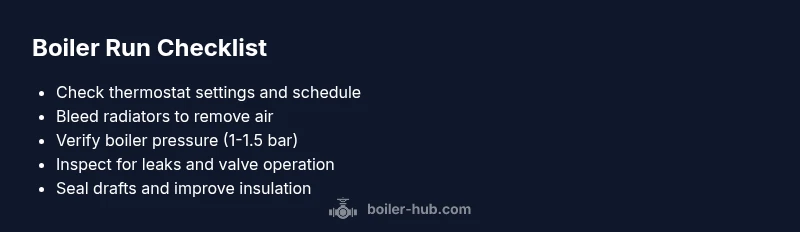
Before calling a professional, try a few safe, easy steps. Confirm the thermostat is set to the desired temperature and that the schedule matches real living patterns. Bleed radiators to remove trapped air and check the pressure gauge; repressurize if it’s below the recommended range. Inspect for obvious leaks around connecting pipes and the expansion tank. If you have multiple zones, ensure each zone valve is opening and closing as intended. Finally, ensure your home isn’t dissipating heat through drafts by sealing gaps around windows and doors. These small steps often cut unnecessary boiler runtime significantly.
Diagnostic flow: symptom to solution (quick reference)
When your boiler runs excessively, start with: 1) Symptom: extended boiler firing. 2) Check: thermostat, timer, and zone valves. 3) Diagnose: pressure level and leaks.
If pressure is low, repressurize; if leaks are found, seal or replace defective components. When in doubt, consult a professional to inspect the heat exchanger and pump. The flow should be intuitive: fix controls, confirm pressure, address air or leaks, then reassess. Regular maintenance can prevent most recurring issues.
Safety, warnings, and prevention
Safety first: never open live boiler panels if you are unsure about procedures. Hot surfaces and electrical components can cause injury. Always shut off power and water supply before bleeding radiators or inspecting pipes. Use proper PPE and keep children away from the area during maintenance. Regular servicing by a qualified technician is the best defense against dangerous failures and inefficiency.
Prevention and maintenance tips for longer-term efficiency
Routine maintenance pays off. Schedule an annual boiler service to catch wear in the heat exchanger, pump, and burner. Keep the area around the boiler clean and free of clutter to improve heat dissipation. Improve overall home efficiency with weatherstripping, attic insulation, and cavity wall insulation. Consider upgrading to a high-efficiency condensing boiler if the old unit is undersized for your home or has begun to fail. Small investments now can lead to big energy savings over time.
Steps
Estimated time: 40-60 minutes
- 1
Check thermostat settings
Verify that the thermostat is set to the actual desired temperature and that the schedule aligns with occupancy. If the thermostat is old or inaccurate, replace it or recalibrate. Confirm that any hot-water priority settings won’t keep the boiler firing longer than needed.
Tip: Keep a copy of the current thermostat settings for easy reference. - 2
Inspect boiler pressure
Locate the pressure gauge. If it’s below the recommended range, safely repressurize according to the boiler’s manual. If you see a sudden drop, check for leaks in the system before repressurizing.
Tip: Do not overshoot the target pressure; small increments are safer. - 3
Bleed radiators and check for air
One by one, loosen the bleed valves until air releases with a hissing sound and water appears. Close the valve as soon as a steady stream of water emerges. This improves heat transfer and reduces cycling.
Tip: Use a cloth to catch drips and protect floor from spills. - 4
Check for zone valve operation
If you have multiple zones, ensure each valve opens and closes as intended. A stuck valve can keep calling for heat in one area while others stay cool, making the boiler work harder overall.
Tip: Listen for valve actuator clicking sounds when zones are activated. - 5
Inspect for leaks and insulation gaps
Look for damp spots around pipes and joints. Check expansion tank for signs of failure. Inspect door and window seals, attic hatch, and any duct leaks that could cause heat loss.
Tip: Address obvious leaks promptly to prevent efficiency loss. - 6
Decide on professional service
If the boiler still runs excessively after these checks, schedule a professional service to inspect the heat exchanger, burner, and safety controls. A professional can perform a combustion analysis and ensure safety compliance.
Tip: Keep a maintenance log and note any changes in boiler performance.
Diagnosis: Boiler runs more than usual or cycles frequently
Possible Causes
- highThermostat settings or placement is incorrect
- highAir in the system causing inefficiency
- highLow boiler pressure or expansion tank issues
- mediumLeakage or stuck zone valve causing constant heat demand
- mediumInsufficient insulation or drafts causing heat loss
Fixes
- easyLower thermostat or correct timer/programmable settings
- easyBleed radiators to remove air pockets and verify no leaks
- easyCheck boiler pressure and repressurize to the recommended range
- hardInspect and service zone valves and circulating pump if needed
- mediumImprove insulation and seal drafts around doors/windows
Questions & Answers
Why does my boiler run constantly even when the house is warm?
A boiler running nonstop usually means heat is being demanded or lost. Start with thermostat settings, check for air in the system, and verify pressure. If unresolved, a professional check is advised.
A boiler that won’t stop running usually means heat is being demanded or heat is escaping. Start with the thermostat, air in the system, and pressure checks, and call a pro if needed.
Is a constantly running boiler dangerous?
Constant running itself isn’t automatically dangerous, but it can indicate issues with fuel efficiency, pressure, or safety controls. Have it inspected if it continues long-term.
Running all the time isn’t always dangerous, but it can point to safety or efficiency issues. Get it checked if it keeps going.
What should I check first if my boiler keeps running?
Start with thermostat settings, then inspect boiler pressure and bleed radiators. Look for obvious leaks and confirm zone valves are functioning. If none resolve the issue, seek professional service.
First check the thermostat, then the pressure and radiators. If it still runs on, have a professional inspect it.
Can lowering the thermostat reduce boiler runtime?
Yes. Reducing the set temperature or adjusting the schedule can significantly cut runtime. This should be paired with sealing drafts and ensuring zones aren’t calling for heat unnecessarily.
Lowering the thermostat and fixing drafts can reduce boiler runtime.
Should I bleed radiators if the boiler is running?
Bleeding radiators should be done with care and ideally when the boiler is cool. If radiators are already hot, turn off the system briefly to avoid scalding and ensure safe bleeding.
Bleed radiators when safe to do so, typically when the system is cool.
When is professional service required?
If the boiler continues to run excessively after basic checks, or if you notice leaks, strange noises, or poor flame quality, a licensed technician should inspect it for safety and efficiency.
Call a professional if it still runs long after checks or you notice leaks or unusual behavior.
Watch Video
Key Points
- Check thermostat and controls first
- Bleed radiators to remove air
- Inspect pressure and leaks
- Call a pro if the issue persists