Why Does Boiler Water Pressure Drop? Quick Troubleshooting Guide
Discover why boiler water pressure drops and how to diagnose, fix, and prevent it. Urgent, practical steps, safety tips, and when to call a pro. Learn from Boiler Hub.


Why does boiler water pressure drop
In residential heating systems, pressure is a delicate balance that keeps hot water circulating and radiators warm. A sudden drop in boiler water pressure is a warning sign that something isn’t sealing or circulating correctly. According to Boiler Hub, the most common culprits are small leaks, a compromised expansion vessel, or a faulty pressure relief valve. The problem often starts quietly—a slow drip from a joint, a corroded valve, or air trapped during a recent fill. Left unchecked, low pressure can cause the boiler to run inefficiently or shut down on safety limits. While the exact operating range can vary by model, most homeowners should monitor the gauge and aim for a consistent reading when the system is cold and again after heating. The Boiler Hub team emphasizes safety first: if you ever smell gas, hear hissing near the valve, or notice significant puddling, evacuate and call emergency services.
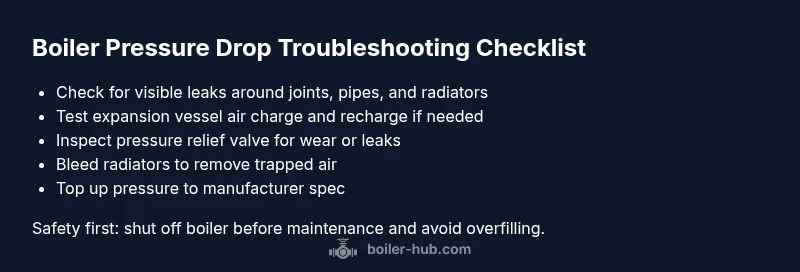
Once you notice pressure drop, don’t panic. A measured, methodical approach protects your home from cold rooms, frozen pipes, and wasted energy. The goal is not to guess the cause but to verify basic conditions that commonly cause drops. This article builds a systematic checklist you can use to diagnose and fix most low-pressure events without risking injury or damage to the boiler circuitry. Throughout, remember to follow your boiler manual’s specific guidance and to pause if you don’t feel confident handling pressurized components.
blockdata_type_for_editor