Why Does Boiler Pressure Keep Rising? A Practical Troubleshooting Guide
A comprehensive, urgent troubleshooting guide to diagnose and fix rising boiler pressure safely. Learn common causes, step-by-step checks, and prevention tips from Boiler Hub.


Most often, rising boiler pressure is caused by the expansion vessel losing its charge or a faulty fill valve allowing excess water into the system. Begin by testing the expansion tank air pressure, inspecting the fill valve and hoses for leaks, and draining a small amount of water to reset pressure. If pressure still climbs, power off and call a qualified technician.
Understanding the symptom: why does boiler pressure keep rising
When you see the pressure gauge climb during heating cycles, it’s a warning sign that something in the system isn’t balancing water volume and temperature. This isn’t just a numbers problem—elevated pressure can stress seals, valves, and the expansion vessel. According to Boiler Hub, the most common culprits are issues with the expansion vessel charge, the automatic fill valve, and persistent small leaks that push the system to compensate. Before you panic, remember that many cases are straightforward fixes you can perform safely if you follow a careful, step‑by‑step approach. The core question—why does boiler pressure keep rising—helps frame the process and set realistic expectations for diagnosis and repair. In this guide we break down the problem, the practical checks, and the actions that reliably deliver results, with safety front and center.
Primary causes of rising pressure you should inspect first
The top suspects are mechanical or installation faults rather than bad water quality. A common failure is the expansion vessel losing its charge, which prevents the system from absorbing the extra water as the boiler heats. A faulty or stuck pressure relief valve can also allow pressure to rise unchecked. Additional culprits include small leaks in radiators or pipework, an automatic fill valve that over-fills, or a recently refilled system that wasn’t vented properly. Air in the system can create false readings and unpredictable pressure behavior. Boiler Hub Analysis, 2026 indicates expansion‑vessel issues and faulty fill valves as leading causes in many homes. Start with these areas, then broaden the check if the gauge continues climbing after basic fixes.
Step-by-step homeowner checks (safe sequence)
- Open with a safety reset: ensure the boiler is off, powered down, and cool before touching any components.
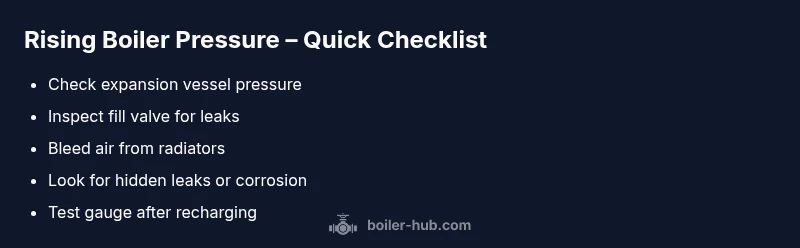
- Inspect the expansion vessel: locate the vessel, check its air charge (the manual will specify the correct value), and listen for hissing that would indicate a leak.
- Examine the automatic fill valve and associated hoses: look for signs of dampness, corrosion, or wear, and ensure the valve closes firmly.
- Scan for visible leaks: check connections, seals, and radiators; even small drips can force the system to pressurize repeatedly.
- Bleed trapped air from radiators if present: air pockets hinder proper water flow and can affect pressure readings.
- Refill and re-pressurize according to the boiler’s guidelines: use the fill loop slowly and watch the gauge.
- Power the boiler back on and monitor: if pressure stabilizes within a reasonable range, you’ve likely found the culprit; if not, move to the diagnostic flow.
Safe diagnostic sequence: from symptom to diagnosis
The diagnostic flow begins with the symptom (rising pressure) and moves to a focused diagnosis by ruling out each common cause in order. First, confirm there is an actual pressure rise rather than a faulty gauge by comparing readings at several points in the system. Next, verify expansion vessel function and fill valve behavior. If the issue persists after these checks, look for slow leaks or hidden corrosion and assess whether the pressure relief valve is releasing abnormally. Each fix should be tested individually, with the system depressurized between steps when safe. If you cannot complete any step safely, stop and call a professional.
What to do if pressure continues rising after basic checks
If the gauge climbs again after completing the initial checks, don’t ignore it. A rising pressure that returns after cooling can still indicate a hidden leak, a failed expansion vessel, or a defective relief valve. Immediately shut down the boiler if you notice scorching smells, unusual noises, or if the gauge hits the maximum limit described in your manual. Do not attempt major repairs without proper training or tools. Document readings and actions, and prepare to share them with a technician to speed diagnosis and repair.
Prevention: keep boiler pressure stable and extend life
Prevention starts with regular maintenance and a cautious approach to refilling and venting. Schedule annual service, including testing the expansion vessel, pressure relief valve, and overall system tightness. Keep the water temperature within manufacturer guidelines to reduce thermal stress, and correct any radiator leaks promptly. Use a high-quality fill valve and ensure the fill loop is correctly installed. A simple habit—monitoring the pressure gauge weekly—can catch trends before they become serious issues. By staying proactive, you’ll minimize unexpected pressure rises and extend the life of your boiler.
When to call a professional and what to expect
Some faults require professional tools and expertise. If the pressure keeps rising after all safe checks, or if you notice water leaks, corrosion, or a failed pressure relief valve, contact a licensed heating technician. The pro will test the expansion vessel, verify the system’s pressure curve, inspect the pressure relief valve for relief events, and check for hidden leaks. They may need to re-pressurize the system, replace faulty components, or install a new expansion vessel. In many cases, a quick service visit resolves the problem and prevents costly future damage. The Boiler Hub team recommends timely professional assessment when in doubt.
Steps
Estimated time: 30-60 minutes
- 1
Power off and cool the boiler
Shut off the boiler at the thermostat and power switch. Close the room valve if present, and allow the unit to cool before touching any fittings.
Tip: Never work on live electrical or hot components; use PPE. - 2
Check expansion vessel pressure
Locate the expansion vessel, check its air charge according to the manual, and listen for signs of a leak.
Tip: If the vessel feels soft, it may need recharging or replacement. - 3
Inspect fill valve and connections
Examine the fill valve and hoses for leaks or wear. Ensure the valve seals firmly when closed and the loop is correctly installed.
Tip: A slow drip indicates a worn valve—replace if necessary. - 4
Bleed air from radiators
Bleed the radiators to release trapped air, which can distort pressure readings and flow.
Tip: Start with the highest radiator first for efficiency. - 5
Refill and re‑pressurize
Open the filling loop slowly, watching the gauge. Stop when the target pressure is reached according to the manual.
Tip: Do not overfill; adjust gradually. - 6
Test run and monitor
Turn the boiler back on and monitor pressure over the next heating cycle. If the rise recurs, document readings for the technician.
Tip: Keep a simple log of numbers and times.
Diagnosis: Boiler pressure rising during or after heating cycles
Possible Causes
- highExpansion vessel losing charge
- highStuck/faulty pressure relief valve
- mediumLeaks in radiators or piping
- mediumAutomatic fill valve malfunction
- lowAir in the system causing incorrect readings
Fixes
- easyRecharge or replace expansion vessel as recommended by the boiler manufacturer
- mediumInspect and replace faulty pressure relief valve
- mediumRepair leaks and re-pressurize system following manual
- easyRepair or replace malfunctioning fill valve
- easyBleed air and ensure the system is properly vented
Questions & Answers
What is a normal boiler pressure?
Typically, boilers read about 1 bar when cold and rise to around 2 bar when heating. If readings stay higher, review expansion vessel and fill valve.
Boiler pressure is usually about one bar when cold and up to two bars during heating.
Can leaks cause rising pressure?
Leaks generally lower pressure, but hidden leaks or rapid cycling can cause transient pressure increases. Always inspect for hidden leaks.
Leaks usually lower pressure, but they can cause fluctuations that look like pressure rises during operation.
Is it safe to adjust boiler pressure yourself?
Only if you’re trained and follow the manufacturer’s guidance. If you’re unsure, call a licensed professional to avoid injury and damage.
Only attempt adjustments if you’re trained and follow the manual. When in doubt, call a pro.
When should I call a professional?
If pressure rises after basic checks, or you notice leaks, corrosion, or a faulty relief valve, contact a licensed heating technician promptly.
Call a professional if it keeps rising after checks or you detect leaks.
What maintenance helps prevent rising pressure?
Schedule annual service, test the expansion vessel and relief valve, and ensure correct re‑fill procedures to maintain stable pressure.
Regular service and proper filling keep pressure stable.
Watch Video
Key Points
- Check expansion vessel first and foremost
- Look for leaks and vents as quick wins
- Bleed air properly before repressurizing
- Call a pro if the issue repeats or you’re unsure