Why is My Boiler Overflowing: A Troubleshooting Guide
Urgent steps to diagnose and fix boiler overflow. Learn common causes, safety actions, and fixes for expansion tanks, pressure, and blocked lines with Boiler Hub.


Overflow is usually caused by expansion tank faults or high system pressure. For a quick fix, switch off the boiler and isolate power, then check the expansion tank, the pressure gauge, and the cold-water feed. If water continues to discharge, shut the water supply and contact a qualified technician immediately.
Why is my boiler overflowing
When you notice water dripping from a boiler or the overflow pipe, your first question is usually why is my boiler overflowing. In most homes this isn’t a mysterious fault; it’s a symptom that the system is under pressure or an ancillary component has failed. According to Boiler Hub, overflow is most often linked to a malfunctioning expansion tank or an abnormal rise in boiler pressure, but other issues like a blocked condensate drain or a faulty pressure relief valve can also trigger the discharge. The risk isn’t just water damage—hot boiler water and damp surfaces create slip hazards and can escalate corrosion inside the boiler. The Boiler Hub team found that many overflow events can be prevented with routine maintenance and early inspection of key parts. In this guide we’ll walk you through quick checks, a safe diagnostic flow, and step-by-step fixes for the most common causes. If you notice a strong gas smell or hissing from the vent, treat it as an emergency and evacuate while calling emergency services.
Safety risks and immediate steps
Overflow can create slip hazards, water damage, and, in gas-fired boilers, potential safety risks. While water itself is not poisonous, damp areas around electrical components invite short circuits. The spill can also obscure heat exchanger corrosion and mask leaks that worsen over time. If you see steam or hear unusual noises, or if the overflow continues after basic checks, stop the system and call a professional. Do not attempt to seal pipes or bypass safety devices. In boilers labeled as 'no power' or with defective valves, shutting off power to the unit and isolating the cold-water supply reduces further discharge. Boiler Hub’s guidance emphasizes acting quickly but safely: never work on hot surfaces, and keep children and pets away from the area. If you smell gas, leave the building immediately and contact the gas emergency line. Once the immediate danger is mitigated, schedule a service appointment to identify the root cause.
Check the basics first
Before diving into diagnostics, perform a few basic checks that don’t require special tools. Start by turning off the boiler power and closing the main water feed if safe. Look for visible signs of expansion tank moisture, corrosion, or a tank with a visibly compromised bladder. Inspect the discharge pipe and the nearby condensate drain for blockages or frost. Check the boiler pressure gauge when the system is cold to see if it sits within the expected range; if it’s way off, do not force adjustments and call a pro. If the boiler has a manual fill valve, ensure it isn’t stuck open. Note any recent changes, such as a service, new thermostat, or added radiators, which can alter how the system behaves. Document readings and conditions with photos; this helps the technician diagnose the root cause more quickly. These simple checks often resolve overflow or reveal where a professional should step in.
Diagnostic flow for boiler overflow symptoms
Here’s a practical diagnostic flow you can follow if water is still appearing after the basics. Start with symptom: water overflowing from the relief pipe during normal operation. Diagnosis leads to likely causes: expansion tank fault (high likelihood), and overpressure (high). If the expansion tank is full of water or the bladder is collapsed, replace or recharge as needed. If pressure is consistently high even after bleeding air, inspect the automatic fill valve and check for a stuck lever. A blocked condensate drain or frozen line can back up into the boiler and trigger discharge; thaw or clear as appropriate. If none of these steps solve the issue, the safety relief valve itself may be failing. Solutions include replacing the expansion tank, adjusting or replacing the pressure relief valve, and ensuring the fill loop is not open. Always test after each fix to confirm the problem is resolved. If the overflow recurs, escalate to a licensed heating professional. Boiler Hub Analysis, 2026, supports a cautious, staged approach to avoid fires or flooding.
Step-by-step: Fix for the most common cause
This section outlines a practical, safe sequence to address the most frequent overflow culprit. Follow these steps in order, and stop if anything feels unsafe or unusual.
Tips & warnings
- Do not ignore repeated overflow; persistent discharge means a repair is needed. - Wear protective gloves and eye protection when inspecting exposed pipes. - If you smell gas, evacuate and call the emergency line immediately. - Schedule regular boiler maintenance to reduce recurrence risk. - Never bypass safety devices or attempt to fix a safety valve without proper training.
Steps
Estimated time: 45-75 minutes
- 1
Power off and isolate
Turn off the boiler at the thermostat or circuit breaker and shut the water feed if safe. This stops further water discharge while you inspect the basics.
Tip: Keep a log of what you see and the readings you take. - 2
Check the expansion tank
Inspect the tank for signs of moisture, corrosion, or a collapsed bladder. If the tank is full of water or the bladder won’t hold air, plan to replace it.
Tip: If you’re unsure about the tank condition, take photos before moving parts. - 3
Inspect venting and condensate drain
Follow the condensate line to ensure it’s clear and not blocked or frozen. Clear any frost and verify the drain is unobstructed.
Tip: Don’t use metal tools that could damage pipes. - 4
Assess boiler pressure and fill valve
Look at the pressure gauge when the system is cold and ensure the fill valve isn’t stuck open. Bleed air if needed and correct any obvious discrepancies.
Tip: Document gauge readings with a photo for future reference. - 5
Test the safety valve condition
If the overflow continues after the above checks, the safety relief valve may be faulty and require replacement by a pro.
Tip: Do not attempt to 'test' a faulty valve; replace it through a licensed technician. - 6
Call a professional if needed
If the overflow returns after these steps, or you’re uncomfortable performing any step, contact a licensed heating professional immediately.
Tip: Provide a concise summary of what you observed and photos if possible.
Diagnosis: Water overflowing from boiler or relief valve
Possible Causes
- highExpansion tank fault (bladder failed or tank waterlogged)
- highHigh system pressure
- mediumBlocked or frozen condensate drain
- mediumLeaking or failing pressure relief valve
- lowFilling loop stuck open
Fixes
- mediumTest expansion tank; replace if bladder is compromised or tank is waterlogged
- easyCheck and restore normal system pressure; bleed air and verify readings, avoid over-pressurizing
- easyClear condensate drain or thaw frozen line; ensure proper drainage
- mediumInspect pressure relief valve; replace if it leaks or sticks
- easyInspect filling loop for a stuck open condition; close valve if needed
- easyIf overflow persists, contact a licensed heating professional for a full diagnostic
Questions & Answers
What causes boiler overflow?
Overflow is commonly due to expansion tank failure, high system pressure, or a faulty relief valve. Blocked condensate drains can contribute as well. A licensed pro can confirm the exact cause.
Overflow is usually caused by expansion tank failure or high pressure, with other factors like a blocked drain possible.
Can overflow damage my boiler?
Yes. Repeated overflow can lead to corrosion, component wear, and water damage around the unit. Stop the overflow and seek professional assessment to prevent long-term harm.
Overflow can damage components if it repeats; a professional should inspect.
Is it safe to reset the boiler after overflow?
Do not reset or restart until you’ve identified the cause and ensured it’s safe. Restarting a faulty system can worsen damage or create new hazards.
Don’t reset until you’ve diagnosed the cause; it can be dangerous.
When should I call a professional?
If the overflow persists after basic checks or you notice gas odors, leaks, or arcing sounds, contact a licensed heating professional immediately.
Call a pro if it continues or you smell gas.
How can I prevent boiler overflow in the future?
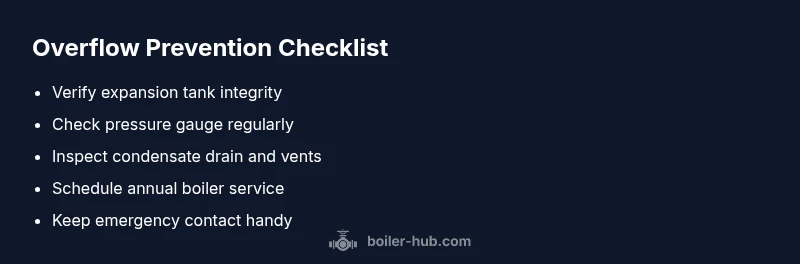
Schedule regular maintenance, verify expansion tank health, and ensure the pressure relief valve and fill loop are functioning correctly.
Keep up with maintenance and check safety components to prevent overflow.
What safety measures should I take right away?
If there is a gas smell, evacuate and call emergency services. Avoid touching hot surfaces and keep the area clear until professionals arrive.
Evacuate if you smell gas and call emergency services.
Do I need to replace the boiler if overflow recurs?
Not automatically. A professional assessment will determine whether components can be repaired or if replacement is warranted based on age and damage.
A pro will tell you if repair or replacement is needed.
Key Points
- Shut off power and water to stop further discharge.
- Inspect expansion tank and pressure gauge before proceeding.
- Address condensate drain and venting issues to prevent recurrence.
- Boiler Hub recommends professional help if overflow recurs.