Urgent Guide to Troubleshooting a Leaking Boiler
Urgent boiler leak troubleshooting with practical checks, safety steps, and Boiler Hub guidance to diagnose, contain, and fix leaks safely for homeowners and facilities.


Most likely the boiler is leaking from the pressure relief valve, expansion tank connections, or worn seals. If you notice water pooling near the unit, shut off power and the water supply, then call a licensed technician immediately. Do not attempt aggressive repairs yourself, especially if you smell gas or see steam; safety comes first.
Why a boiler is leaking matters
A leak from your boiler isn't just a nuisance; it's a safety hazard and can cause extensive water damage. When the system loses water, pressure can spike or electrical components may short, increasing the risk of burns, mold growth, or a carbon monoxide hazard if gas is involved. According to Boiler Hub, quick triage can prevent worse damage while you arrange professional service. If you notice damp spots near the boiler, rust on joints, or pools under the unit, take immediate action. Power off the boiler if it is safe to do so and switch off the water supply at the main valve. Do not ignore fumes or steam. In many homes, leaks originate at common weak points rather than dramatic boiler failure, but the risk is real and warrants urgent attention.
Immediate safety steps you can take (before professionals arrive)
- If you smell gas, evacuate immediately and call emergency services. Do not operate electrical switches or appliances.
- Locate the main shut-off valves for the boiler: turn off the power at the breaker and shut the water supply to the boiler.
- If it’s safe, place towels or a bucket under the leak to minimize water damage and document the area with photos for the technician.
- Do not attempt to seal joints with tape or caulk while the system is under pressure; leaks mean the system needs professional assessment.
- After shutting off, allow the boiler and surrounding pipes to cool before handling any components. Then call a licensed technician for a diagnosis and repair plan.
Common leak sources and how to recognize them
- Expansion tank: A small steel tank connected to the boiler that can rust or lose its air charge; damp spots or a rusty tank indicate a faulty expansion tank.
- Pressure relief valve: Leaks or drips from the discharge pipe often happen after pressure spikes; a constant drip is a red flag.
- Pipe joints and fittings: Loose nuts, corrosion, or damaged gaskets around supply and return lines commonly leak.
- Gasketed seams and door seals: Worn or damaged seals can produce slow leaks around the boiler cabinet.
- Pump seals and connections: Drips at the pump housing or its seal may indicate wear.
- Heat exchanger or internal components: Severe corrosion or pitting requires professional repair or replacement.
Diagnostic flow overview
Diagnosing a boiler leak involves confirming the leak source, evaluating system pressure, and distinguishing condensate from boiler water. Start by checking the pressure gauge; abnormal pressure can indicate a faulty relief valve or expansion tank. Trace the dripping path to identify whether water is condensate (usually clear) or boiler water (may appear mineral-rich). Use a flashlight to inspect joints, valves, and the discharge pipe. If the source remains unclear or gas is involved, stop and call a professional.
Preventive maintenance to minimize future leaks
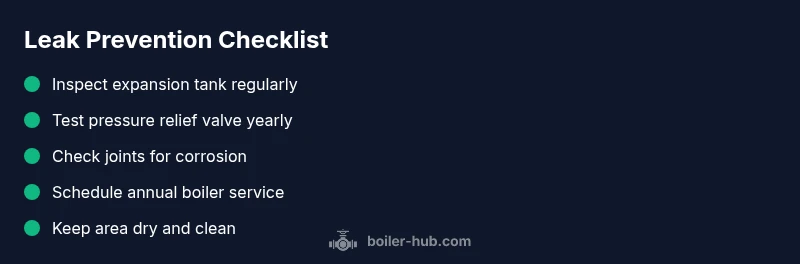
Regular maintenance reduces leak risk considerably. Schedule annual service, inspect expansion tanks and relief valves, and test the boiler’s pressure relief safety mechanisms. Keep the area around the boiler clean and accessible, replace worn gaskets, and monitor for early signs like hissing sounds, dampness, or rust. A proactive maintenance routine saves money and prevents dangerous failures.
Steps
Estimated time: 60-90 minutes
- 1
Shut off power and water
Locate the boiler’s power switch or breaker and switch it off. Then shut the cold-water supply to the boiler at the main valve. This stops electrical heat and stops adding more water to the system.
Tip: Lock out the breaker if possible to prevent accidental re-energization. - 2
Identify the leak source safely
Look for drips at the pressure relief valve, expansion tank, pipe joints, and around gaskets. If you cannot safely trace the source, proceed to step 3 and contact a pro immediately.
Tip: Use a flashlight and a clean container to catch drips for analysis. - 3
Check expansion tank and pressure
Examine the expansion tank for moisture and test air charge. If the system pressure is high, this may indicate a valve or tank problem.
Tip: Do not depressurize the system abruptly; follow manufacturer guidance. - 4
Tighten or replace faulty components
If you identify a loose fitting or gasket, tighten carefully or replace with compatible parts. Avoid forcing fittings beyond their design limits.
Tip: Always use appropriate tools and wear eye protection. - 5
Isolate the boiler if leak persists
If the leak continues after basic fixes, isolate the boiler by shutting off the isolation valve and seek urgent professional help.
Tip: Do not attempt to weld or solder near gas lines. - 6
Call a licensed professional
Even small leaks can hide serious issues. A qualified technician can safely assess, repair, and test the system before returning to service.
Tip: Provide photos and notes of observed leaks to speed up diagnosis.
Diagnosis: Visible leak near or from the boiler
Possible Causes
- mediumExpansion tank failure or loss of air charge
- highFaulty pressure relief valve or discharge pipe
- highLoose or corroded pipe fittings
- lowDamaged gaskets or seals on door/hatch
- lowInternal component corrosion (heat exchanger)
Fixes
- easyInspect expansion tank and recharge/replace if necessary
- mediumInspect discharge pipe and relief valve; replace valve if leaking
- easyTighten or replace leaking joints and fittings
- easyReplace worn gaskets/seals around access points
- hardCall a licensed pro for internal corrosion assessment or heat exchanger replacement
Questions & Answers
What should I do first if I notice a boiler leak?
First, ensure safety: don't operate switches if you smell gas. Shut off the boiler's power and water supply, contain the leak if possible, and contact a licensed technician for diagnosis and repair.
First, ensure safety by shutting off power and water, then contact a licensed technician for diagnosis and repair.
Can I fix a boiler leak myself?
For most boiler leaks, professional repair is recommended. You can perform basic safety steps, such as turning off power and water, but avoid attempting to seal or replace crucial components.
DIY steps are limited to safety shutdowns; complex repairs should be done by a pro.
When should I call a professional?
Call a professional if the leak persists after basic safety steps, or if you suspect a faulty relief valve, expansion tank, or internal corrosion. Gas smells, rising pressure, or unusual noises require immediate professional attention.
If leaks persist or you suspect gas or corrosion, call a professional right away.
Is a leaking boiler dangerous?
Yes. Leaks can cause electrical hazards, scalding, mold growth, and carbon monoxide risks if gas is involved. Treat all leaks seriously and prioritize safety.
Yes, leaks can be dangerous; prioritize safety and seek professional help quickly.
Will a boiler leak affect warranty?
Leaks themselves may not void a warranty, but improper DIY repairs can. Always follow manufacturer guidance and use licensed technicians for any fix.
Leaks can be covered if repaired by a licensed pro; DIY mistakes may void warranty.
What maintenance prevents leaks?
Regular annual service, check the expansion tank and relief valve, monitor pressure, and replace worn gaskets. A proactive maintenance plan reduces leak likelihood.
Annual service and regular checks greatly reduce leaks.
How can I tell if the leak is condensate or boiler water?
Condensate usually looks clear and may be slightly acidic; boiler water is mineral-rich and can leave deposits. A professional can test for the exact source.
Condensate is clear; boiler water has mineral content—get it tested if unsure.
Watch Video
Key Points
- Shut off power and water immediately when a leak is spotted
- Identify the leak source before attempting repairs
- Most leaks come from valves, expansion tanks, or joints—professionals handle complex fixes
- Regular maintenance reduces future leak risk