Why Does Boiler Pressure Drop Overnight? A Troubleshooting Guide
Boiler Hub's urgent guide explains why boiler pressure can drop overnight, how to diagnose leaks and expansion vessel faults, plus safe repressurization tips and when to call a professional.


Most overnight pressure drops are caused by a small, undetected water leak, an aging expansion vessel, or a valve slowly releasing pressure as the system cools. Start by checking the pressure gauge when the boiler is cold, inspect visible pipes and radiators for drips, and repressurize to the recommended level if no leak is found. If the drop continues, call a technician.
Why does boiler pressure drop overnight and what it signals
Why does boiler pressure drop overnight? In most homes, the answer is practical rather than dramatic: a small water leak, a worn expansion vessel, or a valve that slowly releases pressure as the system cools. The boiler pressure gauge gives the quick clue: if the reading sits well below the typical cold range (often around 1 bar) and stays there after cooling, something is letting water escape or failing to retain it. Boiler Hub's analysis shows that most overnight drops are due to gradual losses rather than a dramatic failure. For homeowners and facility managers, the key is safety first: verify obvious culprits, then repressurize within the manufacturer’s guidelines and monitor the gauge over the next heating cycle. If you cannot identify a leak or the pressure keeps dropping when the system heats, do not delay your call to a qualified technician. A professional can check the expansion vessel membrane, the feed-and-expansion connections, and the internal seals that may not be obvious at first glance. Additionally, it's important to understand the distinction between cold and hot pressure readings: when the boiler heats up, pressure should rise slightly, not plummet. Keep a maintenance log to track patterns and help future diagnosis.
Common Causes of Overnight Pressure Drop
If the overnight drop is real and persistent, several causes should be considered. The most common is a hidden water leak: this could be in radiators, pipe joints, valve connections, or the boiler itself. A second frequent culprit is the expansion vessel (also called the expansion tank). If the vessel’s bladder/membrane fails or its pre-charge is wrong, the system cannot store water volume as it expands heating, leading to gradual pressure loss. A third possibility is a faulty pressure relief valve or a leaking feed pipe, which can slowly release water over hours. Air trapped in the system can create pressure inconsistencies and prevent the system from maintaining steady pressure after heating. Finally, an aging or failing pump or pump seals can disrupt circulation, causing pressure to drop in idle periods. Boiler Hub analysis shows these issues are typically fixable without major overhauls, but require careful inspection and proper reseating of seals and components. In some cases, multiple issues occur together, which accelerates pressure loss.
How to Diagnose Safely (checklist)
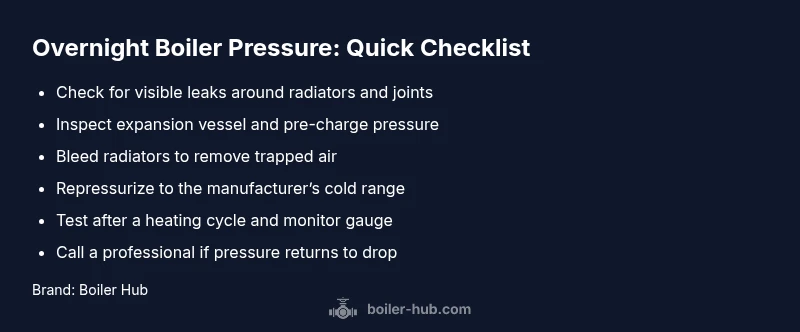
Diagnosing overnight pressure drop requires careful, safe steps. Begin by verifying that the boiler is safely powered off and cool before touching any components. Then, perform these checks:
- Read the gauge when cold and compare to the manufacturer’s recommended cold range (usually around 1 bar). Note any readings that are consistently below or above this range.
- Look for visible leaks around radiators, joints, and the boiler itself. Even small damp spots or a faint musty smell can indicate a slow leak.
- Inspect the expansion vessel and its connections. If you can access the vessel, check for signs of moisture or a dull, soft bladder indicating failure.
- Check for a faulty or leaking pressure relief valve and any dampness around the discharge pipe near the boiler.
- Bleed radiators to remove trapped air that can affect pressure readings, then recheck the system pressure after bleeding. Recheck for leaks after bleeding.
- If the system has an auto-fill or feed loop, ensure it’s not continuously letting water into the system due to a misadjustment or fault.
If you discover a leak, isolate it if possible and plan repairs. If the expansion vessel appears compromised or if you’re unsure about how to test a valve safely, escalate to a professional. Boiler Hub recommends documenting each finding for the technician and never attempting high-risk components with the system energized.
What to Do Next: Step-by-Step Fixes
When you’ve identified potential causes, use the following fixes as a practical workflow. Always prioritize safety and personal protection when handling hot surfaces, gas lines, or electrical components. If you’re uncomfortable, stop and call a licensed technician.
- Fix 1: Address visible leaks first. Tighten simple joints if feasible, or replace worn seals. After addressing leaks, recheck pressure and monitor for further loss.
- Fix 2: Test the expansion vessel’s pre-charge. If the vessel is external, use a gauge to verify that the pre-charge matches the system’s cold pressure recommendations (often around 1 bar). If the membrane is failed, replace the vessel.
- Fix 3: Inspect the pressure relief valve and discharge pipe for dampness or active leaks. If the valve is leaking, replace it and test the system after replacement.
- Fix 4: Purge air from the system by bleeding radiators. After bleeding, re-check the pressure and ensure the reading remains stable.
- Fix 5: Repressurize using the filling loop to the normal cold pressure range, typically around 1 bar. Do this slowly and monitor the gauge for a few minutes to detect any immediate pressure changes.
- Fix 6: Run a heat cycle and recheck. After the system reaches operating temperature, confirm pressure increases slightly but remains within the safe range. If pressure drops again, the issue is likely deeper than a leak or vessel failure and requires professional assessment.
Professional intervention is recommended if the pressure drops again after repressurization or if there are signs of significant leaks, corrosion, or valve faults. In some cases, multiple issues must be addressed in sequence to restore stable pressure.
Prevention Tips to Avoid Overnight Drops
- Schedule regular boiler servicing to identify wear and aging components before they fail. A professional can test the expansion vessel integrity and the overall health of the pressure system.
- Keep the system topped up only to the manufacturer’s recommended cold pressure. Avoid overfilling, which can stress seals and valves and cause future leaks.
- Regularly inspect radiators and pipework for damp patches or rust. Fixing small leaks early prevents bigger problems that lead to pressure loss.
- Make a note of every pressure change and maintenance event. A simple log helps you spot trends and provides a helpful history for technicians.
- Bleed radiators as part of seasonal maintenance to remove air that can skew pressure readings and mask other issues.
Boiler Hub emphasizes consistent maintenance as the best defense against overnight pressure drops. A proactive approach reduces emergency calls and extends boiler life.
When to Call a Professional
If you notice a leak that you cannot locate, persistent pressure drops after repressurization, signs of corrosion, or repeated cycling of the boiler without achieving stable pressure, contact a licensed heating engineer promptly. Gas boilers require proper handling by qualified personnel, and attempting complex repairs could be dangerous. A professional can diagnose issues like a failing expansion vessel, degraded seals, or a faulty pressure relief valve with precision and restore system reliability.
Steps
Estimated time: Total time: 30-45 minutes
- 1
Turn off and cool the boiler
Power down the boiler and allow the system to cool completely to avoid burns and to obtain an accurate cold pressure reading.
Tip: Use insulated gloves and keep a safe distance from hot surfaces. - 2
Check the pressure gauge when cold
Note the current reading and compare it to the typical cold range specified by the manufacturer (usually around 1 bar).
Tip: Record the exact reading for maintenance records. - 3
Look for visible leaks
Inspect radiators, joints, and the boiler casing for damp spots, puddles, or corrosion that indicates a leak.
Tip: Check under the boiler and along feed pipes as leaks can travel. - 4
Test the expansion vessel
If accessible, verify the vessel’s pre-charge with a pressure gauge and assess the membrane condition.
Tip: A failed membrane typically requires replacement of the vessel. - 5
Repressurize if safe
Use the filling loop to bring cold pressure back to the normal range, watching the gauge carefully.
Tip: Do not exceed about 1.5 bar when cold. - 6
Test after heating cycle
Turn the boiler back on and let it reach operating temperature; recheck pressure to ensure it stays within range.
Tip: If pressure drops again, stop and contact a professional.
Diagnosis: Boiler pressure drops overnight
Possible Causes
- highVisible or hidden water leaks in radiators, joints, or boiler casing
- mediumFailing expansion vessel (pre-charge or bladder failure)
- mediumLeaking or malfunctioning pressure relief valve or feed pipe
- lowAir trapped in the system
- lowLeaking condensate or return pipes
Fixes
- easyInspect for leaks and tighten or replace seals as needed
- mediumCheck expansion vessel pre-charge and replace the vessel if the bladder is failed
- mediumInspect the pressure relief valve and discharge pipe for leaks and replace if defective
- easyBleed radiators to remove air and recheck system pressure
- easyRepressurize with the filling loop to the prescribed cold pressure and monitor
- hardIf pressure continues to drop or leaks are suspected, call a licensed technician
Questions & Answers
What is a safe boiler pressure range when cold?
Most boilers should read around 1 bar when cold. If the pressure is consistently below or above this, repressurize within the manual and inspect for leaks. If you notice ongoing instability, consult a technician.
Boiler pressure should be about 1 bar when cold. If it's much lower or higher, repressurize according to the manual and seek professional help if it keeps changing.
Can air in the system cause a pressure drop?
Air trapped in the radiators or pipes can cause pressure fluctuations and less stable pressure readings when heating. Bleeding radiators often resolves this issue, followed by a check of the overall system pressure.
Air in the system can cause the pressure to wobble. Bleed the radiators and recheck the pressure after the air is released.
Is it safe to repressurize the boiler myself?
Repressurizing a boiler yourself is generally safe if you follow the manufacturer’s instructions and work with the boiler cold. If you’re unsure or the reading is erratic, stop and call a professional.
Repressurizing is possible if your boiler is cold and you follow the manual. If unsure, get a professional to help.
What should I do if I see water leaking from the boiler?
A leak requires immediate attention. Isolate the source if possible and turn off the boiler. Do not operate the boiler until a qualified technician inspects for safety and fixes the leak.
If you see a leak, turn off the boiler and call a licensed technician right away.
How long does it take to fix a dropped boiler pressure?
Time varies with the cause; simple leaks and bleeding can be resolved in a short session, while expansion vessel or valve replacements may take longer. A technician can provide an accurate estimate after inspection.
Fix times vary. Bleeding or minor leaks are quick; vessel or valve work takes longer. A pro can give a precise estimate.
Watch Video
Key Points
- Check for leaks first and seal obvious ones.
- Expansion vessel faults are a common overnight drop cause.
- Repressurize gently within manufacturer guidelines.
- Call a pro if pressure drops again after fixes.