Why Does a Boiler Overpressure? A Practical Troubleshooting Guide
Learn why boiler overpressure happens, identify common causes like expansion vessel faults and relief valve issues, and follow step-by-step fixes. Urgent, safety-focused guidance from Boiler Hub to protect your home and equipment.


Why does a boiler over pressure happen? The most common cause is excessive heat causing water to expand, often due to a faulty expansion vessel or pressure relief valve. Quick fixes: vent the system, reduce heat, and verify the gauge. If the pressure remains high or you smell gas, shut down and call a qualified technician.
What is boiler overpressure and why it matters
Boiler overpressure occurs when the internal water pressure rises above the safe operating range. In most residential systems, cold pressure is around 1 bar, and it should rise to roughly 1.5–2 bar when the water is heated. If the pressure gauge climbs rapidly or stays high after heating, components inside the boiler may be failing or system water may be mismanaged. Understanding why this happens helps homeowners and facility managers respond quickly and avoid dangerous situations. According to Boiler Hub, persistent overpressure is a sign that a deeper inspection is needed, not a quick workaround. Recognizing the difference between a temporary spike and a sustained abnormal pressure is essential for safety and longevity of the boiler. The keyword here is not just the number on the gauge, but the trajectory of the pressure over time. If you notice sustained overpressure, you should treat it as urgent and follow a structured troubleshooting flow to prevent damage to radiators, pipes, or the boiler itself.
Why does a boiler over pressure matter? Sustained overpressure can lead to gasket failures, leaks, or even a dangerous release of steam. It can also trigger the boiler’s safety devices to shut down, disrupting hot water or space heating when you need it most. A proactive approach—checking expansion components, valve operation, and routine maintenance—reduces risk and extends the boiler’s life. This guide outlines a practical, methodical path to diagnose the most common culprits and implement safe fixes.
Quick reference: what to check first (before calling a pro)
- Confirm the boiler is cold before touching pressure components.
- Check the visible pressure gauge for sustained high readings (and compare with the manufacturer’s normal range).
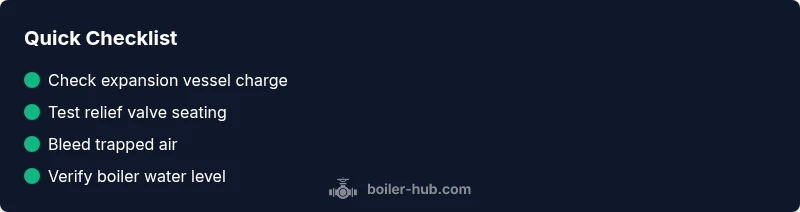
- Inspect the expansion vessel for obvious signs of failure or loss of air charge.
- Test the pressure relief valve for leaks or improper seating.
- Look for obvious leaks or recent water additions that could push pressure upward.
If any step seems unsafe or you smell gas, stop immediately and call emergency services or a licensed technician. Boiler Hub emphasizes safety first: do not attempt high-risk adjustments when the system is hot or under pressure.
How to interpret symptoms and typical responses
- High single spike vs. rising trend: A quick spike followed by normalization may indicate a transient issue, such as a cold fill or brief heat surge; a rising trend over days suggests a faulty expansion vessel or relief valve.
- Leaks around fittings or the relief valve: This often points to a worn seal or valve malfunction and requires replacement.
- Frequent resets or lockouts: Recurrent shutdowns usually signal an underlying problem that won’t fix itself with a reset and needs professional assessment.
Throughout these checks, track readings over time. A log helps determine whether the problem is moving toward a safe resolution or escalating into a hazard.
Immediate safety steps you can take (do this only if safe)
- Power down the boiler heat source and turn off the power supply to prevent further heating.
- If you can do so safely, give the system time to cool before attempting any pressure relief.
- Do not forcibly open pressure relief valves while the system is hot or pressurized.
- If you suspect a gas leak or smell fuel, evacuate and call emergency services.
- After cooling, re-check the gauge to see if pressure returns toward normal; if not, seek professional service.
Safety is the priority. If at any point you feel unsure, contact a qualified heating engineer. Boiler Hub stresses professional advice when dealing with potential overpressure.
What to look for during a professional inspection
- Expansion vessel charge: Many overpressure problems trace to a loss of air charge or a failed vessel. A pro will test pressure pre-charge and re-fill if needed.
- Pressure relief valve: The tech will confirm the valve seats properly and does not leak when tested. A faulty valve is a common cause of persistent high pressure.
- System water and air balance: Air trapped in the system or too much water can increase pressure. The pro will bleed air and adjust water levels as required.
- Leaks and corrosion: Check for leaks around joints, seals, and radiators; corrosion can worsen pressure-related issues.
A professional evaluation helps confirm the diagnosis and prevents misdiagnosis, which can save time and money in the long run. Boiler Hub recommends arranging a boiler service if the symptoms persist after initial checks.
Long-term fixes and prevention strategies
- Regular maintenance: Schedule annual service to inspect the expansion vessel, relief valve, and overall system pressure.
- Pre-charge and sizing: Ensure the expansion vessel is correctly sized for the boiler and pre-charge pressure is set per manufacturer’s spec. Incorrect pre-charge is a frequent root cause of overpressure.
- Water quality and hardness: Hard water can cause scale buildup that affects heat transfer and pressure behavior. Use appropriate water treatment and monitor boiler water quality.
- System balancing: Ensure radiator and zone valves are balanced so that the system does not overwork, causing pressure to rise unnecessarily.
- Documentation: Keep a log of pressure readings, service dates, and any repairs. This helps identify entrenched problems and supports future troubleshooting.
By addressing both the immediate pressure issue and the long-term reliability, you reduce risk and extend the boiler’s life. The Boiler Hub team recommends proactive maintenance and prompt action when overpressure signs appear.
Troubleshooting at a glance: how to approach the issue step by step
If your boiler shows signs of overpressure, work through the following workflow in order, only moving to the next step if the previous one does not resolve the issue. Systematically addressing the core components minimizes risk and improves chances of a safe resolution. Always consider professional help if you are uncertain about any step.
Final thoughts
Boiler overpressure is a potentially serious condition, but a structured, safety-first approach helps you diagnose and fix common causes effectively. Always prioritize safety, document readings, and seek professional service when needed. With proper maintenance and prompt action, you can prevent repeated incidents and keep your heating system reliable. Remember, the Boiler Hub team is here to support you with clear, practical guidance.
Steps
Estimated time: 60-120 minutes
- 1
Power down and isolate the boiler
Switch off the boiler and disconnect the power supply. Allow the unit to cool completely before touching any components. This prevents scalding and reduces the risk of causing further pressure rise.
Tip: Keep a clear workspace and wear protective gloves when inspecting nearby pipes after cooling. - 2
Check the pressure gauge and current setpoint
Note the gauge reading and compare it to the boiler’s specified operating range. If the reading is consistently above the safe range, proceed with the next checks rather than assuming a simple reset will fix it.
Tip: Document the gauge value and any recent changes to the system for the service technician. - 3
Inspect the expansion vessel
Look for signs of corrosion, leakage, or a charged air chamber. If your vessel has an air valve, test for proper pre-charge according to the manufacturer’s guidelines. A failed expansion vessel is a common cause of sustained overpressure.
Tip: If you don’t have the proper tools or knowledge, skip recharging and schedule professional service. - 4
Test the pressure relief valve
Carefully inspect the relief valve for leaks or binding. A valve that dribbles or fails to reseat after relief is not safe and should be replaced by a pro. Do not force the valve open or closed.
Tip: Only perform valve checks when the system is cool and depressurized to avoid steam burns. - 5
Bleed air and inspect water level
Bleed any trapped air from radiators or vents as needed and verify boiler water level. Air and water balance impact pressure, especially after recent fills or maintenance work.
Tip: Use the correct vent points and avoid over-bleeding, which can lower pressure unexpectedly. - 6
Plan professional service if unresolved
If readings remain high after the above steps, arrange a service with a qualified heating engineer. They can verify vessel pre-charge, inspect internal components, and ensure safe operation.
Tip: Provide the technician with your pressure log and any notes about prior issues.
Diagnosis: Boiler gauge reads high pressure and stays elevated after heating
Possible Causes
- highExpansion vessel charge loss or failure
- highFaulty or stuck pressure relief valve
- mediumAir trapped in the system after filling
- lowExcessive water addition or improper filling
Fixes
- easyTurn off heat and power; let boiler cool before any further checks
- mediumTest and recharge the expansion vessel or replace if needed
- mediumInspect the pressure relief valve and replace if it leaks or won't reseat
- hardIf pressure remains high after basic checks, contact a qualified heating engineer for a full service
Questions & Answers
What is considered safe boiler pressure, and how do I know if mine is too high?
Safe boiler pressure varies by model, but most domestic systems operate around 1 bar when cold and about 1.5–2 bar when hot. If your gauge remains consistently above the rated range after cooling, it indicates a potential fault needing inspection.
Safe boiler pressure usually sits around 1 bar when cold and 1.5 to 2 when hot. If it stays high after cooling, get a professional check.
Can I reset the boiler if the pressure is high?
Resetting does not fix the underlying cause of overpressure. It may mask a fault and lead to repeat incidents. Address the expansion vessel or relief valve, and seek professional evaluation if high pressure remains.
Resetting won’t fix overpressure. Seek a professional check if the pressure stays high.
What are the common causes of rapid pressure rise?
Common causes include a failing expansion vessel, a faulty pressure relief valve, trapped air after filling, or excessive water introduction. Each requires a targeted check to confirm the root cause.
Common causes are expansion vessel failure, valve problems, trapped air, or too much water.
Is expansion vessel replacement expensive?
Costs vary by boiler type, region, and parts. A service call plus parts can be necessary. A professional visit helps ensure the right captain and safe operation.
Costs vary; a service call plus parts may be needed. A pro can confirm.
When should I call emergency services?
If you smell gas, hear a hissing leak, or see steam venting with signs of danger, evacuate and call emergency services immediately. Do not attempt repairs in such conditions.
If there’s gas smell or active leaks, call emergency services now.
What maintenance can prevent overpressure?
Regular boiler service, checking expansion vessel charge, testing the relief valve, and ensuring proper water quality can prevent many overpressure scenarios. Keep a maintenance schedule and follow manufacturer guidelines.
Regular service and checks of expansion vessel, relief valve, and water quality prevent overpressure.
Watch Video
Key Points
- Identify if the issue is a temporary spike or persistent fault
- Check expansion vessel and relief valve as primary culprits
- Never ignore rising pressure; safety comes first
- Schedule professional service for unresolved cases