Why is My Boiler Over-Pressurising? A Practical Troubleshooting Guide
Facing high boiler pressure? Learn the quick causes, safe checks, and step-by-step fixes to bring pressure back to normal. Practical guidance from Boiler Hub to protect your home.


Most likely, high boiler pressure is caused by an overfilled system or a failing expansion vessel. The fastest fix is to turn off the boiler, let it cool, then carefully vent water using the drain valve to drop pressure to the normal range. If the gauge stays high, contact a professional.
Why boiler over-pressurising happens
If you're wondering "why is my boiler over pressurising", you're not alone. In most homes, pressure faults come down to a few familiar culprits. First, an overfilled system will push water into the pipes and radiators as soon as the boiler heats, expanding the liquid and compressing air. Second, a failing expansion vessel — the tank that absorbs thermal expansion — can lose its charge or its diaphragm may split, leaving the system unable to accommodate extra water. Third, a faulty pressure relief valve can become stuck or leak, allowing the system to pressurise beyond the safe limit. Finally, a corrupted or blocked filling loop can cause unintended topping up of water, causing pressure to creep upward. Boiler Hub's guidance emphasizes checking for these issues in order, starting with the simplest check first. In many cases, standard home maintenance tasks will correct the problem without replacement parts, but persistent high pressure is a red flag that should not be ignored.
Understanding boiler pressure and safe ranges
Boiler pressure is measured on a gauge in bars. Pressure rises as the water heats because water expands and the system must accommodate the extra volume. The key is staying within the manufacturer's recommended range; this is usually printed on the gauge or in the user manual. A typical residential boiler has a cold-start range around 1 bar and a hot-rise that brings it higher when the system is active. If the gauge climbs well above the normal range during heating, there is a real risk of venting water or triggering the safety relief valve. Do not ignore a rapidly rising reading, and do not attempt to pressurise the system further to 'fix' it. Regular checks ensure you catch a developing fault early. By understanding your boiler's pressure behavior, you can distinguish between a temporary spike and a persistent fault that needs professional attention.
Safety first: hazards of high pressure
High boiler pressure creates several safety hazards. Water under pressure can scald or cause burns if a valve leaks. In many systems, the pressure relief valve is designed to vent steam or hot water when pressure exceeds safe limits; if this valve opens repeatedly, you may notice puddles or a damp area near the boiler. Over time, excessive pressure can stress joints, leading to leaks or even component failure. If you smell gas or hear unusual hissing, evacuate and call emergency services. Never attempt complex repairs while the system is under pressure. When in doubt, switch off the boiler at the switch or fuse, and give the unit time to cool before inspecting. Boiler Hub's safety guidance stresses that working on a pressurised boiler should only be done with appropriate PPE and a clear safety plan. If your property is older or you suspect a faulty pressure valve or expansion vessel, a professional assessment is the safest path.
Common causes in detail
Several factors frequently come up when diagnosing over-pressurisation. The most common is an expansion vessel that has lost its charge, or a diaphragm that has deteriorated, which prevents the vessel from absorbing expansion. Next, overfilling from the filling loop or manual topping up can push pressure higher than intended. A faulty or leaking pressure relief valve can fail to regulate pressure, either sticking open or closing prematurely. Leaks in radiators, pipes, or heat exchangers can create a false sense of pressure change, as the system compensates. Air trapped in the system can also disrupt normal pressure balance, particularly after a fill or radiator bleed. Finally, temperature extremes or recent boiler maintenance may temporarily alter readings. Understanding these possibilities helps you prioritise checks and avoid unnecessary parts replacement. In practice, many homes resolve pressure issues by addressing the expansion vessel and ensuring the filling loop is correctly closed.
Diagnostic approach you can trust
Approach to diagnosing high pressure should be systematic. Start by verifying that the boiler is off and has cooled. Then check the gauge reading at rest. If the gauge remains high, inspect the filling loop to ensure it is fully closed. Next, listen for any rapid whistling or hissing from the expansion vessel area, which may indicate a failed diaphragm. Check for signs of dampness around the boiler, radiators, and joints, which could indicate a leak. If you identify a leak, isolate and repair or call a professional, because even small leaks can drive pressure changes. Check if the pressure relief valve is leaking by wiping the valve and looking for drips near the discharge pipe; a faulty valve typically needs replacement. Finally, if you can't locate the cause or the pressure remains high after venting, schedule a professional service. This approach aligns with Boiler Hub recommendations on safe, prioritized troubleshooting.
What you can do safely before a service appointment
Even if you are not a boiler technician, you can perform a few safe checks that may resolve the issue or buy you time until a professional arrives. Make sure the boiler is off and cool. If your system has a visible drain valve, place a collection tray and slowly open it to release some water until the pressure gauge returns to the normal range. Avoid forcing valves or removing caps from pressurised components. Do not attempt to drain forcibly through the expansion vessel yourself. If you feel unsure at any step, stop and call a pro. Maintain clear access to the boiler area and keep pets and children away during the process. After any venting, turn the boiler back on and monitor the gauge. If pressure climbs again, do not continue attempting repairs; this indicates a more serious fault that requires professional intervention.
Prevention and maintenance tips to avoid future over-pressurisation
Preventing over-pressurisation starts with regular maintenance. Have the expansion vessel checked and recharged if necessary, typically during annual servicing. Keep the filling loop properly closed after topping up. Bleed radiators and balance the system to ensure even heat distribution, which reduces local pressure spikes. Regularly inspect for leaks around valves, joints, and boiler connections, and repair promptly. Install a pressure gauge safeguard near the boiler if allowed by local codes, so you can catch abnormal readings early. If your boiler has an automatic pressure relief valve, test that it operates correctly during a service. In addition, document pressure readings over time so you notice trends. Boiler Hub's approach emphasizes proactive checks and routine maintenance to prevent emergency repairs, reducing both downtime and risk to personnel. Finally, consider upgrading an old expansion vessel or the entire boiler if it frequently experiences high pressure despite maintenance.
Quick checks you can do before a service appointment
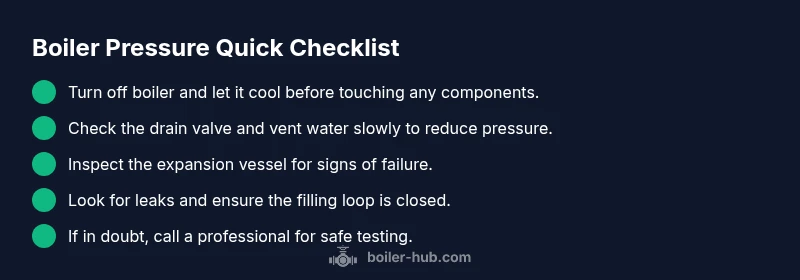
Before you call a technician, run through these quick checks:
- Verify the boiler is powered off and cool.
- Check the gauge and note the pressure value when the system is cold and when hot.
- Ensure the filling loop is fully closed if you recently topped up.
- Look for obvious leaks around radiators, joints, and the boiler discharge pipe.
- If you must vent water, use a drain valve slowly and place a tray to catch spills.
- Do not attempt to service pressure relief valves or expansion vessels yourself.
- Record readings and symptoms to share with the technician. If any step feels unsafe, stop and contact a pro immediately.
When to call a professional and what to expect
If pressure remains stubbornly high after venting, or you notice damp patches, a hissing pipe, or dripping around the relief valve, professional assessment is essential. A qualified technician will check the expansion vessel, pressure relief valve, and the filling loop, and test for leaks. They may recharge or replace the expansion vessel and, if necessary, pressure-relief components. A service visit also helps identify wear and corrosion that could cause recurring issues. Boiler Hub recommends arranging a service if you cannot safely restore pressure or if the high pressure recurs after maintenance. Remember: ongoing high pressure is not just an inconvenience — it can indicate a fault that risks damage to your boiler and piping, so prompt, professional attention is prudent.
Steps
Estimated time: 45-60 minutes
- 1
Turn off the boiler and let it cool
Switch the boiler to off at the mains switch or control panel. Allow at least 30 minutes for the unit to cool before handling any components. This reduces the risk of scalding and protects sensitive parts while you perform checks.
Tip: Wear protective gloves and keep a tray ready for any drips. - 2
Locate the drain valve and prepare to vent
Find the drain valve and connect a suitable hose to direct water away from walls and electrical components. Place a container or tray to catch water and reduce mess. Do not force valves or remove caps while the system is pressurised.
Tip: Open the drain valve slowly to control the release rate. - 3
Vent water to drop pressure
Carefully open the drain valve a small amount and let water escape until the pressure gauge shows a safe level. Close the valve gradually once the gauge reaches the manufacturer-recommended range. Re-check the gauge after cooling.
Tip: If the gauge fluctuates rapidly, stop and call a pro. - 4
Inspect the expansion vessel area
Look for signs of a failed diaphragm or a very soft expansion vessel. If you can safely recharge the vessel, do so per the manufacturer’s instructions; otherwise, arrange professional service for testing and replacement.
Tip: A faulty expansion vessel is a common cause of repeated pressure increases. - 5
Check the filling loop and leaks
Make sure the filling loop is fully closed and observe for any signs of leaks around radiators, joints, or the boiler. If leaks are present, do not attempt permanent fixes yourself; repair or replacement by a professional may be required.
Tip: Document any leaks with photos for your service visit. - 6
Reset and reinstate operation
Once the pressure is within range, turn the boiler back on and let it run through a cycle. Monitor the pressure as the system heats to ensure it remains stable and within spec.
Tip: Keep a log of readings for future reference. - 7
Bleed radiators if necessary
If radiators haven’t bled recently, air pockets can cause fluctuations. Bleed them carefully and recheck the system pressure after the cycle completes.
Tip: Use appropriate tools to avoid scalding and air-locks. - 8
Assess safety valve condition
If the pressure relief valve shows signs of leakage or frequent venting, a replacement is usually required. Schedule a service to inspect the valve and related piping.
Tip: Do not bypass or bypass-test a relief valve. - 9
Plan for a professional assessment
If pressure remains high after venting and basic checks, or if you are uncomfortable performing any step, book a professional service—this protects your home and boiler warranty.
Tip: A professional will perform a full diagnostic and safe restoration.
Diagnosis: Boiler pressure gauge climbs above the normal range after heating or shows high constant reading
Possible Causes
- highOverfilled system after maintenance or recent top-up
- highFaulty expansion vessel (diaphragm failure or loss of charge)
- mediumFaulty or leaking pressure relief valve
- lowLeak in radiators or pipes causing pressure fluctuations
- lowIncorrectly operated filling loop causing unintended topping up
Fixes
- easyTurn off the boiler, let it cool, and safely vent water via the drain valve to reduce pressure
- mediumInspect expansion vessel for fault and recharge or replace if needed (professional)
- mediumCheck and service/replace the pressure relief valve if leaking or sticking (professional)
- hardCheck for radiator or pipe leaks and repair as required (professional if needed)
Questions & Answers
What does high boiler pressure mean for my system?
High boiler pressure usually indicates the system cannot absorb thermal expansion or has a fault such as a faulty expansion vessel or pressure relief valve. It can lead to leaks or valve venting. A quick inspection and controlled venting can help, but persistent high pressure requires professional assessment.
High boiler pressure often means the system can't absorb expansion, or a valve is faulty. If it stays high, get a professional check.
What is considered a normal boiler pressure?
Normal pressure varies by boiler model, but most systems run around a low reading when cold and rise modestly when hot. Always verify with your manual. If the gauge is out of the manufacturer’s guidance range, stop and seek help.
Normal pressure depends on your model; check the manual, but don’t ignore readings outside the guidance.
Can I bleed air to reduce pressure?
Bleeding air helps balance the system, but it is not a primary fix for high pressure caused by overfilling or a faulty vessel. Bleed only if air is present and follow safety steps, then recheck pressure.
Bleeding can help if air is the issue, but it won’t fix a faulty expansion vessel.
Is it safe to attempt fixes myself?
Only perform basic checks if you feel confident and always with the boiler cooled. Many fixes require professional testing and equipment. If unsure, stop and contact Boiler Hub or a licensed technician.
If you’re unsure, it’s safer to call a professional rather than risk injury or boiler damage.
When should I call a professional?
Call a professional if the pressure remains high after venting, if you notice leaks or damp patches, or if the expansion vessel or relief valve appears faulty. Regular servicing can prevent recurring issues.
Call a pro if pressure stays high after venting or you see leaks.
Can high pressure be dangerous?
Yes. Excess pressure can lead to leaks, venting of hot water, or damage to boiler components. It is important to address it promptly and avoid delayed repair.
Yes, it can be dangerous—don’t ignore persistent high pressure.
Watch Video
Key Points
- Identify the likely causes: overfill, expansion vessel, relief valve.
- Don’t ignore rising pressure; it signals a fault that worsens with time.
- Follow a safe, incremental venting process to lower pressure.
- Keep records of readings and maintenance to prevent recurrences.
- When in doubt, call Boiler Hub for expert guidance.