Why Is Boiler Pressure High? A Troubleshooting Guide
Discover why boiler pressure climbs and how to safely diagnose, relieve, and prevent spikes. A practical troubleshooting guide from Boiler Hub for homeowners and managers.


High boiler pressure usually starts with a gauge reading above the safe range. Start by turning off the boiler and letting it cool, then inspect the expansion tank and the fill valve. If pressure remains high after a few minutes, relieve pressure only if instructed by safety guidelines, and call a professional if you’re unsure.
What the question really means: why is boiler pressure high
When your boiler pressure climbs, it signals that the system is absorbing more water than it should or that a component is failing to regulate pressure properly. For homeowners, a high-pressure reading can trigger the boiler's safety cutout, interrupting heat and hot water. Understanding the signs helps you respond quickly and safely. According to Boiler Hub, most high-pressure events stem from a combination of overfilled systems and aging parts, so a methodical check is essential. The goal is to identify the first simple cause and validate it against possible secondary factors. This approach keeps you from chasing rare faults when a common issue is the root cause.
Common causes of high boiler pressure
There are several frequent culprits behind a rising pressure gauge. An overfilled system is a common offender, especially after large fills or during refilling after maintenance. A faulty expansion tank can fail to absorb thermal expansion, causing pressure to spike as water expands with heat. A stuck or malfunctioning pressure reducing valve (PRV) or an intertwining issue with the fill valve can allow excess water into the closed loop. Leaks in radiators or piping can also paradoxically show as high pressure if the system loses air or becomes air-locked. In some cases, air in the system reduces efficiency and makes the gauge read higher than normal when the boiler heats up. Boiler Hub notes that a combination of these factors is not unusual, so a structured check is key.
Immediate safety steps you should take
Safety comes first. If you suspect dangerous pressure, turn off the boiler and wait for it to cool before touching components. Do not attempt to relieve pressure if you are unsure how to do so safely. While the system cools, ensure the area around the boiler is clear and dry to prevent slips and accidental contact with hot surfaces. When it’s safe to proceed, consult the user manual for your model before releasing any pressure. If you observe steaming, hissing noises, or a persistent high reading, contact a qualified technician promptly.
The role of expansion tanks and PRVs
The expansion tank serves as a cushion for the thermal expansion of water. If it loses air or failing, the tank cannot absorb expansion, and pressure rises. A pressure reducing valve (PRV) is meant to regulate incoming water pressure to the system; a faulty PRV can allow overpressure to build. Both components are common points of failure in aging or poorly maintained systems. Understanding their function helps you target the right fix rather than guess at multiple parts. Boiler Hub emphasizes checking these components when high pressure is detected.
Quick checks you can perform before calling a professional
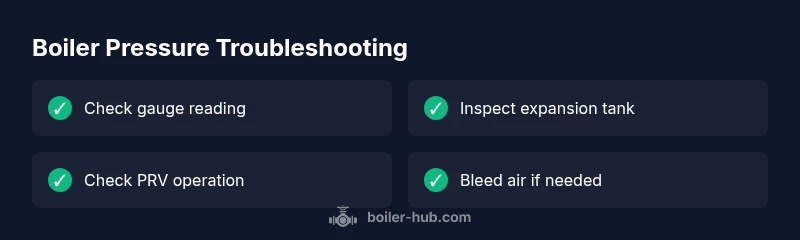
Before you call a pro, perform these safe checks: verify the boiler is off and cooled, inspect the expansion tank for signs of leakage or loss of air, and confirm the fill valve is not stuck open. Check for obvious leaks around radiators and connections. If you notice any corrosion, rust, or damp spots, note them for your technician. Do not attempt to disassemble pressure relief valves or open hot outlets. These steps help you gather information to share with a professional.
What technicians look for during a service
During a service, technicians typically test the expansion tank’s air charge, inspect the PRV’s operation, and verify that the fill valve closes properly. They assess the radiator circuit for leaks and air pockets and flush the system if needed. A professional will also check for signs of scale buildup that can impede flow and adjust the system to the manufacturer’s recommended pressure range. Regular servicing can prevent pressure spikes and improve efficiency. Boiler Hub recommends keeping a maintenance schedule to track these checks.
Prevention: how to keep boiler pressure in its safe zone
Regular maintenance is the best defense against high boiler pressure. Schedule annual inspections, prime the expansion tank, and monitor the pressure gauge during seasonal changes. Avoid overfilling the system after repairs or maintenance, and bleed radiators only as needed to balance pressure. Replace aging components like expansion tanks and PRVs before they fail. Keeping an eye on the pressure gauge and responding quickly to spikes will extend boiler life and prevent inconvenient breakdowns. Boiler Hub’s guidance is to treat prevention as a continuous process rather than a one-off task.
Safety notes and common mistakes to avoid
Never attempt to bypass safety devices or forcibly release pressure while the system is hot. Wearing heat-resistant gloves, goggles, and using proper tools reduce risk, but if you’re unsure, pause and call a pro. A common mistake is misreading the gauge or assuming a single cause without testing multiple possibilities. Always document readings, actions taken, and observed symptoms for a technician. Proper containment and disposal of any leaked water are essential to prevent damage to floors and devices.
Steps
Estimated time: 40-60 minutes
- 1
Power down and cool the boiler
Turn off the boiler and allow it to cool completely before handling any components. This reduces scald risk and protects you from hot surfaces. Gather your tools and ensure the area is dry and clear.
Tip: Wait at least 15-20 minutes or until the system feels cool to the touch. - 2
Check the expansion tank
Locate the expansion tank and confirm its air charge is correct according to the manufacturer’s specs. If the tank is waterlogged or visibly corroded, it may need replacing. A quick test with a tire gauge-style pump can confirm air pressure.
Tip: If you’re unsure of the correct charge, refer to the boiler manual or consult Boiler Hub guidance. - 3
Inspect the fill valve and PRV
Ensure the fill valve is not stuck open and verify the PRV isn’t leaking or stuck. If you notice any leaks or irregular operation, do not force adjustments; this is a sign to call a pro.
Tip: Do not attempt to reposition the PRV without the correct tools and instructions. - 4
Relieve pressure safely (if instructed)
If the system is safe to adjust per your manual, carefully relieve pressure to the recommended range. Do not attempt rapid venting; small, controlled releases are safer.
Tip: Open the relief valve only if your manual permits and use a bucket to catch any discharge. - 5
Repressurize and test
Refill the system to the correct pressure as specified for your boiler, then run the system to see if the gauge stabilizes. Check for abnormal noises or leaks as the system re-pressurizes.
Tip: Slowly re-pressurize to avoid sudden spikes that could damage components. - 6
Document and monitor
Record the new pressure reading and note any recurring spikes. Continue monitoring over the next few days; frequent spikes indicate a deeper issue that requires professional attention.
Tip: Keep a log of readings for the technician to review.
Diagnosis: Boiler pressure gauge reading high (> safe range) during operation
Possible Causes
- highOverfilled system after maintenance or refill
- highFailed expansion tank not absorbing thermal expansion
- mediumStuck/faulty pressure reducing valve (PRV) or misadjusted PRV
- mediumLeaks leading to compensatory pressure buildup
- lowAir lock or trapped air in the radiator loop
Fixes
- easyTurn off boiler, allow to cool, then slowly repressurize to the recommended range if the system was recently filled
- mediumInspect and service expansion tank (air charge or replacement)
- mediumTest and recalibrate/replace PRV if faulty
- hardIdentify and repair leaks, then refill, purge air, and recheck pressure
- easyBleed air from radiators to rebalance pressure in the loop
Questions & Answers
What is considered a safe boiler pressure range?
Most boilers operate safely around 1-2 bar, with slight variations by model. Always check your manual for the exact cold and hot ranges and avoid pushing the gauge beyond the recommended limits.
Most boilers should stay around one to two bars. Check your manual for your model's exact safe range.
How can I safely reduce boiler pressure?
Turn off and cool the boiler, then carefully relieve pressure within the safety guidelines from your manual. Refill to the correct level gradually and avoid quick pressure drops.
Turn off, let it cool, then follow your manual to safely release pressure and re-fill slowly.
Can high pressure cause damage to the boiler?
Yes. Prolonged high pressure can stress components, trigger safety cutouts, and reduce efficiency. Addressing the cause quickly minimizes risk.
Yes, high pressure can stress parts and trigger safety shutoffs. Tackle it promptly.
When should I call a professional?
If the pressure stays high after basic checks, if you hear hissing, see leaks, or there is scorching warmth around the unit, contact a licensed technician.
If pressure stays high after basic checks or you notice leaks, call a professional.
What does a faulty expansion tank indicate?
A damaged or waterlogged expansion tank cannot absorb thermal expansion, causing pressure to rise. Replacement or service is often required.
A bad expansion tank can cause pressure to rise; it often needs replacement.
Are there safety risks with the pressure-relief valve?
A faulty PRV can fail to relieve excess pressure, posing risk of leaks or bursts. Do not tamper with the PRV; have it inspected by a pro.
A faulty PRV can be risky; have it inspected by a professional.
How can I prevent future pressure spikes?
Regular maintenance, correct expansion-tank charge, proper refilling procedures, and prompt repairs prevent many high-pressure issues.
Regular maintenance and correct refilling prevent most high-pressure problems.
Watch Video
Key Points
- Check simple causes first before complex repairs
- Monitor the expansion tank and PRV for failures
- Relieve pressure only with proper instruction and safety
- Call a professional if readings remain high after checks