What to Do If Boiler Pressure Is Low
Learn how to diagnose and fix low boiler pressure safely with our step-by-step guide. Repressurize, bleed radiators, and know when to call a professional. Based on Boiler Hub Analysis, 2026 insights.


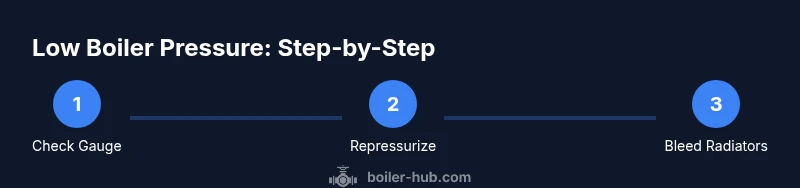
If boiler pressure is low, you can usually re-pressurize it using the filling loop, then bleed radiators to remove air and test the system. Start by turning off the boiler, checking for leaks, and consulting the manufacturer's guide. If pressure remains low or you notice leaks, contact a qualified heating engineer.
Understanding boiler pressure and why it drops
Boiler pressure is the force that pushes hot water through your heating system. When pressure drops, you may notice the boiler cycling on and off more frequently, radiators taking longer to heat, or cold spots on chilly mornings. For homeowners, understanding what the gauge indicates and how the boiler brand’s recommended range is set is the first step in safely diagnosing issues. According to Boiler Hub, many low-pressure events are caused by small leaks, air entering the system during radiator bleeding, or after work on the pipes. The gauge is typically marked with a minimum and maximum range; staying within that window is essential to keep the system primed and to avoid air pockets that hinder circulation. If you see the needle sitting near or below the minimum line when the system is cold, approach the task with caution and plan a test routine during daylight hours when you can monitor for drips or hissing from joints. Always have the boiler’s manual handy and treat any sign of hissing, banging, or pooling water as a potential warning sign.
Common causes of low pressure
Low boiler pressure doesn’t always mean a dangerous fault; in many homes it stems from a mix of routine wear and maintenance. First, gradual leaks at joints, valves, or the pressure relief valve can slowly erode pressure over days or weeks. Second, air can be introduced to the system when radiators are bled or after a water refill. Third, a faulty expansion vessel or pressure relief valve can prevent the system from maintaining pressure as the water expands and contracts with heating cycles. Finally, a lost seal or tiny crack in the heating circuit may appear minor at first but can cause measurable pressure loss when hot water circulates. Boiler Hub’s guidance emphasizes identifying the exact source before attempting corrective action, since the remedy ranges from simple tightening to component replacement.
Immediate safety steps before you start
Before touching any boiler components, ensure safety for you and others. Switch off the boiler and power supply to prevent accidental ignition or electric shock. If you notice a strong gas odor, evacuate and call the gas emergency number. Place a thick towel or rag over any drips to catch them and wear gloves to protect your hands. Keep children and pets away. Have the manual open to locate the correct pressure range and the procedures for using the filling loop. If you’re uncertain at any point, pause and call a qualified technician. The aim at this stage is to reduce risk while you prepare the system for re-pressurization, ensuring you haven’t missed a visible leak or swollen pipe joint.
How to safely repressurize a boiler
Repressurizing is the core skill for addressing low pressure, but it must be done in the correct sequence. Start by locating the filling loop and ensuring the valves are in the closed position. Attach the filling loop if required by your model, then slowly open the valves while watching the pressure gauge. When the gauge reaches the manufacturer’s recommended range, close the valves firmly and recheck. Restart the boiler and give it time to cycle; the gauge should stabilize as the system heats. If readings rise quickly or you hear unusual noises, stop and shut the boiler down, as this could indicate an over-pressurized circuit or water hammer. Work in daylight if possible and avoid leaning over hot surfaces. If you’re unsure about valve operation, consult your manual or a professional.
Bleeding radiators to remove air and balance pressure
Bleeding radiators is often necessary after repressurizing because air trapped in radiators can push against water and reduce effective system pressure. Begin with the radiators on the highest floor first, then move downward. Use a bleed key to open the valve slowly; you should hear a hissing sound as air escapes. When water begins to come out in a steady stream, close the valve promptly. Place a cloth underneath to catch drips; hot water can scald, so proceed with care. Check the pressure gauge again after bleeding and top up if necessary using the steps above. If you notice a persistent drip from the bleed valve or the radiator’s valve stem, a fault may require replacement parts. The goal is to remove air without excessive water loss that destabilizes pressure.
Post-repressurization checks and maintenance tips
With the pressure stabilized, run the boiler for a full cycle and observe the pressure gauge across heating and hot-water cycles. If the level remains steady within the recommended range, you likely fixed the issue. Record the time and reading to compare against future fluctuations. Look for leaks in joints, valves, and the expansion vessel area, and consider a pressure test if you notice dampness or corrosion. Regular maintenance, such as annual service and radiators bled as needed, reduces the chance of sudden pressure loss. Boiler Hub’s approach is practical: address small faults early, monitor performance, and plan a professional inspection if the problem recurs.
Troubleshooting persistent pressure drop and when to call a pro
Not all low-pressure events are the same. If pressure returns to normal after repressurizing but drops again within a few days, you likely have a slow leak or a faulty expansion vessel. Do not repeatedly re-pressurize; persistent loss indicates an underlying issue requiring diagnostic equipment. A licensed heating engineer will perform a pressure test, inspect the expansion vessel, check the boiler’s seals, and test the circuit for leaks without risking water damage or gas safety. The Boiler Hub team recommends scheduling a professional assessment if low pressure recurs or if you notice signs of corrosion, dampness around joints, or unusual boiler noises. Safety comes first, and when in doubt, seek professional evaluation.
Tools & Materials
- Boiler manufacturer's manual(Keep handy to follow the correct pressure range and valve operations)
- Filling loop kit(Required for re-pressurizing, compatible with your boiler model)
- Radiator bleed key(Used to release trapped air from radiators)
- Bucket or tray(Catch drips during bleeding or filling)
- rag or towels(Protect surfaces and absorb leaks)
- Gloves(Protect hands when handling hot components)
- Torch or flashlight(Illuminates tight access points)
Steps
Estimated time: 45-75 minutes
- 1
Prepare and safety check
Power down the boiler and switch off any isolation switches. Inspect the area for obvious leaks, hot surfaces, or damaged pipes. Gather all tools and the manual before you begin, and inform others in the home that you will be working near the boiler.
Tip: Have a bucket under the filling loop to catch drips and keep towels handy. - 2
Check current pressure against the manual
Read the pressure gauge with the boiler cold to establish a baseline. Compare the reading to the range specified in your boiler manual. If it is below the recommended range, you’re likely dealing with low pressure that needs re-pressurization.
Tip: Note the initial reading for later comparison after repressurization. - 3
Connect filling loop and repressurize
Attach the filling loop if required by your model. Open the valves slowly, watching the gauge closely. When the pressure reaches the manufacturer’s range, close the valves firmly and re-check.
Tip: Open valves slowly to avoid sudden pressure surges or water hammer. - 4
Restart boiler and observe
Turn the boiler back on and monitor its cycle. Allow the system to heat and re-check the pressure on the gauge as it stabilizes. Do not rely on a single reading—watch for consistency across cycles.
Tip: If the gauge climbs too quickly, shut down and reassess; you may have overfilled. - 5
Bleed radiators to remove air
Starting with the highest radiator, use the bleed key to release air gradually. When water flows steadily, close the valve. Repeat for other radiators as needed.
Tip: Bleeding can cause a temporary drop in pressure—recheck afterward and top up if needed. - 6
Final checks and documentation
Confirm the pressure remains in the correct range after a full heating cycle. Document readings and any leaks found. If pressure still fluctuates, arrange a professional inspection.
Tip: If you notice damp patches or corrosion, stop and call a professional immediately.
Questions & Answers
Why is my boiler pressure low?
Low pressure is commonly caused by small leaks, air entering the system, a faulty expansion vessel, or a failing pressure relief valve. Each cause requires a different remedy, so you should identify the source before attempting fixes.
Low pressure is usually from leaks, air, or a faulty component. Identify the source before trying fixes.
Is it safe to repressurize my boiler myself?
Repressurizing is generally safe if you follow the boiler’s manual and use proper safety precautions. Stop and contact a professional if you detect leaks, gas smells, or unusual noises.
You can usually repressurize yourself if you follow the manual; stop if you detect leaks or gas smells.
What should I do if the pressure gauge drops after refilling?
Shut the boiler down and inspect for leaks in joints or the expansion vessel. If the drop persists, a professional inspection is advised to check for hidden leaks or component faults.
If the gauge drops again after refill, check for leaks and consider a professional inspection.
How often should I bleed radiators?
Bleed radiators when they feel cold at the top or you hear air movement. It isn’t routine maintenance but a response to air trapped in the system. Do not over-bleed, which can lower pressure.
Bleed when you hear air or feel cold spots; don’t over-bleed.
When should I call a professional?
Call a professional if pressure drops repeatedly, you smell gas, see corrosion, or the boiler fails safety tests. Recurrent issues suggest an underlying fault that needs diagnostic equipment.
Call a pro if pressure keeps dropping or you smell gas.
Can a low pressure indicate a hidden leak?
Yes. A persistent or hidden leak can slowly reduce pressure. A professional can perform a pressure test to locate hidden leaks and verify the integrity of seals and joints.
Yes, it can indicate a hidden leak; a test can locate it.
Watch Video
Key Points
- Check the gauge before taking action
- Repressurize only within the manufacturer range
- Bleed radiators to remove air
- Monitor pressure across heating cycles
- Call a professional if pressure cannot stabilize