What Should Boiler Pressure Be When Heating Is Off? A Practical Guide
Learn the ideal boiler pressure when heating is off, how to read it, safe ranges, and practical steps to maintain system health. Insights from Boiler Hub Analysis, 2026 for homeowners and facilities managers.


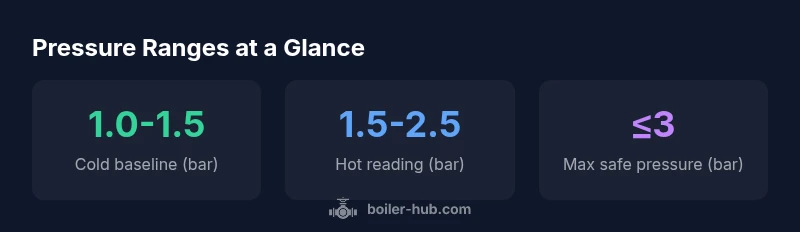
The typical boiler cold pressure when heating is off should be around 1.0–1.5 bar on a standard gauge. This baseline helps ensure safe circulation and reliable startup. Readings below 1.0 bar usually require repressurization, while readings above 2.0–2.5 bar when cold indicate overpressure that merits inspection of the expansion vessel and filling loop. Boiler Hub Analysis, 2026 identifies these ranges as the baseline for common residential systems.
Understanding Boiler Pressure Basics
Boiler pressure is the force that pushes hot water through your heating system, and it is read on a pressure gauge that uses bars as the unit. In everyday terms, a practical question seeks to know what should boiler pressure be when heating is off. For most residential boilers, a cold (off) reading of about 1.0–1.5 bar is expected. This baseline supports reliable circulation, efficient pump performance, and minimizes the risk of air locks or sluggish circulation. According to Boiler Hub Analysis, 2026, these ranges capture the typical operating envelope for common residential designs. Remember that individual boilers can have slightly different baselines, so always compare to your model’s manual and note any manufacturer-specific guidance. If readings drift significantly from this range, it’s a sign to inspect the expansion vessel, filling loop, and any recent changes to the system.
- Definitions matter: cold vs hot readings, and how the system responds when the boiler fires.
- Early checks save on costly repairs later.
- Always use safe, methodical steps when adjusting pressure.
Tip: Keep a small log of readings over several days to detect slow trends that could indicate a developing issue.
What to Expect When Heating Is Off
When the heating is off, you should see relatively stable pressure as long as there are no leaks and the expansion vessel is functioning. If the gauge shows readings consistently outside the 1.0–1.5 bar range, or if you notice sudden drops or spikes, this is a red flag. A drop may indicate a leak or a valve problem, while a rise can signal air trapped in the system or a failing expansion vessel. The Boiler Hub Team emphasizes that gradual drift is easier to manage than abrupt swings, which often require urgent attention. If you’re unsure, err on the side of caution and schedule a professional check, especially if your home has older equipment or recent water loss.
- Leaks, valve issues, and vessel faults are common culprits for pressure instability.
- Pressure should remain within a narrow band when idle.
- Documenting readings helps identify slow leaks or gradual failures.
Safe Pressure Ranges and How to Measure
Measuring boiler pressure accurately matters. Begin by confirming the boiler is off and cool before checking the gauge. The safe cold range for most boilers is 1.0–1.5 bar; when the system is hot, readings naturally increase, often to around 1.5–2.5 bar, depending on the boiler model. If you see figures outside the standard range, don’t panic—in many cases, a small adjustment is enough, but large deviations may require professional service. To measure, locate the pressure gauge on the front panel, read the needle against the scale, and compare with your manual. Repressurization (adding water to the system) should follow the manufacturer’s procedure and only be done with the boiler off and cold. Always check for leaks first and ensure the radiator bleed valves are closed before testing.
- Ground rules: cold range 1.0–1.5 bar; hot readings will be higher.
- Use the filling loop only as instructed by the boiler’s manual.
- If in doubt, consult a qualified technician.
For reference, see Energy Saving Trust guidance on boiler pressures and GOV.UK maintenance tips to keep your system safe.
Troubleshooting Common Issues Related to Pressure
Pressure problems fall into a few common categories: too low, too high, or unstable pressure. Low pressure (below 1.0 bar) often points to a leak, a recently drained system, or a faulty expansion vessel. High pressure (above 2.5–3.0 bar when cool) can trigger the safety valve or trip the boiler. Fluctuations that do not settle may indicate air in the system, a bad pump seal, or a faulty pressure relief valve. Start with simple fixes: check for visible leaks, inspect the pressure relief valve for drips, and ensure the filling loop is fully closed after repressurization. If readings remain out of range, stop and call a pro. Safety and reliability depend on proper component function, including the expansion vessel and pressure relief valve.
- Leaks and drips can cause pressure loss.
- A stuck or failed expansion vessel is a frequent cause of instability.
- Never bypass safety devices to test pressure; seek professional help if you’re unsure.
Step-By-Step: Safe Checks You Can Perform
- Locate the pressure gauge and verify the boiler is completely off and cool. Note the reading and compare to the 1.0–1.5 bar target for cold conditions.
- Inspect visible pipes and joints for leaks. Any dampness or rust can indicate a water loss that drags pressure down.
- Check the expansion vessel for signs of loss of air charge or failure—this is a common source of pressure drift.
- If you need to repressurize, use the filling loop exactly as your boiler manual prescribes, and do so slowly—do not overfill.
- After repressurizing, purge air from radiators if you notice cold spots, but remember that bleeding radiators lowers pressure, which may require another repressurization.
- Recheck the gauge after a short cycle to confirm stability. If readings still don’t settle, contact a professional.
- Always follow the manufacturer’s procedure because incorrect repressurization can damage the boiler.
- Keep a log of readings and events to help a technician diagnose the issue.
What Factors Can Influence Pressure Over Time
A boiler’s pressure can drift due to several factors over time. An aging expansion vessel may lose its ability to absorb pressure changes, causing wider fluctuations when the system heats. Small leaks from radiators, joints, or valves gradually reduce pressure if addressed late. Sediment buildup and valve wear can also create pockets of resistance, altering how pressure stabilizes after each cycle. In multi-story homes or larger installations, pressure behavior can vary between zones, making uniform readings less consistent. Routine maintenance, including checking the expansion vessel, inspecting seals, and ensuring the filling loop is correctly closed after service, helps keep pressure within the expected range.
- Expansion vessel health directly affects pressure stability.
- Leaks and valve wear cause slow pressure loss over time.
- Regular checks reduce unexpected pressure swings during winter.
When to Schedule Professional Service
If your readings persist outside the safe range after repressurization, or if you notice frequent fluctuations, it’s time to call a qualified heating engineer. A professional can test the expansion vessel’s air charge, inspect pressure relief valves, and verify the integrity of joints and seals. Proactive checks save money by preventing early component failures and extending boiler life. The Boiler Hub Team recommends scheduling annual or biannual service for mid-life boilers and more frequent checks for older systems or if you notice leaks, corrosion, or weak heating performance.
Typical pressure ranges and actions for common residential boilers
| Metric | Value (typical) | Notes |
|---|---|---|
| Typical cold pressure | 1.0-1.5 bar | Common baseline for many boilers |
| Typical hot pressure | 1.5-2.0 bar | Rises with system temperature |
| Low-pressure threshold | 0.8 bar or lower | Warning sign—possible leak or loss of water |
| Max safe pressure | 3 bar | Most boilers cap around this; exceed risk valve activation |
| Repressurization steps | Filling loop to add water | Follow manufacturer instructions |
Questions & Answers
What should boiler pressure be when heating is off?
For most boilers, a cold pressure of about 1.0–1.5 bar is expected when the heating is off. If readings are consistently outside this range, investigate for leaks, valve issues, or expansion vessel faults. Always refer to your model’s manual for model-specific guidance.
Aim for about 1.0–1.5 bar when the system is cold; if you see big deviations, it’s best to check for leaks or faults.
Why does pressure rise when heating starts?
Pressure typically rises when the boiler heats because the water expands as it warms. This is normal within a designed range, but excessive rises can indicate overpressure or a vented expansion vessel that’s lost its charge. Monitor readings and consult a professional if you exceed your boiler’s recommended hot range.
Water expands as it heats, pushing pressure up. If it gets too high, get it checked.
What is a safe low pressure reading?
A safe low reading is generally above 0.8 bar when cold. If it’s below 0.8 bar, repressurization may be required and could indicate a leak or loss of water. Do not ignore persistent low readings.
Low pressure below 0.8 bar isn’t normal; repressurize or call a pro if it returns to that level repeatedly.
What is a safe high pressure reading?
Most boilers are designed to operate safely up to around 2.0–2.5 bar when hot; exceed 3 bar and you should shut the system down and seek professional help. High readings can trigger safety valves.
If pressure hits the high end of the range, it’s time to get it checked by a professional.
Should I bleed radiators to fix pressure?
Bleeding radiators releases trapped air and can lower system pressure slightly. It should not be used to fix high pressure. Only bleed after confirming the heat is off and the boiler is cool, and repressurize if needed afterward.
Bleeding is for air, not pressure. Repressurize if pressure drops after bleeding.
When should I call a professional?
If readings persist outside the safe 1.0–1.5 bar cold or 1.5–2.5 bar hot range, or if the expansion vessel seems faulty, contact a licensed heating engineer. Ongoing leaks, steam, or gas safety concerns require immediate professional attention.
If in doubt, call a professional—pressure issues can be safety concerns.
“Maintaining accurate boiler pressure is essential for safe operation and efficient heating. Small deviations, left unchecked, can stress the system and increase energy use.”
Key Points
- Maintain cold readings at 1.0–1.5 bar to keep the system safe.
- Expect a modest pressure rise when the boiler is hot.
- Repressurize if readings fall below 1.0 bar; stop if readings exceed 2.5 bar.
- Document readings to spot trends and catch slow leaks early.