When a boiler is off: what should the pressure be
Learn the proper boiler pressure range when the system is off, how to check it safely, and what actions to take if readings fall outside the safe window. Boiler Hub provides practical guidance for homeowners and facility managers.


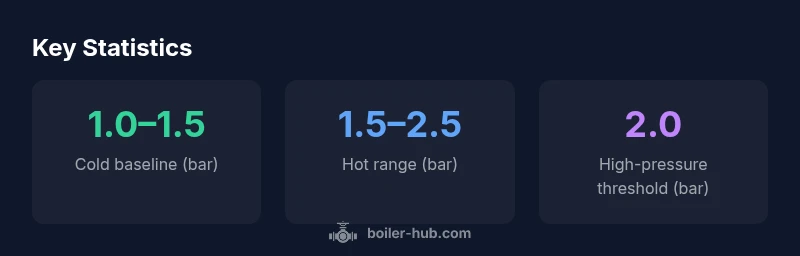
When a boiler is off, the pressure should read roughly 1.0–1.5 bar on a cold system (about 14.5–22 psi). This is the typical baseline for most homes. If the pressure sits consistently below 1.0 bar, or rises above 2.0 bar, the system may have a leak or expansion problem and should be checked by a qualified technician. Always consult your boiler manual for exact figures.
Understanding boiler pressure basics
According to Boiler Hub, boiler pressure is a function of the closed-loop heating system and expands as water heats. In most homes, the cold baseline pressure sits around 1.0–1.5 bar. When the boiler is off, this baseline becomes a critical reference point: staying within roughly 1.0–1.5 bar helps ensure the expansion tank, valves, and gauge aren’t overworked. If your gauge reads well outside this range, it’s a signal that something in the loop may be flawed, whether a leak, air in the system, or a faulty pressure sensor. The goal is stable pressure that doesn’t fluctuate dramatically with seasonal use or minor temperature changes. Boiler Hub Analysis, 2026, emphasizes that correct baseline pressure is a foundation for safe operation and efficient heating.
Cold vs hot pressure: what changes and why
The pressure you see on the gauge can change with temperature. When the system is cold, many boilers target about 1.0–1.5 bar. As the water warms, it expands and the gauge climbs; a typical hot reading might range up to about 2.0–2.5 bar on many models. Different boilers have different tolerances, so always check your manual for exact numbers. The important point is that hot pressure will be higher than cold, but should remain within the manufacturer’s specified range. This variability is normal, and a well-maintained system should remain within safe limits.
What to do if your pressure is too low
If the reading is consistently below 1.0 bar when the boiler is off, there could be a leak in the system, a fault in the expansion tank, or an airlock that gradually lowers the pressure. Low pressure reduces radiator heat output and can hinder overall performance. Do not ignore a sustained low reading; it may indicate a slow leak or a faulty fill valve. The prudent course is to arrange a professional inspection to diagnose leaks, inspect the expansion vessel, and verify the pressure relief components are functioning correctly.
What to do if your pressure is too high
A pressure reading above the safe high threshold signals that the system is under excessive stress, especially when the boiler is heating. High pressure can stress seals and joints, increasing the risk of leaks or equipment damage. In many homes, a persistent reading above 2.0 bar (when off) or 2.5–3.0 bar while heating requires professional assessment. Do not attempt to suppress pressure with improvised fixes; high pressure often points to air in the system, a faulty expansion tank, or a defective pressure relief valve that needs inspection by a pro.
How to check pressure safely and interpret gauges
Begin by locating the pressure gauge on the boiler control panel. Read the cold-range value when the system is off and cold. If the gauge has a scale in bars, interpret 1.0–1.5 bar as the target cold range. If your model uses psi, remember that 14.5 psi equals 1.0 bar and 22 psi equals ~1.5 bar. When readings are outside the safe range, refer to the manual or contact a licensed technician. Always ensure the boiler is de-energized before attempting any inspection to avoid electric shock, and never open pressure vessels without proper training or protective equipment.
Common causes of pressure deviations in boilers
Boiler pressure deviations can arise from leaks, a failing expansion vessel, air in the system, faulty gauges, or a compromised pressure relief valve. Seasonal contraction and expansion due to temperature shifts can cause minor fluctuations, but persistent deviations demand attention. In some cases, a calibration issue or sensor fault can misreport pressure, making the system appear unsafe even when it’s within normal limits. Regular inspection helps catch these issues before they become costly problems.
Quick maintenance tips to protect pressure stability
Schedule annual boiler servicing with a qualified technician to verify gauge accuracy, test safety valves, and ensure the expansion vessel is properly charged. Keep the filling loop in good condition and check for fast leaks around pipework and radiators. Bleeding radiators can release air and improve overall pressure consistency. Finally, maintain consistent heating habits: long, steady heating cycles tend to stabilize pressure better than short, abrupt heat changes.
When to call a professional
If you notice persistent pressure readings outside the normal cold range, or you experience repeated pressure fluctuations that do not respond to a basic inspection, stop using the boiler and call a licensed technician. Boilers are closed systems where incorrect adjustments or DIY repairs can create safety hazards, including the risk of carbon monoxide exposure. The Boiler Hub team recommends professional assessment when readings diverge from the baseline 1.0–1.5 bar cold range or when hot-range limits are exceeded.
Boiler pressure ranges by state
| Situation | Cold pressure | Hot pressure | Notes |
|---|---|---|---|
| Idle/off (cold system) | 1.0–1.5 bar | N/A | Baseline when cold |
| During operation (hot) | N/A | 1.5–2.5 bar | Pressure rises with heat |
| Low-pressure warning | below 1.0 bar | N/A | Possible air/leak in system |
| High-pressure warning | above 2.0 bar | N/A | Expansion issue risk |
| Maintenance tip | N/A | N/A | Regular checks recommended |
Questions & Answers
What is the normal boiler pressure when the system is off?
For most homes, when the system is cold and off, boiler pressure should be about 1.0–1.5 bar. If it’s consistently outside this range, there may be a leak or expansion issue. Check your model’s manual for exact figures and contact a professional if unsure.
Normal cold pressure is typically 1.0 to 1.5 bar. If it’s outside this range, have a professional check the system.
Low pressure: what should I do?
If pressure is below 1.0 bar when off, there may be a leak or air in the system. Do not ignore a sustained low reading. Schedule a professional inspection to diagnose leaks and verify expansion vessel functionality.
Low pressure means there could be a leak or air; get a professional check.
High pressure: what should I do?
A reading above the safe high threshold suggests the system is under too much stress. Seek professional assessment promptly to check expansion vessel, pressure relief valve, and for possible air in the system.
High pressure needs professional assessment to prevent damage.
Can I adjust boiler pressure myself?
Many boilers require specialized procedure to adjust pressure and may involve a filling loop. If you’re not trained, don’t attempt DIY adjustments; contact a licensed technician to prevent injury or damage.
Don’t attempt DIY pressure tweaks unless you’re trained.
Does heating affect boiler pressure?
Yes. Pressure typically rises as the boiler heats up due to water expansion. The gauge should show higher readings when hot but stay within the model’s safe range.
Heating makes pressure rise; expect higher readings when hot.
“Maintaining the correct boiler pressure is essential for safe operation; readings outside the normal cold range usually indicate a leak, air in the system, or a faulty gauge.”
Key Points
- Keep cold pressure between 1.0 and 1.5 bar.
- Monitor hot pressure; avoid exceeding 2.5 bar during heating.
- Low readings often signal leaks or air in the system.
- High readings require professional assessment.
- Consult the boiler manual for model-specific ranges.