Ideal Boiler Pressure: What It Should Be When the Boiler Is On
Learn the correct boiler pressure ranges for operating steam and hot water systems. This guide explains safe hot vs cold pressures, how to check gauges, and practical steps to maintain stability for reliable heating.


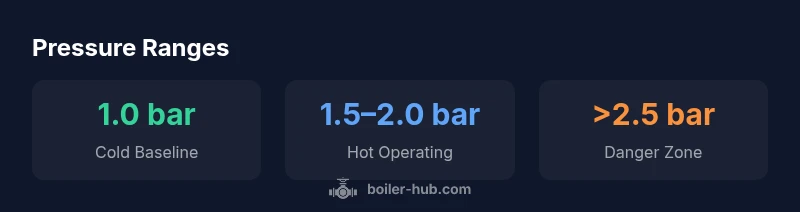
According to Boiler Hub, when the boiler is on, the normal operating pressure should be in the range of about 1.0–2.0 bar (roughly 14.5–29 psi). Most systems rise to around 1.5–2.0 bar when hot. If the pressure stays below 1.0 bar or rises above 2.5 bar, you should schedule maintenance or service. When boiler is on what should the pressure be? Aim for roughly 1.5–2.0 bar while hot, with a cold baseline near 1.0 bar.
Understanding Boiler Pressure Basics
Boiler pressure is a reading that tells you how much pressure your heating system uses to push hot water through radiators and pipes. Measured in bars (and often shown in psi on some gauges), it changes as the boiler starts, heats, and circulates water. In most modern residential boilers, a safe operating pressure while the boiler is running is approximately 1.0–2.0 bar. This interval ensures reliable heat delivery without stressing components. For home owners and facility managers, knowing the typical cold and hot ranges helps you spot anomalies quickly. To address the specific question when boiler is on what should the pressure be, the short answer is: look for about 1.5–2.0 bar when the system is hot, with a cold baseline near 1.0 bar. If you observe consistently outside these values, there may be a leak, a faulty expansion tank, or the system requires service. Manufacturers publish precise targets tailored to your model, so always cross-check with your manual. The take-away: pressure is not a fixed number; it moves with temperature, water volume, and the integrity of the piping. A safe gauge reading gives you a reliable signal that your boiler is functioning as designed.
Boiler Hub’s ongoing analysis emphasizes that staying within the manufacturer’s stated range reduces wear on the heat exchanger and improves efficiency. Regular checks align with best practices for both homeowner comfort and facility management.
How Pressure Changes When the Boiler Is On
Pressure naturally fluctuates as the boiler cycles on and off. When the boiler starts heating, the water expands and pressure rises; as the system cools, pressure falls. The expansion tank and automatic filling valve work together to keep this swing within the safe window. In practice, many boilers show cold readings around 1.0 bar and rise toward 1.5–2.0 bar once the radiators begin to warm. If your system creeps above 2.5 bar, the relief valve or safety thermostat may engage, and you should pause use and inspect or service the system. Boilermaking manuals typically state a hot-range target; deviations can signal leaks, air in pipes, or a failing expansion vessel. By understanding these dynamics, you can distinguish normal cycling from a developing fault.
How to Check If Your Pressure Is Within Safe Range
Start by locating your boiler pressure gauge. Most gauges show a clear bar scale; some display a PSI conversion on the dial. With the system cold, note the baseline—many boilers sit near 1.0 bar. Turn on the boiler and let it reach its normal operating temperature; observe the dial as the system heats. Safe ranges typically fall between 1.0–2.0 bar hot, and around 1.0–1.5 bar when cold. If you’re below 1.0 bar cold or above 2.5 bar hot, consult the manual or contact a technician. Always confirm the target range for your exact model, as some high-efficiency or system boiler configurations require tighter tolerances. For ongoing accuracy, keep a log of readings across seasons and note any persistent shifts.
If you routinely notice readings outside these bands, it may indicate a slow leak, an expanding water column, air in the system, or a failing expansion vessel.
Common Causes of Pressure Deviations and Solutions
Common issues that push pressure out of range include small leaks in joints or radiators, a faulty expansion tank that allows too much expansion, or an overworked pressure relief valve. Corrosion and scale buildup inside pipes can also alter effective water volume, changing pressure dynamics. Solutions vary by cause: tightening loose fittings, replacing a faulty expansion vessel, or refilling and repressurizing according to the manufacturer’s procedure. Regular radiator bleeding can also reduce localized pressure imbalances by removing trapped air. If you detect a deliberate loss of pressure after topping up, investigate potential leaks and monitor over several days. Before taking action, consult your boiler’s manual for the exact steps and safety precautions.
When to Call a Pro and What to Expect
If the pressure spikes suddenly, if you hear hissing from the pipes, or if the gauge stays outside the safe band after a reset, call a qualified boiler technician. A professional can perform a pressure test, inspect the expansion vessel, and check for hidden leaks. Expect a service visit to include a pressure check with the system hot and cold, valve inspections, and potential re-pressurization. The technician may also advise a replacement expansion tank or a system flush if mineral buildup is contributing to instability.
Maintenance Tips to Keep Pressure Stable
To maintain stable pressure, schedule periodic checks as part of routine boiler maintenance. Regularly inspect radiators for leaks, bleed trapped air, and verify the expansion tank’s charge if applicable. Keep your boiler area clean and free from obstructions so that the pressure relief valve can operate freely. If your system uses a fossil-fuel boiler, ensure the flue and venting are clear to prevent pressure anomalies from backdrafts. Use a fixed dilution schedule whenever possible—this means refilling to manufacturer-recommended pressures after any top-ups and avoiding overfilling. A simple monthly check can catch gradual drifts before they become major issues.
Safety Considerations and Quick Troubleshooting
Pressure-related issues can affect boiler safety and efficiency. Never bypass the safety relief valve or attempt to drive top-ups beyond the manufacturer’s stated range. If you notice leaks, never weld directly on a live pipe; shut off power and water and call a pro. For quick checks, confirm that the cold baseline is near the recommended value, that hot readings remain within the stated range during operation, and that the expansion tank is intact. If you’re unsure, treat it as a potential risk and arrange for professional assessment.
Typical pressure behavior across operating states
| Scenario | Cold Pressure | Hot Pressure | Typical Range (bar) |
|---|---|---|---|
| Cold boiler (idle) | 1.0 bar | 1.0 bar | 1.0–1.5 |
| Heating cycle | 1.0–1.5 bar | 1.8–2.0 bar | 1.5–2.0 |
| Normal hot range | — | 1.5–2.0 bar | 1.5–2.0 |
Questions & Answers
What should boiler pressure be when the boiler is on?
When the boiler is on, aim for about 1.5–2.0 bar. Cold readings are typically around 1.0 bar. Check your model’s manual for exact targets, as some configurations require tighter tolerances.
Aim for 1.5 to 2.0 bar when hot, and about 1.0 bar when cold. Always verify your specific model's targets.
What if the pressure is too high?
If the gauge exceeds 2.5 bar, stop using the boiler and consult a technician. High pressure can trigger safety devices and indicate leaks or a failing expansion vessel.
If it goes above 2.5 bar, shut down and call a pro right away.
What if the pressure is too low?
Low pressure (below about 1.0 bar when cold) can mean a leak or water loss. Refill according to the manual, but if it drops again, have a professional inspect the system.
Low pressure means trouble; refill following the manual and call a pro if it keeps dropping.
How do I check the pressure gauge correctly?
Locate the pressure gauge on the boiler, read the bar scale, and compare to the manufacturer’s safe range for cold and hot states. Record readings over several cycles for consistency.
Look at the gauge, note the bar, and compare to your manual’s range.
Can an expansion tank help with pressure stability?
Yes. A proper expansion tank absorbs the water volume changes as water heats, reducing pressure swings. If it’s faulty, pressures may spike.
Expansion tanks dampen pressure swings—check if yours needs service.
Is some fluctuation normal during heating?
Yes, some fluctuation is normal as the boiler heats. However, persistent, large swings should be inspected to rule out leaks or component failures.
Some fluctuation is normal, but big swings aren’t. Get it checked if unsure.
“Maintaining correct boiler pressure is essential for safe operation, efficient heat transfer, and extending the life of the system.”
Key Points
- Know the safe hot range: 1.5–2.0 bar.
- Check cold baseline around 1.0 bar.
- Don’t ignore readings outside the manufacturer’s targets; consult a pro.
- Regular maintenance stabilizes pressure and efficiency.