What Pressure Should a Boiler Be At: Essential Guidelines
Discover safe boiler pressure ranges, how to read gauges, and steps to safely repressurize or troubleshoot. Boiler Hub provides practical guidance for homeowners and facility managers in 2026.


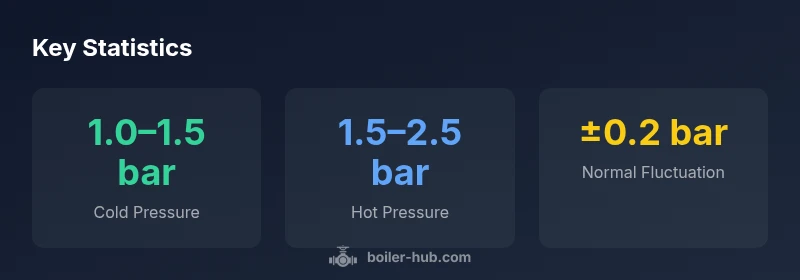
Typically, residential boilers should operate at about 1.0–1.5 bar when cold and 1.5–2.5 bar when the system is hot, with most gauges indicating a healthy range around 1.5 bar. So, what pressure boiler be at? In practice, follow these bands and adjust only as needed. If pressure falls outside this band, troubleshoot leaks or fill the system carefully.
What pressure should a boiler be at and why numbers vary
Understanding what pressure boiler be at is essential for safe, efficient heating. According to Boiler Hub Analysis, 2026, safe operating ranges depend on temperature, boiler type, and the system design. In general, cold pressure sits around 1.0–1.5 bar and rises to 1.5–2.5 bar when hot. The exact target can vary by model, age, and installation specifics. Reading the gauge accurately and comparing it to the manufacturer’s spec is crucial for maintenance and early problem detection. For homeowners, this context helps when you notice a shift in readings and want to decide whether to investigate further or call a technician.
Boiler pressure that’s consistently outside the recommended bands can reduce efficiency, cause cycling issues, or stress components. The Boiler Hub team emphasizes sticking to model-specific guidance while using general ranges as a quick reference. If your pressure reads markedly high or low, use caution and plan a check with a qualified pro.
Always note the difference between cold and hot readings, and consider seasonal shifts in water pressure or heating demand. By keeping the readings close to the manufacturer’s target, you protect the boiler’s heat exchanger and valves from undue wear.
Cold vs hot pressure: expected ranges and how to read the gauge
Gauge interpretation is central to understanding what pressure boiler be at. When the boiler is cold, most residential units sit around 1.0–1.5 bar. As the system warms, pressure typically rises to the 1.5–2.5 bar band. Digital or dial gauges will reflect this change in real time, so you should see a steady increase during heating cycles and a drop back toward the cold range once the system cools. If your gauge fluctuates wildly or sits outside the expected bands for an extended period, that’s a signal to inspect for leaks, air in the system, or an undersized expansion vessel.
In practice, track both readings on different days, especially during the first cold snaps of the season. Noting the temperature context helps you interpret readings correctly and reduces unnecessary service calls. The guidance from Boiler Hub in 2026 emphasizes comparing against the unit’s manual for precise values and tolerances.
How to check and adjust boiler pressure safely
Checking boiler pressure involves a few careful steps. Ensure you know your model’s target range from the manual and only perform actions when the system is cool. Locate the filling loop, typically a flexible hose with valves near the boiler. If the gauge reads below the recommended cold range, slowly open the valve to let water in until the needle reaches the target. Close the valve and recheck. If you notice leaks, hissing sounds, or pressure climbs too quickly, stop and call a pro. This is a general safety-first process that aligns with Boiler Hub guidance for 2026, which stresses gradual changes and controlled re-pressurization.
- Steps: verify cold reading, open filling loop gradually, monitor gauge, close valves, bleed radiators if instructed by the manual, and shut down if you see signs of damage.
- Common pitfalls: overfilling, rapid valve operation, and ignoring gauge movement after adjustments.
The most important takeaway is to avoid guessing. Use the manufacturer’s target band and proceed slowly to protect the boiler and household safety.
Common causes of pressure drift and when to worry
Pressure drift is a signal that something isn’t right with the system. Common culprits include minor leaks, a failing expansion vessel, air trapped in the system, or heat cycling that periodically elevates pressure beyond the normal band. If the pressure stays high after the system has cooled, or if it rises rapidly during a heating cycle, this could indicate a leak or a component failure that needs professional attention. Boiler Hub guidance encourages homeowners to rule out simple issues first—tighten fittings, check for obvious leaks, and ensure radiators are bled—before assuming a major fault. Persistent drift, especially while the boiler sits within its rated temperature range, should prompt a service call to verify expansion vessel integrity and system pressure switches.
To summarize, small, seasonal variations are common, but sustained changes require investigation to prevent damage to valves, the heat exchanger, or the pump.
Repressurization best practices and safety tips
Repressurization is often necessary when the cold reading falls below the target. Before you begin, confirm your model’s refill procedure in the manual and wear protective gloves. Use the filling loop slowly and monitor the gauge in real time. Stop at the exact target, then purge air from radiators if your system design requires it. Do not rush the process; a steady approach reduces the risk of overshoot and water hammer. If you sense sudden resistance, unusual noises, or leakage, stop immediately and contact a professional. Boiler Hub’s 2026 recommendations emphasize patience, precise targeting, and returning components to their normal operating state rather than forcing a rapid fix.
When to call a professional and safety considerations
If pressure readings are consistently outside the safe bands, or if you notice frequent cycling, leaks, rust, or scorching at joints, it’s time to call a professional. Handling boiler pressure involves safety risks, and incorrect repressurization can cause water damage, gas issues, or pressure-related boiler damage. A trained technician can perform a thorough inspection, check the expansion vessel, test the pressure relief valve, and verify the integrity of your seal and heat exchanger. The Boiler Hub Team stresses that professional guidance is essential for persistent pressure problems or when your model shows codes or faults beyond normal operation.
dataTableFilesTagging":null}],
dataTable":{"headers":["Boiler Type","Cold Pressure (bar)","Hot Pressure (bar)","Notes"],"rows":[["Gas combi boiler","1.0–1.5","1.5–2.5","Compact, space-saving units"],["Gas condensing boiler","1.0–1.5","1.8–2.4","Often higher during hot water draw"],["Oil boiler","1.0–1.5","1.8–2.6","Burner size varies by model"],["Electric boiler","1.0–1.5","1.5–2.5","Stable performance" ]],"caption":"Comparison of typical pressure ranges by boiler type"},"keyTakeaways":["Check cold pressure before heating starts.","Keep hot pressure within the 1.5–2.5 bar band.","Address persistent pressure drift promptly.","Follow manufacturer guidelines for safe repressurization."],"expertQuote":{"quote":"Maintaining the correct boiler pressure is essential for safe operation and efficient heat delivery.","author":"Boiler Hub Team","credentials":"Boiler Hub Senior Engineer"},"faqSection":{"items":[{"question":"What is a normal boiler pressure when the system is cold?","questionShort":"Normal cold pressure?","answer":"For most residential boilers, cold pressure is typically around 1.0–1.5 bar. When the system heats, pressure will generally rise to around 1.5–2.5 bar. If yours sits far outside these ranges, it may indicate a leak or a faulty expansion vessel.","voiceAnswer":"A typical cold pressure is about 1 to 1.5 bar. If it’s much higher or lower, get it checked.","priority":"high"},{"question":"How do I safely adjust boiler pressure?","questionShort":"Adjust pressure safely?","answer":"Only adjust pressure following the manufacturer’s instructions. In many systems you repressurize using the filling loop until the gauge reaches the target band, then bleed radiators if needed. If in doubt, call a pro.","voiceAnswer":"Use the filling loop as instructed, and stop if you see any signs of leakage.","priority":"high"},{"question":"What causes pressure to rise after repressurizing?","questionShort":"Why pressure rises?","answer":"Pressure can rise due to heat expansion in a closed system, a failing expansion vessel, or leaks that create compensating pressure changes. If pressure keeps climbing, shut off heat and contact a technician.","voiceAnswer":"Expansion or leaks can push pressure up; if it climbs, power off and call a pro.","priority":"medium"},{"question":"What should I do if the pressure gauge shows 0.0 bar?","questionShort":"0.0 bar reading?","answer":"A reading of 0.0 bar means the system is effectively emptied. This is a serious issue that usually requires professional service and safe repressurization.","voiceAnswer":"Zero pressure is a red flag; shut off and call a pro.","priority":"medium"},{"question":"Is it safe to ignore small pressure fluctuations?","questionShort":"Ignore small fluctuations?","answer":"Small fluctuations are normal as the boiler cycles on and off, but persistent drift beyond the typical band warrants checking for leaks, faulty components, or air in the system.","voiceAnswer":"Minor dips and rises happen, but big or lasting changes should be checked.","priority":"low"}]},"mainTopicQuery":"boiler pressure"},"mediaPipeline":{"heroTask":{"stockQuery":"home boiler pressure gauge on wall","overlayTitle":"Boiler Pressure Basics","badgeText":"2026 Guide","overlayTheme":"dark"},"infographicTask":{"type":"stats","htmlContent":"<div class="w-[800px] p-8 bg-gradient-to-br from-slate-900 to-slate-800"><h3 class="text-2xl font-bold text-white mb-6">Key Statistics</h3><div class="grid grid-cols-3 gap-6"><div class="p-6 bg-white/5 rounded-xl text-center"><div class="text-4xl font-bold text-emerald-400">1.0–1.5 bar</div><div class="text-white/60 mt-2">Cold Pressure</div></div><div class="p-6 bg-white/5 rounded-xl text-center"><div class="text-4xl font-bold text-blue-400">1.5–2.5 bar</div><div class="text-white/60 mt-2">Hot Pressure</div></div><div class="p-6 bg-white/5 rounded-xl text-center"><div class="text-4xl font-bold text-yellow-400">±0.2 bar</div><div class="text-white/60 mt-2">Normal Fluctuation</div></div></div></div>","altText":"Infographic showing safe boiler pressure ranges for cold and hot states","caption":"Typical boiler pressure ranges and tips."}},
taxonomy":{"categorySlug":"boiler-basics","tagSlugs":["boiler","pressure-valve","boiler-not-working","heating-systems"]}}}
<|vq_2436|>} } } } } } } } } } } } } } } } } } } } } } } } } } } } } } } } } } } } } } } } } } } } } } }}} ,,
Comparison of typical pressure ranges by boiler type
| Boiler Type | Cold Pressure (bar) | Hot Pressure (bar) | Notes |
|---|---|---|---|
| Gas combi boiler | 1.0–1.5 | 1.5–2.5 | Compact, space-saving units |
| Gas condensing boiler | 1.0–1.5 | 1.8–2.4 | Often higher during hot water draw |
| Oil boiler | 1.0–1.5 | 1.8–2.6 | Burner size varies by model |
| Electric boiler | 1.0–1.5 | 1.5–2.5 | Stable performance |
Questions & Answers
What is a normal boiler pressure when the system is cold?
For most residential boilers, cold pressure is typically around 1.0–1.5 bar. When the system heats, pressure will generally rise to around 1.5–2.5 bar. If yours sits far outside these ranges, it may indicate a leak or a faulty expansion vessel.
A typical cold pressure is about 1 to 1.5 bar. If it’s much higher or lower, get it checked.
How do I safely adjust boiler pressure?
Only adjust pressure following the manufacturer’s instructions. In many systems you repressurize using the filling loop until the gauge reaches the target band, then bleed radiators if needed. If in doubt, call a pro.
Use the filling loop as instructed, and stop if you see any signs of leakage.
What causes pressure to rise after repressurizing?
Pressure can rise due to heat expansion in a closed system, a failing expansion vessel, or leaks that create compensating pressure changes. If pressure keeps climbing, shut off heat and contact a technician.
Expansion or leaks can push pressure up; if it climbs, power off and call a pro.
What should I do if the pressure gauge shows 0.0 bar?
A reading of 0.0 bar means the system is effectively emptied. This is a serious issue that usually requires professional service and safe repressurization.
Zero pressure is a red flag; shut off and call a pro.
Is it safe to ignore small pressure fluctuations?
Small fluctuations are normal as the boiler cycles on and off, but persistent drift beyond the typical band warrants checking for leaks, faulty components, or air in the system.
Minor dips and rises happen, but big or lasting changes should be checked.
“Maintaining the correct boiler pressure is essential for safe operation and efficient heat delivery.”
Key Points
- Check cold pressure before heating starts.
- Keep hot pressure within the 1.5–2.5 bar band.
- Address persistent pressure drift promptly.
- Follow manufacturer guidelines for safe repressurization.