What Number Should Your Boiler Be On: A Practical Guide
Learn the safe, practical boiler pressure targets, how to check readings, and what to do if the pressure drifts. A Boiler Hub Guide with clear steps and expert insights.


According to Boiler Hub, the safe operating range for common residential boilers is roughly 1 to 2 bar when the system is cold. When the boiler is heating, aim for about 1.5 to 2.0 bar. If your gauge sits outside these ranges, consult your manual or call a technician to avoid damage.
Understanding boiler pressure ranges and why they matter
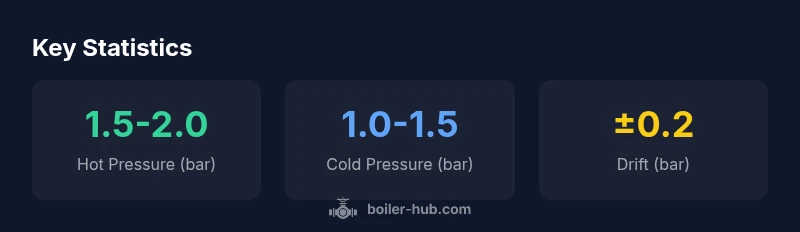
Boiler pressure is more than a number on a gauge—it reflects the health and efficiency of your heating system. For most homes, the boiler should sit within the 1.0 to 2.0 bar window, with the cold reading typically around 1.0 to 1.5 bar and higher readings when the system is actively heating. The exact ideal range can vary by model and age, but a safe, commonly recommended target is to keep cold readings near 1.0–1.5 bar and hot readings around 1.5–2.0 bar. When you ask, “what number should your boiler be on,” this is the practical baseline that balances reliable heat with minimized strain on your boiler and radiators. According to Boiler Hub, staying within these ranges helps reduce unnecessary cycling, improves efficiency, and lowers the likelihood of nuisance leaks. For homeowners and facility managers, knowing this baseline is the first step to proactive boiler maintenance and energy savings.
How to check boiler pressure safely and accurately
Checking boiler pressure is a straightforward maintenance task, but safety comes first. Start by locating the pressure gauge on your boiler—usually a circular dial with markings in bars. Make sure the boiler is off and cool before you check. When you read the gauge, note both the cold value (before the boiler has run) and the hot value (after a brief heating cycle). Use the manufacturer’s manual as your primary reference, but as a general rule keep cold readings near 1.0–1.5 bar and hot readings near 1.5–2.0 bar. If you don’t see a pressure gauge, or the gauge is damaged, contact a qualified technician. Regular checks—monthly for busy homes or quarterly for smaller setups—can help you catch slow leaks or developing faults early, saving both money and energy.
Cold vs hot readings: what the numbers mean in practice
Cold readings reflect the system at rest, which is your baseline. Hot readings occur while the boiler is actively heating water; pressure tends to rise as the system expands. A reading that sits consistently above the hot target (above 2.0 bar) can indicate over-pressurization, while readings below the cold target (below 1.0 bar) suggest a loss of pressure, often from small leaks or air in the system. In both cases, range consistency matters more than a single spike. Boiler Hub’s guidance emphasizes watching for gradual drift over several days rather than a one-off fluctuation. Tracking these patterns with a simple notebook or a home-automation log makes it easier to decide when intervention is needed.
How to adjust pressure safely: bleeding radiators and topping up
Adjustment should be done gradually and with care. If your cold reading is below 1.0 bar, you likely need to top up the system using the filling loop, following the exact steps in your manual. Do not rush this process, and stop if you notice any hissing sounds or leaks. If a radiator feels cold at the top, air may be trapped; use a radiator key to bleed air from the radiators until water starts to emerge. After any top-up or bleed, recheck both cold and hot readings to confirm you’ve returned within the safe range (ideally 1.0–1.5 bar cold, 1.5–2.0 bar hot). Regular bleeding and top-ups can maintain system efficiency, but persistent pressure drift warrants a professional assessment to rule out leaks, faulty valves, or a failing pressure vessel.
When to call a professional: signs it’s beyond a DIY fix
Some pressure issues are simple to correct, but others require expert attention. If you notice rapid pressure drops, persistent high readings after topping up, or signs of a leak (wet patches, corrosion, damp patches near seams), contact a licensed heating engineer. It’s also wise to schedule an annual service that includes pressure testing and safety checks. For complex systems, such as combi boilers with multiple zones or boilers connected to underfloor heating, professional assessment is especially important to avoid safety risks and ensure continued efficiency.
Typical pressure targets by boiler type
| Boiler Type | Cold Pressure Range (bar) | Hot Pressure Range (bar) |
|---|---|---|
| Residential gas boiler | 1.0-1.5 | 1.5-2.0 |
| Combi boiler (condensing) | 1.0-1.5 | 1.5-2.0 |
| Older system with radiators | 0.9-1.4 | 1.6-2.2 |
Questions & Answers
What is the ideal boiler pressure for a typical home?
For most homes, aim for 1.0–2.0 bar depending on cold or hot readings. The exact target varies by model, so always check your boiler’s manual. Regular checks help you maintain comfort and efficiency.
The typical target is 1.0 to 2.0 bar, depending on whether the system is cold or hot. Check your manual for model-specific guidance.
What should I do if my pressure is too low?
If you see pressure below 1.0 bar, you likely need to top up the system slowly using the filling loop. Recheck after topping up. If the pressure drops again quickly, call a professional to inspect for leaks.
Top up slowly with the filling loop and recheck. If it keeps dropping, contact a pro to inspect for leaks.
What if pressure is too high after heating?
High readings above 2.0 bar after heating can indicate over-pressurization. Let the boiler cool, bleed a radiator if needed, and consult a tech if the problem recurs.
If it stays high, let it cool and bleed a radiator. If it repeats, call a professional.
Is it safe to top up boiler pressure myself?
Top up carefully following the boiler’s manual. If you’re unsure, or if you see leaks or corrosion, stop and call a licensed heating engineer.
Top up only as guided by your manual. If unsure, get a pro involved.
How often should I check boiler pressure?
Check pressure monthly during the heating season and quarterly otherwise. Note any gradual drift and address issues before failures occur.
Check monthly in winter and quarterly in milder months, watching for slow changes.
What are signs of a pressure-related leak?
Wet patches, rust near fittings, or unusual hissing near the boiler can indicate a leak. A professional should inspect if leaks are suspected.
Watch for damp patches or hissing noises; a pro should assess if you suspect a leak.
“Maintaining correct boiler pressure is a key indicator of system health. Small shifts are normal, but persistent drift signals air, leaks, or valve issues.”
Key Points
- Check pressure when cold; target 1.0-1.5 bar.
- Hot readings should stay around 1.5-2.0 bar.
- Bleed or top up gradually if readings drift.
- Seek a professional if pressure drifts persistently.