What Should Boiler Pressure Be When Heating Is On
Discover the ideal boiler pressure range during heating, how to read the gauge, and what to do if pressure drifts. Practical tips for homeowners and facility managers.


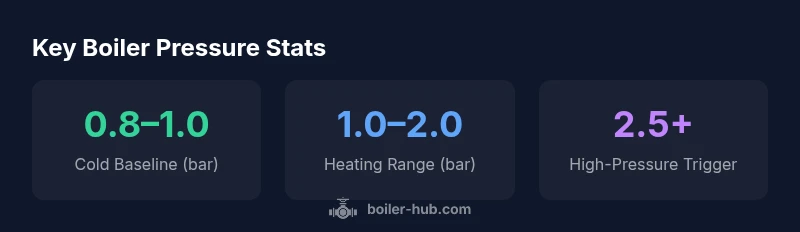
When heating is on, boiler pressure typically rises from its cold baseline; aim for a steady range around 1.0–2.0 bar on most systems. If it climbs above 2.5 bar, or falls below 1.0 bar during heating, you should check for issues or bleed radiators.
What should boiler pressure be when heating is on — a practical baseline
If you're asking what should boiler pressure be when heating is on, the short answer for most residential boilers is that the pressure should sit within a defined range while the heating cycle runs. A typical cold-start reading is around 0.8–1.0 bar. Once the system starts heating, pressure tends to rise to about 1.0–2.0 bar. This is normal as the water expands and the circuit fills, but readings outside this band warrant attention. Always check your boiler manufacturer manual for the exact range for your model, and note that some designs maintain slightly different targets. Regular monitoring helps prevent inefficient heating and potential damage. If the gauge moves beyond the high or low thresholds consistently, you should investigate potential leaks, air pockets, or a faulty expansion vessel. Boiler Hub emphasizes consistency: a stable pressure during cycles is a sign of a healthy system. In addition to gauge readings, listen for unusual banging or radiators noises, which can also indicate pressure irregularities. By understanding the baseline and how it should behave during heating, you can diagnose issues early and act without delay. According to Boiler Hub, anticipating how pressure should behave during a heating cycle is a cornerstone of reliable boiler maintenance.
How pressure is measured and what the numbers mean
Pressure in most boilers is measured in bar using a gauge on the front panel. One bar roughly equals 14.5 psi. A typical cold-start reading is around 0.8–1.0 bar; when the boiler fires up, the pressure often rises to a range of 1.0–2.0 bar. This rise reflects water expansion and system fill. If readings stay outside the 1.0–2.0 bar range for extended periods during heating, investigate potential causes such as leaks, air pockets, or a failing expansion vessel. Always verify the target pressure in your user manual, since some models are calibrated differently. Keeping records of readings over time helps you spot gradual shifts before they become problems.
What to monitor during heating: signs your pressure is off
During heating, small fluctuations are normal, but persistent deviations deserve attention. Watch the gauge as your boiler runs and note not only the absolute pressure but the rate of change. Signs of pressure problems include rapid spikes, a gauge that oscillates between high and low, unusually noisy radiators, and inconsistent heat distribution. If you notice conditions such as simmering or banging in the pipes, or if the pressure reading remains outside the typical 1.0–2.0 bar band for more than a few minutes, plan a diagnostic check. Regularly monitoring pressure in conjunction with temperature behavior provides a clearer picture of system health and can prevent unexpected breakdowns.
Common causes of pressure deviations
Pressure deviations often come from a handful of familiar culprits. A slow leak in the radiator circuit or at joints can gradually lower pressure. A faulty expansion vessel or a failed filling loop can cause either unexplained loss or uncontrollable rise in pressure. Air trapped in the system can raise readings and reduce heating efficiency, while a malfunctioning pressure relief valve may fail to regulate pressure properly. Finally, if the system is overfilled during filling, you may see a higher baseline pressure that compounds when heating starts.
How to safely adjust pressure: steps you can take
If you need to adjust pressure, proceed with care. First, turn off the boiler and allow the system to cool. Locate the filling loop (usually a rigid hose with two valves). Slowly open both valves to allow water in until the pressure gauge reaches around 1.0–2.0 bar. Close the valves and recheck. If pressure rises quickly, or if you notice active leaks, stop and call a professional. Bleed radiators to remove trapped air if you notice cold spots or noises after repressurizing. Always use the boiler’s manual as your guide, and avoid forcing pressure above the manufacturer’s recommended maximum.
When to call a pro: safety and risk considerations
Persistent pressure issues can indicate a deeper problem like a failing expansion vessel, a leak, or a faulty pressure relief valve. If you notice boiler error codes, persistent high pressure beyond 2.5 bar during heating, or any signs of gas odor or CO symptoms, stop using the boiler and seek professional service immediately. Gas safety and installation standards require trained technicians for repairs beyond simple bleed and repressurize actions. Regular maintenance by a qualified engineer can prevent many pressure-related failures and ensure safe operation.
Maintenance tips to keep pressure stable long-term
A proactive maintenance plan helps keep pressure within the desired range. Schedule an annual boiler service to check seals, valves, the expansion vessel, and the pressure relief valve. Ensure the expansion vessel is charged to the correct pre-charge, as specified by the manufacturer. Keep the system clear of sludge and debris by performing an occasional system flush if your water quality is poor. Finally, record and compare gauge readings at baseline and after major weather events or system changes to catch anomalies early.
Quick-check checklist for homeowners
- Know your boiler’s normal pressure range for heating (generally 1.0–2.0 bar).
- Check the gauge when heating starts and monitor if it quickly spikes beyond 2.5 bar.
- Bleed radiators if you notice cold spots or noises after re-pressurizing.
- Repressurize only to the manufacturer’s recommended range.
- Look for leaks around radiators, joints, and the boiler itself.
- Schedule annual servicing to maintain expansion vessel and safety valves.
- If you smell gas, hear hissing, or suspect CO, evacuate and call emergency services immediately.
Pressure scenarios during heating
| Situation | Cold Pressure (bar) | During Heating (bar) | Common Actions |
|---|---|---|---|
| Normal baseline | 0.8–1.0 | 1.0–2.0 | Bleed radiators if needed; repressurize to 1.0–2.0 |
| High pressure during heating | 1.5–2.5 | 2.0–3.0 | Check for leaks, reduce pressure, consult if above 3.0 |
Questions & Answers
What is the normal boiler pressure when the heating is on?
Typically 1.0–2.0 bar when the system is heating. Individual models vary, so check the manufacturer guide. If readings consistently fall outside this range, schedule a service.
Typically 1.0 to 2.0 bar when heating. If it stays outside this range, call a professional.
Why does boiler pressure rise when heating?
As the system heats, water expands and the volume increases, causing pressure to rise in the closed loop. This is expected up to the boiler’s designed limit.
Pressure rises because water expands in a closed system.
What should I do if pressure is too high during heating?
Turn off the boiler and bleed a radiator to release some trapped air, then repressurize to the recommended range. If it remains high, contact a professional.
Bleed a radiator, repressurize to normal range, and call a pro if it stays high.
What should I do if pressure is too low during heating?
Repressurize using the filling loop until the gauge reaches the target range. Check for leaks if pressure keeps dropping.
Repressurize to the recommended range and check for leaks if it drops again.
Can air in the system affect pressure?
Yes. Air pockets can distort readings and reduce heating efficiency. Bleeding the radiators helps release trapped air.
Air pockets can skew readings and reduce heat; bleed the radiators to fix.
Is it safe to adjust boiler pressure myself?
For simple repressurization and bleeding, follow the manufacturer’s steps and safety guidelines. If you’re unsure or the gauge behaves abnormally, call a technician.
You can do basic adjustments if you follow the manual, otherwise contact a pro.
“Monitoring boiler pressure is essential for safe, efficient heating; small deviations are common, but persistent pressure changes indicate maintenance needs.”
Key Points
- Know your boiler’s normal range: 1.0–2.0 bar while heating
- If pressure spikes beyond 2.5 bar, shut down heating and check
- Bleed radiators to balance pressure
- Consult a pro for persistent high/low pressure