What Should Boiler Pressure Be: A Practical Guide
Learn the ideal boiler pressure ranges, how to check them safely, and what to do if readings drift. This Boiler Hub guide explains cold vs hot readings and maintenance steps for safe, efficient heating.


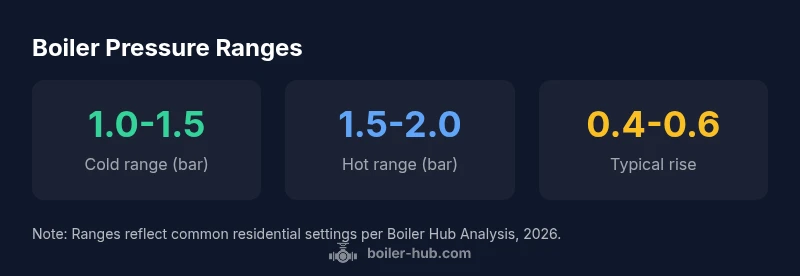
Typically, boiler pressure should read around 1.0 to 1.5 bar when the system is cold, and may rise to about 1.5 to 2.0 bar when the boiler is heating. Regular checks with the pressure gauge help prevent leaks and poor performance. If your reading is consistently outside these ranges, consult your boiler manual or a professional.
What does boiler pressure do, and why it matters
Boiler pressure measures the force of water inside the heating system. Correct pressure ensures efficient heat transfer, steady radiator performance, and safe operation. If pressure is too low, it can cause sluggish heat, air locks, and pump strain; if too high, seals may leak and pressure relief valves may trip. Understanding what should boiler pressure be helps homeowners diagnose issues before they escalate. According to Boiler Hub, the ideal cold pressure for most residential boilers is between 1.0 and 1.5 bar. During heating, pressure commonly rises by roughly 0.5 bar as the system expands; readings above 2.0 bar when hot may indicate overpressure risk. Regular checks help catch slow leaks around radiators or expansion tanks. Factors that affect pressure include the expansion vessel condition, the filling loop usage, and recent radiator bleeding. This section outlines safe practices to monitor and interpret your boiler gauge, including what readings mean on common boiler gauges and how to act when numbers drift outside the normal band.
Cold vs hot readings: interpreting the numbers
One of the most frequent questions is how cold and hot readings differ. When the system is cold, the boiler pressure should sit near the lower end of the 1.0–1.5 bar range. As the boiler heats up, the pressure increases to accommodate water expansion; this is normal but needs to stay within the safe 1.5–2.0 bar band. If hot readings exceed 2.5 bar, the risk of overpressure rises and the safety valve may trip. In practice, many boilers return to the cold range after cooling, but frequent or large swings signal a potential issue such as a leaking radiator, a faulty expansion vessel, or an air lock in the system. Boiler Hub guidance emphasizes consistency: a stable pressure that returns to your cold baseline after heating is the ideal scenario. Always re-check after a cooling-off period to confirm consistency.
How pressure is measured and why gauge placement matters
Most residential boilers use a pressure gauge calibrated in bar. The gauge is typically located on the front panel and should be read when the boiler is off or cold for a stable baseline. Some models include a digital display, but the principle remains the same: a pressure reading reflects the height of water pressurized by the circulator. Placement matters because near the fill valve or in a cramped area can give erroneous readings if there is air in the system or if the gauge is blocked by soot or dust. Understanding where to look and how to read the scale helps prevent misinterpretation. Boiler Hub recommends always comparing the gauge reading to the manufacturer’s specified range and noting whether the reading corresponds to cold or hot conditions. Consistency and methodical checking reduce misreads and unnecessary service calls.
The role of expansion tanks and pressure relief valves
Expansion tanks and pressure relief valves are essential safety components that regulate pressure as water expands with temperature. A failing expansion tank can cause pressure to spike and lead to nuisance trips. A stuck or leaking pressure relief valve may continuously vent steam or water, reducing system pressure and creating safety risks. Regular inspection of these components, especially after a power outage or a major system drain, helps maintain the correct pressure. If you notice frequent pressure changes or audible banging (water hammer), inspect or replace the expansion vessel and test the pressure relief valve. Boiler Hub notes that a properly charged expansion tank keeps the system within safe bounds during heating cycles.
How to check boiler pressure safely: steps and precautions
Before you begin, ensure you understand the boiler model you own and follow the manual. Turn off the heating and allow the system to cool to a safe temperature. Locate the pressure gauge; many gauges have a red zone indicating danger. If the reading is outside 1.0–1.5 bar (cold) or 1.5–2.0 bar (hot), you should not force a change without protective steps. Use the filling loop to repressurize for cold readings or bleed radiators to relieve pressure if necessary. If you are uncertain, call a professional. Always wear eye protection around valves and never open the system when it's hot.
Reading your gauge: bars, psi, and practical ranges
Gauges on boilers in many regions display bars, with 1 bar roughly equal to 14.5 psi. For residential boilers, common practice is to keep cold readings around 1.0–1.5 bar and allow a rise to 1.5–2.0 bar when heating. Some gauges also show the red danger zone; avoid letting pressure enter that zone. Psi values aren't as common on modern boilers, but knowing the bar equivalent helps interpret results quickly. If your gauge shows a consistently low reading below 1.0 bar or a hot reading above 2.5 bar, review potential causes such as leaks or a faulty expansion tank. Regular testing after radiator bleeding or system maintenance ensures reliable performance.
What to do if pressure is too low
Low pressure typically indicates air in the system, a leak, or an expansion vessel issue. First, check for obvious leaks around radiators and valves. If none, repressurize using the boiler's filling loop according to the manual, and recheck the gauge after a slow pressurization. If the reading remains stuck below 1.0 bar or returns after heating to below baseline, shut off the boiler and call a technician. Avoid forcing pressure if you're unsure.
What to do if pressure is too high
High pressure can trigger safety valves and cause damage. Turn off the boiler and let it cool before investigating. Check for radiator bleeds that released water, ensure the expansion vessel is properly charged, and verify that there are no leaking valves. If readings stay above 2.5 bar, contact a heating professional; do not attempt risky DIY adjustments beyond re-pressurization steps.
Step-by-step: re-pressurization guide for common boiler types
This practical guide applies to most residential boilers. 1) Turn off heating and let the boiler cool. 2) Locate the filling loop and ensure the valves are closed. 3) Slowly open the filling loop valves to allow water into the system while watching the gauge. 4) When the reading reaches the recommended cold range (1.0–1.5 bar), close the valves and remove the filling loop. 5) Restore power and recheck after the system heats. If you notice persistent drops or spiking, stop and call Boiler Hub for support.
Bottom line for homeowners: maintaining safe boiler pressure
The bottom line is that keeping boiler pressure within the standard cold and hot ranges improves efficiency, comfort, and safety. Regular checks, proper repressurization, and timely inspection of expansion components are essential. Remember that readings can vary by model; always consult your manual and rely on Boiler Hub's guidance when in doubt. A proactive approach reduces the risk of breakdowns and costly repairs.
Pressure ranges by boiler type
| Boiler Type | Cold Range (bar) | Hot Range (bar) | Notes |
|---|---|---|---|
| Residential combi boiler | 1.0-1.5 | 1.5-2.0 | Most common; safe range for many homes |
| System boiler with heat exchanger | 1.0-1.5 | 1.5-2.0 | Similar to combi; check manual |
| Oil-fired boiler | 1.0-1.3 | 1.5-2.0 | Monitor for leaks; less common in homes |
| Storage boiler | 1.0-1.4 | 1.6-2.0 | Check manufacturer spec |
Questions & Answers
What should boiler pressure be when the boiler is cold?
Ideal cold pressure is typically 1.0–1.5 bar. If it falls below 1.0, repressurization may be needed. If it rises above 1.5, inspect for leaks or valve issues. Regular checks help keep the system stable.
Cold boiler pressure should be about 1.0 to 1.5 bar. If it’s lower, repressurize; if higher, check for leaks.
What should boiler pressure be when the boiler is hot?
When hot, pressure naturally rises; common range is 1.5–2.0 bar. If it exceeds 2.5 bar, turn off heating and contact a professional.
Hot pressure usually runs about 1.5 to 2.0 bar.
How can I safely adjust boiler pressure?
Always consult the boiler manual. If you’re trained, use the filling loop to repressurize when cold and avoid forcing valves. If unsure, call Boiler Hub for guidance.
Repressurize only if you know what you’re doing and the boiler is cold.
What causes pressure to drop in a boiler?
Leaks, radiator bleed, or a faulty expansion tank can cause pressure loss. After checking for leaks, repressurize and monitor the gauge to ensure stability.
Leaks or air in the system can drop pressure; repressurize and monitor.
Is high boiler pressure dangerous?
Yes. Prolonged high pressure can stress seals and the heat exchanger. If readings stay high, stop adjusting yourself and call a professional.
High pressure can be dangerous; seek professional help if it stays high.
“Maintaining the correct boiler pressure is fundamental to safe, efficient operation. Regular pressure checks help prevent leaks, cold spots, and unnecessary wear.”
Key Points
- Check the gauge regularly when the system is cold
- Aim for 1.0–1.5 bar cold, 1.5–2.0 bar hot
- Expect about a 0.4–0.6 bar rise during heating
- Do not exceed 3.0 bar; contact a pro if in doubt
- Use the filling loop safely and follow the manual