What Is Wrong with My Furnace? An Urgent Troubleshooting Guide
Struggling with a furnace that won't start or heats poorly? This Boiler Hub guide shows homeowners a fast diagnostic flow, common causes, step-by-step fixes, safety tips, and when to call a pro.


The most likely issue is a power or thermostat problem causing the furnace to fail to start. Start with the basics: verify the circuit breaker and switch are on, confirm the thermostat is set to heat and correctly wired, and replace a dirty filter that could trigger safety shutoffs. If it still won't start, move to diagnostic steps.
The Most Likely Causes When Your Furnace Won't Start
According to Boiler Hub, the most common startup failures are not mysterious internal faults but simple, detectable issues. Start by confirming the furnace is getting power, the thermostat is correctly set to heat, and the gas supply is available if you have a gas furnace. A dirty air filter can trigger safety shutoffs and prevent ignition. A tripped limit switch or blown fuse is a frequent culprit in older systems. These basic checks reduce unnecessary service calls and get you back to warmth quickly. Boiler Hub's analysis, 2026, shows that many startups are resolved by fixing power, thermostat, or airflow issues before calling for parts replacement or professional service. In urgent situations, prioritize checks that reduce risk, such as gas line safety and CO detection. If you narrow the cause to a controllable item, you can complete the fix safely and regain heat promptly.
Quick Checks You Can Do Right Now
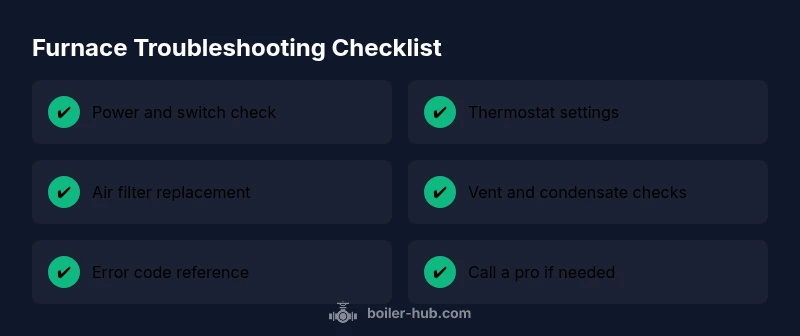
Before drafting a service call, perform these quick checks that require no special tools. First, switch off power to the furnace, then verify the wall switch and the circuit breaker for the furnace are ON. If the breaker trips, reset it after removing the cause of the overload. Next, inspect the thermostat: ensure it’s set to heat, the fan is on Auto, and the temperature setting is above the room temperature. If the thermostat is programmable or a smart device, confirm it’s online and communicating with the furnace. Check the air filter—if it’s dark, clogged, or more than 90 days old, replace it. A clogged filter reduces airflow and can cause the furnace to shut down for safety. Finally, look for obvious obstructions near returns and vents; clear any store-bought or household debris that could block airflow. These steps can restore operation in many cases and buy time while you prepare a professional assessment.
Interpreting Furnace Error Codes and Safe Inspections
Many modern furnaces display LED error codes or blinking lights that point you toward the problem area. A quick check of the furnace’s manual or the manufacturer’s website, using the exact code, helps you distinguish between ignition faults, pressure problems, or airflow restrictions. If you cannot identify the code, note any LED pattern, count the blinks, and compare to the known code list. At the same time, perform high-priority safety checks: ensure the CO detector is functioning, confirm the gas line is not leaking, and never bypass safety switches. If you smell gas or hear hissing, evacuate and contact your gas provider or emergency services immediately. For cold-air symptoms, verify the blower is running and that there is heat at the vents, which could indicate a flame sensor issue or misalignment of limits. In all cases, follow the diagnosis flow step-by-step and avoid improvising electrical or gas repairs beyond basic safety. Remember: when in doubt, call a professional.
When to Call a Professional
Some furnace problems are beyond DIY scope, especially those involving gas lines, carbon monoxide safety, or ignition components. If you’ve completed the quick checks, reviewed error codes, and still see no heat, it’s time to involve a licensed HVAC technician. A pro can safely test gas pressure, ignition systems, and safety devices without risking leaks or CO exposure. Prior to the visit, gather model numbers, a list of symptoms, and any error codes you observed so the technician can diagnose quickly.
Safety First: Quick Safety Protocols
Always shut off power at the furnace before opening access panels. If you smell gas, leave the area immediately and call the gas company or emergency services. Keep CO detectors functional and test them monthly. Do not bypass safety controls, and never expose yourself to live electrical components or unvented gas combustion.
Steps
Estimated time: 60-90 minutes
- 1
Power down and ensure safety
Before touching anything, switch off the furnace at the wall and the service panel. If you smell gas, evacuate and call the gas provider. This first step reduces the risk of shock or fire during inspection.
Tip: If safe, keep a flashlight handy to inspect without moving parts. - 2
Check the power supply and breaker
Verify the furnace is receiving power by testing the outlet (if accessible) and confirming the circuit breaker for the furnace is ON. If the breaker tripped, reset it after addressing any overload causes.
Tip: Reset only after ensuring there are no obvious hazards. - 3
Inspect thermostat settings and connections
Set the thermostat to Heat, ensure the mode is Auto, and verify the temperature setpoint is above room temperature. If you use a programmable/smart thermostat, confirm it is online and communicating with the furnace.
Tip: Take a quick photo of the wiring before adjusting. - 4
Replace or clean the air filter
Turn off power, locate the air filter, and replace it if dirty or discolored. A clogged filter can trigger overheat shutoffs and reduce airflow.
Tip: Mark replacement dates on new filters for future maintenance. - 5
Check vents, returns, and condensate lines
Ensure all return vents are clear and not blocked by furniture. Inspect the condensate line for clogs or leaks and clear any debris from the surrounding area.
Tip: Keep the intake and exhaust areas free from obstructions. - 6
Test restart and read any codes
Restore power, set the thermostat to heat, and listen for ignition or blower activity. Note any error codes or blinking patterns for reference in the manual or with Boiler Hub.
Tip: If you see error codes, document them before calling support.
Diagnosis: Furnace won't start or stays off
Possible Causes
- highPower issue (fuse, breaker, or switch off)
- mediumThermostat miscalibration or faulty wiring
- mediumClogged air filter or blocked vents causing safety shutoff
- lowIgnition/flame sensor fault or inducer motor problem
Fixes
- easyReset breakers, switch off/on furnace power, and ensure the outlet is supplying electricity
- easyTest and replace thermostat batteries or replace thermostat if faulty; verify wiring
- easyReplace dirty air filter and clear return air pathway; clean blower area
- hardIf ignition sensor or inducer fault persists, contact a licensed HVAC technician
Questions & Answers
Why won’t my furnace start even though the thermostat shows it’s on?
Startup failures are usually power-related or thermostat-related. Start by verifying the furnace is receiving power, checking the switch and circuit breaker, and ensuring the thermostat is set to heat with a current temperature setting. If these aren’t the cause, continue with the diagnostic flow.
Startup problems are usually power or thermostat related. Check the power, thermostat settings, and try the diagnostic steps.
What does a banging noise from the furnace indicate?
A banging or popping sound often indicates ignition delay or a pressure issue. This can be dangerous; stop using the furnace and call a pro if the noise persists.
That noise can mean ignition problems or gas pressure issues.
Why is my furnace blowing cold air?
Cold air typically means the furnace is running without heat, the thermostat is mis-set, gas supply is insufficient, or there’s a heat exchanger issue. Check gas supply, thermostat settings, and for any mode errors.
If you feel cold air, verify the settings and gas supply before calling for help.
Should I reset my furnace, and how should I do it?
A reset can clear minor faults but shouldn’t be overused. Turn off power, wait 30 seconds, restore power, and set the thermostat to heat. If the issue recurs, don’t keep resetting.
Resetting can help briefly, but repeated resets mean call a pro.
When is it time to call a professional?
If you smell gas, hear unusual noises, or the furnace won’t start after basic checks, contact a licensed HVAC technician. Do not attempt risky gas work yourself.
Call a licensed HVAC tech if you smell gas or can’t diagnose safely.
Watch Video
Key Points
- Check power, thermostat, and filter first.
- Clear vents and replace filters regularly.
- Use error codes to guide safe DIY fixes.
- Call a professional for gas or ignition issues.