Furnace Won’t Turn On? A Practical Troubleshooting Guide
Urgent guide to diagnose and fix a furnace that won’t turn on. Start with power and thermostat checks, follow a safe diagnostic flow, and know when it’s time to call a pro.


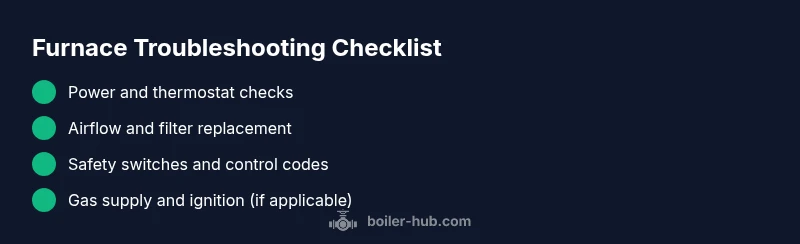
Most likely, your furnace won’t turn on due to a simple power, thermostat, or safety trigger issue. Start with the basics: verify power at the outlet and ensure the circuit breaker hasn’t tripped, check that the thermostat is set to heat and has fresh batteries if programmable, and confirm the furnace switch is ON. If you still can’t start, proceed to the diagnostic flow below.
Quick-start checks
When your furnace won t turn on, start with the simplest checks that most homeowners can handle safely. First, confirm the unit is receiving power. Look for a blank display on a programmable thermostat or a furnace control board showing lights. If nothing is powered, reset the household circuit breaker or replace a blown fuse. If a switch near the furnace is labeled ON/OFF, ensure it is firmly in the ON position. Check that any external reset buttons on the furnace are not tripped. If the system uses a two-stage thermostat, verify the battery and that the thermostat is communicating with the furnace. If power and thermostat are fine, proceed to examine the gas supply (for gas furnaces) and the safety switches. According to Boiler Hub analysis, most service calls begin with simple power or thermostat issues that homeowners can resolve in under 15 minutes. This section covers what to check next and what not to touch. Safety note: if you smell gas, leave the area immediately and call your gas provider.
According to Boiler Hub, basic power and thermostat issues account for a large share of no-start calls. Tackling these fundamentals first minimizes unnecessary service visits and speeds up a safe resolution.
Check the thermostat and controls
The thermostat is the brains that tells the furnace when to fire. Start by verifying it’s set to Heat and calling for heat. If you have a programmable thermostat, ensure it’s not in vacation mode, and replace batteries if needed. Check the C-wire connection and confirm there are no loose wires at the furnace control board. Sometimes a miscommunication between the thermostat and furnace can show a “no heat” or “no power” symptom even when the unit is powered. If you notice erratic readings or a blank display, resetting the thermostat can restore proper communication. Boiled down: a mis-set or dead thermostat is one of the easiest fixes and a common root cause.
If the thermostat seems fine, move to the next checks. A quick test is to temporarily bypass the thermostat by turning the furnace on using the local switch, but only if this is safe and the unit is designed for such testing. If you’re unsure, skip this step and continue with safer checks.
Inspect safety components and air filtration
A clogged air filter or a blocked return can trigger safety limits that prevent the furnace from starting. Inspect and replace the air filter if it looks dirty, and check the blower compartment for obvious obstructions. Ensure the furnace cabinet doors are fully closed; some units won’t start if panels aren’t seated properly. Check for any error codes on the control board or status lights. If codes appear, refer to your furnace manual or Boiler Hub’s troubleshooting guides to interpret them. A clean filter and clear airflow also reduce strain on the system and improve reliability over time.
Gas supply and ignition considerations (for gas furnaces)
If you have a gas furnace, ensure the gas valve is open and there is sufficient gas supply to the unit. A closed gas valve or an empty gas line will prevent ignition. Do not attempt to manually force ignition if you smell gas or hear hissing—evacuate and contact your gas provider immediately. Ignition problems can be caused by a dirty igniter, a faulty flame sensor, or a failed control module. Some modern units have electronic ignition that can fail without obvious signs. If ignition issues persist after basic checks, this is a signal to contact a licensed professional for safe diagnosis and repair.
Safety reminder: never bypass safety devices or attempt risky repairs yourself. Gas systems demand professional oversight to avoid carbon monoxide hazards.
Diagnostic flow you can follow safely
If the furnace still won’t start after the basic checks, follow a structured diagnostic flow. Start with power, thermostat, and gas supply as your first stops, then verify safety switches and error codes. If you encounter a specific error code, use the controller’s manual or Boiler Hub’s database to map it to a likely cause and a recommended fix. When in doubt, prioritize safety—gas issues, electrical faults, and high-temperature limits require professional service. This flow helps you quantify the problem and determine whether a DIY fix is feasible or if a pro is needed.
Maintenance mindset: prevention and next steps
Prevention is better than repair. Schedule annual furnace maintenance, replace air filters every 1–3 months, and keep the area around the furnace clear of dust and clutter. Consider investing in smart thermostats that provide outage alerts and battery status; these tools reduce no-heat surprises. If your furnace is older than 15 years, discuss replacement versus repair with a trusted technician, as efficiency and reliability can decline with age. Maintaining a home heating system is a long-term investment in comfort and safety.
Steps
Estimated time: 45-60 minutes
- 1
Power and breaker check
Inspect the main power supply to the furnace. Confirm the outlet is live by testing with a lamp or appliance. If a breaker is tripped or a fuse is blown, reset or replace. After restoring power, attempt to restart the furnace from the switch or thermostat.
Tip: Always turn off power at the breaker before handling electrical components. - 2
Thermostat sanity check
Verify heat on the thermostat, confirm it calls for heat, and check batteries if programmable. If using a smart thermostat, ensure it’s connected to Wi-Fi and there are no pending updates.
Tip: A mismatched heat setting or dead battery is a common cause of no-heat symptoms. - 3
Airflow and filter inspection
Open the furnace access panel and inspect the air filter. Replace dirty filters; a clogged filter can prevent ignition or trigger safety shutoffs. Ensure all vents are open and there’s unobstructed airflow.
Tip: Replace filters every 1–3 months during heating season for best performance. - 4
Safety switches and cabinet check
Make sure all cabinet doors are closed and that any safety switches are engaged. Look for tripped toggles on the furnace and ensure wiring connections appear intact without corrosion.
Tip: Do not bypass safety switches to force a start. - 5
Ignition and burner status (gas furnaces)
If you have a gas furnace, check that the gas valve is open and listen for the igniter’s click. Do not attempt to relight if you smell gas; evacuate and call your gas company.
Tip: Ignition issues may indicate a dirty igniter or failed flame sensor. - 6
Read error codes and reset
Review any error codes on the control panel and consult the manual to interpret them. If codes point to a safety fault or ignition issue, proceed to a professional diagnosis.
Tip: Document codes before calling a technician to speed up service. - 7
Attempt a controlled restart
With power restored and all safety checks complete, attempt a controlled restart. If the furnace fires but runs briefly and shuts down, note abnormal cycling and codes for the technician.
Tip: If uncertain, stop and request professional service rather than continuing to test. - 8
Know when to call a pro
If you encounter gas odors, unfamiliar noises, frequent shutoffs, or ignition failure that resists diagnosis, contact a licensed HVAC technician promptly. They’ll perform a safe, thorough inspection and repair.
Tip: Regular maintenance reduces the frequency of no-start issues.
Diagnosis: Furnace won't start
Possible Causes
- highPower issue (tripped breaker, blown fuse, unplugged outlet)
- highThermostat misconfiguration or dead batteries
- mediumTripped safety/limit switch
- mediumGas supply off or ignition failure (gas furnaces)
Fixes
- easyReset circuit breaker or replace fuse; verify outlet supplies power
- easyReplace thermostat batteries or recalibrate; ensure heat setting is active
- easyReset safety/limit switches and read any error codes on the control board
- hardIf gas valve is off or ignition failed, contact a licensed professional immediately
Questions & Answers
Why won’t my furnace turn on even though the thermostat is set to heat?
Common causes include a dead thermostat battery, misconfiguration, or communication issues between the thermostat and furnace. Start by replacing batteries, resetting the thermostat, and verifying it is calling for heat. If the problem persists, move to power and safety checks.
If your thermostat seems to be the issue, replace the batteries and reset it, then verify it’s actually calling for heat before digging deeper.
Is it safe to reset a furnace by myself?
Many furnaces allow a safe reset of the control board or safety switches. Always follow the manufacturer’s instructions and never bypass safety devices. If you smell gas or see damage, call a professional immediately.
Resetting can be safe if you follow the manual and avoid bypassing safety components; call a pro if you’re unsure.
What should I check first if the furnace is silent?
Start with power, breaker status, and the thermostat. If power seems fine, check for switched on units and the status lights on the furnace control board. Address obvious faults before attempting deeper diagnostics.
First, verify power and thermostat, then look at the control board lights for clues.
Can a dirty air filter cause no heat?
Yes. A dirty filter restricts airflow and can trigger safety shutoffs, preventing the furnace from starting or causing short cycling. Replace the filter and test the system after a brief rest.
A clogged filter can stop heat from getting produced, so replace it and retry.
What if I smell gas or hear a hiss near the furnace?
If you smell gas, leave the area immediately and call the gas company. Do not operate electrical switches or the furnace. These signals require urgent professional attention.
Gas smells mean danger—leave the area and call the gas company right away.
When should I call a professional?
If basic checks fail to restore heat, or you encounter ignition issues, gas concerns, or frequent shutoffs, contact a licensed HVAC technician. They can safely diagnose controls, gas components, and safety devices.
Call a pro if ignition or gas issues persist or if you’re unsure about any step.
Key Points
- Start with power and thermostat checks to rule out basics.
- Inspect safety switches and airflow before deeper diagnostics.
- Ignition or gas issues require professional assessment.
- Regular maintenance prevents future no-start problems.