What Causes Boiler Pressure to Rise: A Troubleshooting Guide
Urgent, practical troubleshooting for rising boiler pressure. Learn common causes, safe fixes, diagnostic steps, and prevention tips from Boiler Hub.


The most common cause of rising boiler pressure is excess water expansion when the system heats. The quick fix is to release pressure safely by bleeding radiators and, if needed, draining a small amount of water to bring the pressure back to the normal range. If pressure climbs again after bleeding, stop and call a qualified technician.
Why boiler pressure rises
According to Boiler Hub, rising boiler pressure is most often caused by improper absorption of water expansion during heating. When the water heats, it expands and increases pressure if the system's expansion resources are compromised. Common culprits include a failed expansion tank, a malfunctioning pressure-relief valve, or a closed filling loop that was opened during recent service. Leaks in the loop or radiators can also drive pressure up as fresh water adds volume. Understanding these dynamics helps homeowners act quickly and safely. If you notice the gauge climbing steadily as the boiler heats, treat it as a warning sign and proceed with measured checks rather than improvising fixes. The Boiler Hub team emphasizes safety and methodical diagnosis to prevent costly damage.
Common causes of rising boiler pressure
Rising boiler pressure is rarely caused by a single fault. In many homes, multiple factors interact. Here are the most frequent culprits:
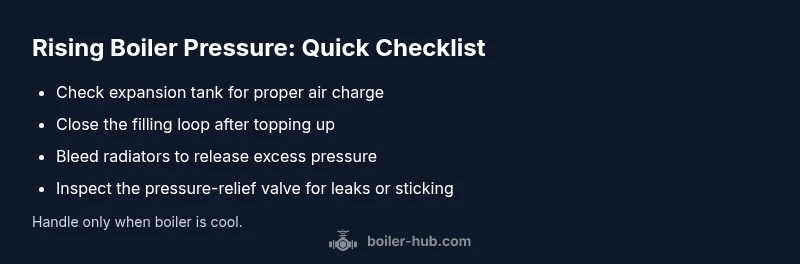
- Expansion tank failure: The expansion vessel is designed to absorb extra water volume as the system warms. If the tank loses its air charge or the bladder ruptures, it cannot absorb expansion, and pressure climbs.
- Open or partially open filling loop: If the filling loop was left open during maintenance or if water was added too aggressively, the extra water raises pressure.
- Faulty or stuck pressure-relief valve: The PRV should vent excess pressure. If it sticks or is misadjusted, coolant pressure can remain high.
- Leaks in radiators, joints, or piping: Even small leaks allow fresh water to enter the loop, increasing pressure over time.
- Air in the system and poor bleed: Air pockets can distort readings and prevent proper pressure regulation; bleeding and purging air improves stability.
- Overheating or boiler faults: Some boilers misread heat expansion or have control faults that exaggerate pressure readings during operation.
If you identify one or more of these issues, avoid rapid, large dumps of water; instead, target the root cause for a safer resolution.
Diagnosing the issue safely
Begin with a calm, step-by-step assessment. Confirm the boiler is cold before touching gauges or valves. Check the pressure gauge reading and compare it with your boiler's manual. Inspect for visible leaks around radiators, joints, and the expansion tank. If you have an expansion tank with a Schrader valve, test the air pressure when the system is cool. Check whether the filling loop is closed. If the pressure continues to rise despite these checks, this points toward a faulty expansion tank or pressure-relief valve, and you should seek professional help. Always prioritize safety: if you smell gas, hear hissing steam, or notice pooling water, evacuate and call emergency services as needed.
Quick fixes you can try now
These steps target the most common cause—excess expansion from heating. Start with safe, controlled actions:
-
Turn off the boiler and allow it to cool completely. This reduces risk when working near hot components. Tip: wear gloves and use a flashlight to inspect for leaks.
-
Bleed radiators to relieve trapped air and relieve pressure. Work from the highest radiator downward and close valves when finished. Tip: have a cloth ready to wipe spills.
-
Check the expansion tank's air charge if accessible: with the system cool, disconnect the air valve and top up to the recommended pressure (as per manufacturer). If the tank won’t hold air, it may need replacement. Tip: note the tank's model for a future service.
-
Inspect the filling loop and ensure it is fully closed. If you recently topped up water, you may have overfilled the system—drain a small amount until the gauge shows the correct range. Tip: never force water into a hot boiler.
-
If pressure remains high after these steps, do not continue to bleed or drain; call a licensed technician. Tip: document readings and dates for your service record.
Prevention and safe practices
Regular maintenance reduces the chance of pressure rise. Schedule an annual boiler service to inspect the expansion tank, PRV, and system leaks. Regularly check the pressure gauge at cool-down moments and record any deviations. Keep the area around the boiler clear of clutter and avoid blocking vents, which can affect safe operation. By staying on top of routine checks, you minimize sudden pressure spikes and costly repairs.
Steps
Estimated time: 45-60 minutes
- 1
Safety prep and power down
Turn off the boiler and let it cool completely before handling any components. Clear the area and gather a bucket, towels, and gloves.
Tip: Safety gear and a calm approach prevent scalds and water damage. - 2
Check the pressure gauge
Read the current pressure and compare it to the boiler manual. If the reading is outside the normal range, avoid forcing more water in.
Tip: Note the exact gauge reading for service records. - 3
Bleed radiators
Starting with the highest radiator, use a radiator key to release air until water runs steadily. Close valve after each section.
Tip: Have a cloth ready to catch drips and spills. - 4
Inspect expansion tank
With the system cool, check the air charge on the expansion tank. If the tank can’t hold air or the bladder is damaged, it may need replacement.
Tip: Record tank model and current date for service. - 5
Verify filling loop is closed
Ensure the filling loop is fully shut and that no water is entering the system during normal operation.
Tip: If you recently topped up, drain a small amount to bring pressure back to the target range. - 6
Call a professional if needed
If pressure remains high after these steps, do not continue attempts yourself and contact a licensed technician.
Tip: Provide readings and steps you took to the technician.
Diagnosis: Boiler pressure climbs during heating and remains high
Possible Causes
- highExpansion tank failure or air charge loss
- highOpen or leaking filling loop causing overfill
- mediumLeaks in system or radiators increasing water volume
- lowFaulty or stuck pressure-relief valve
- lowAir in the system
Fixes
- easyBleed radiators to relieve pressure and purge air
- easyClose the filling loop and verify no water is entering the system
- easyTest and recharge or replace the expansion tank as needed
- mediumInspect and replace a faulty pressure-relief valve if needed
- hardRepair leaks or replace damaged piping components
Questions & Answers
What is considered safe boiler pressure?
Safe boiler pressure varies by model, but a sudden rise is not normal. Always refer to manufacturer specs and check your manual. If in doubt, call a pro.
Safe boiler pressure depends on your boiler model; check the manual and consult a pro if unsure.
Can air in the system cause pressure issues?
Air pockets can cause readings to behave erratically and may contribute to pressure fluctuation. Bleed air from radiators and check the expansion tank.
Air pockets can cause pressure fluctuations; bleed air and check the expansion tank.
Is it safe to bleed radiators yourself?
Bleeding is generally safe if you follow steps and the boiler is cool. Wear gloves and keep a cloth handy to catch water.
Bleeding radiators can be safe if you follow steps and stay cool.
What should I do if pressure continues to rise after bleeding?
If pressure rises again after bleeding, stop and don’t keep bleeding. Shut off the boiler and call a professional for a full diagnostic.
If pressure rises again after bleeding, stop and contact a pro.
When might replacement be necessary?
If expansion tank or PRV is failing and leaks persist, professional replacement may be required.
If parts fail and leaks persist, replacement may be needed.
Watch Video
Key Points
- Confirm root cause before fixes
- Bleed radiators to relieve pressure
- Close filling loop after topping up
- Inspect expansion tank and PRV regularly
- Schedule annual boiler maintenance