Boiler Pressure Is Too High: Troubleshooting Guide
Learn to diagnose and fix boiler pressure is too high with safe, practical steps. Quick checks, common causes, and when to call a pro. Boiler Hub guidance for homeowners and managers.


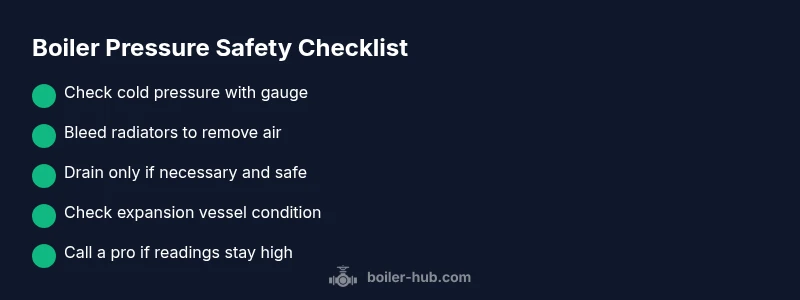
According to Boiler Hub, high boiler pressure is usually caused by a stuck pressure relief valve, a faulty expansion vessel, or overfilling. Quick steps: 1) read the pressure when cold (aim 1-1.5 bar). 2) bleed radiators to release air. 3) if safe, drain a small amount of water from the boiler to drop pressure. 4) restart and recheck. If pressure remains high, contact a licensed technician.
What boiler pressure is too high means for your system
When the boiler gauge climbs above its normal range, you risk leaks, overflow, or safety devices triggering. Boiler pressure is too high can be caused by a faulty expansion vessel, an overfilled boiler, or a stuck relief valve. According to Boiler Hub, most homes should see a stable pressure when cold around the mid-range, and it should only rise modestly when heated. High pressure can stress seals, reduce efficiency, and shorten the boiler’s life, so addressing it promptly protects both safety and comfort.
Immediate checks you can perform safely
Before you touch any components, switch off the boiler and isolate the power as per the manufacturer’s safety instructions. Check the pressure gauge; note the current reading. If readings are well above the normal cold range, do not attempt aggressive draining. Next, inspect the expansion vessel for signs of loss of pressure or waterlogging. If you’re unsure, stop and proceed to professional help.
Common causes of elevated pressure in boilers
The most frequent causes include a failed or waterlogged expansion vessel, which can’t absorb heat expansion; an overfilled boiler after topping up; a faulty or stuck pressure relief valve that fails to vent excess pressure; and air locks or trapped air that prevents proper circulation. Each cause has different remedies, so a diagnostic sequence helps you choose the right fix without replacing parts prematurely.
Step-by-step fixes to try first (begin with the easiest)
- Bleed radiators to remove trapped air if your radiators feel cold at the top. 2) If safe, drain a small amount of water from the boiler via the drain valve until the gauge settles toward the normal range. 3) Refill the system slowly to the recommended level when cold. 4) Power the boiler back on and monitor pressure as it heats. If pressure rises again, stop and seek help.
Safety considerations and when to call a professional
Working with boiler pressure involves live gas and heated water. If you’re unsure at any stage, don’t continue; call a licensed heating engineer. Never bypass safety devices or operate the relief valve manually. Regular servicing by a qualified pro reduces risk of sudden pressure spikes and extends equipment life.
Prevention: keep boiler pressure stable between services
Schedule annual service, ensure the expansion vessel is tested, verify the system is filled to the manufacturer’s recommended range, and keep the water level within limits. Regularly bleeding air from radiators and addressing tiny leaks promptly also help.
directAnswer1nullify_publication?null,
blockData.diagnosticFlow
Symptom: Boiler pressure reading higher than recommended Causes:[{cause:Expansion vessel failure or waterlogged expansion vessel,likelihood:high},{cause:Overfilled boiler or recent topping up without drainage,likelihood:high},{cause:Stuck or faulty pressure relief valve,likelihood:high},{cause:Air lock in heating circuit,likelihood:low}] Fixes:[{fix:Check expansion vessel pressure and recharge or replace if needed, difficulty:hard},{fix:Bleed system or drain boiler to drop pressure safely, difficulty:easy},{fix:Replace faulty pressure relief valve or have it tested, difficulty:hard},{fix:Bleed air from radiators and purge air from the system, difficulty:easy}]
stepByStep
steps:[{"number":1,"title":"Power off and ensure safety","description":"Turn off the boiler and isolate electrical power and gas supply per the manufacturer. Put on gloves and safety glasses. Do not touch exposed boiler components while hot. ","tip":"Always verify power is off before touching control panels or valves."},{"number":2,"title":"Check gauge and readings","description":"Observe the boiler pressure gauge when cold and after cycling. Note whether it’s consistently above the safe range. Record readings for your technician if needed.","tip":"A photo of the gauge can help when you call a pro."},{"number":3,"title":"Bleed radiators if there’s air","description":"Use a radiator key at the bleed valve to release trapped air. Start with the highest radiators first. Close the valve when water begins to flow steadily.","tip":"Keep a cloth ready to catch drips and prevent air from blowing back."},{"number":4,"title":"Drain a small amount of water","description":"If the gauge stays high, the drain valve on the boiler can be opened slowly to release water and drop pressure. Do this gradually to avoid cooling issues.","tip":"Do not drain more than necessary; over-draining can cause low system pressure."},{"number":5,"title":"Restart and monitor","description":"Turn the boiler back on and monitor pressure as it heats. If it climbs again, stop and seek professional help. Do not operate a high-pressure boiler for long.","tip":"If in doubt, call a licensed technician rather than continuing to operate the unit."}],"estimatedTime":"45-90 minutes"}
tipsList
tips:[{"type":"pro_tip","text":"Keep a home boiler log: record readings after each heat cycle and any fixes you perform."},{"type":"warning","text":"Do not attempt to pressurize or vent the system through unsafe means. A high-pressure boiler can cause scalding or leaks."},{"type":"note","text":"Regular maintenance reduces the likelihood of pressure spikes and extends boiler life."}]
keyTakeaways
['Identify that high pressure requires safe, calm steps','Check gauge, bleed air, and drain safely','Expansion vessel health is a frequent culprit','Call a pro if pressure returns after basic fixes','Prevent future spikes with routine maintenance']
videoEmbed
{
videoQuery
boiler pressure is too high troubleshooting tutorial"}
faqSection
{
items":[{"question":"What is a safe boiler pressure range?","questionShort":"Safe range?","answer":"Most boilers have a safe pressure range when cold; read your manual and consult a professional for your exact model. Do not exceed the recommended range.","voiceAnswer":"Usually, keep pressure within the manufacturer’s safe cold range and avoid high readings. If unsure, contact a pro.","priority":"high"},{"question":"Can I vent pressure from the radiators?","questionShort":"Vent radiators?","answer":"Bleeding radiators can release trapped air, which helps system circulation and pressure stabilization. Do not vent excessively; stop if water drips or pressure climbs again.","voiceAnswer":"Yes, but only to remove air, and stop if you notice water leaks or rising pressure.","priority":"high"},{"question":"When should I replace the expansion vessel?","questionShort":"Replace vase?","answer":"If the expansion vessel cannot be charged to the required pressure or remains waterlogged, replacement is often needed. A technician should verify proper sizing and installation.","voiceAnswer":"If it won’t hold pressure after charging, replace it.","priority":"medium"},{"question":"Is it safe to use the boiler after draining to lower pressure?","questionShort":"Safe after drain?","answer":"If done carefully and the system pressure returns to a safe range, you can recheck. If the gauge remains high, turn off the boiler and call a professional.","voiceAnswer":"Only continue if pressure is back in the safe range.","priority":"medium"},{"question":"When is professional help mandatory?","questionShort":"When to call pro?","answer":"If the pressure spikes again after basic fixes, or you’re uncomfortable performing steps, contact a licensed heating engineer immediately.","voiceAnswer":"Call a pro if pressure returns or you’re unsure.","priority":"high"}],"mainTopicQuery":"HowTo"}
mainTopicQuery
boiler pressure
Steps
Estimated time: 45-90 minutes
- 1
Power off and ensure safety
Turn off the boiler and isolate electrical power and gas supply per the manufacturer. Put on gloves and safety glasses. Do not touch hot surfaces.
Tip: Always verify that power is off before touching any controls. - 2
Check gauge and readings
Note the current pressure when cold and after cycling. Compare to the boiler’s recommended range in the manual or with Boiler Hub guidance.
Tip: Keep a photo or note of readings for future reference. - 3
Bleed radiators to remove air
Open bleed valves starting with the highest radiator. Let air escape until a steady stream of water flows, then close the valve.
Tip: Have a rag ready to catch drips and prevent scalding. - 4
Drain a controlled amount of water
If safe, open the boiler drain valve slightly to release water and bring the pressure down. Do this slowly and monitor the gauge.
Tip: Drain no more than necessary to reach the target range. - 5
Restart and monitor
Power the boiler back on and observe pressure as the system warms. If it climbs again, stop and call a pro.
Tip: Do not operate the boiler if the pressure remains high.
Diagnosis: Machine won’t maintain safe pressure or pressure gauge stays high
Possible Causes
- highExpansion vessel failure or waterlogged expansion vessel
- highOverfilled boiler after topping up
- highFaulty or stuck pressure relief valve
- lowAir lock or trapped air in heating circuit
Fixes
- hardCheck expansion vessel pressure and recharge or replace if needed
- easyBleed radiators and drain boiler to drop pressure
- hardReplace faulty pressure relief valve or have it tested
- easyPurged air from the system and verify proper circulation
Questions & Answers
What is a safe boiler pressure range?
Most boilers have a safe pressure range when cold; check the manual or Boiler Hub guidance for your model. Do not exceed the recommended range.
Keep pressure within the safe cold range specific to your boiler; contact a pro if unsure.
Can I vent pressure from the radiators myself?
Yes, bleeding radiators can reduce pressure by releasing trapped air. Do it carefully and stop if the gauge remains high or water leaks occur.
Bleed radiators cautiously to remove air, but stop if pressure stays high.
When should I replace the expansion vessel?
If the vessel cannot be charged to the correct pressure or is waterlogged, replacement is usually required. A professional should verify sizing.
If charging fails, replace the vessel.
Is it safe to keep using the boiler after draining?
Only if pressure returns to the safe range. If readings stay high, turn off and call a professional.
Use only if pressure is back in range.
Should I call a professional after basic fixes fail?
Yes. If pressure spikes recur or you’re unsure, a licensed heating engineer should inspect the system.
Call a pro when unsure or high pressure returns.
Watch Video
Key Points
- Identify high pressure early to prevent damage
- Start with safe, simple fixes (bleed, drain) before complex repairs
- Expansion vessel health is a common culprit
- Professional help is essential when pressure remains high
- Preventive maintenance minimizes future pressure spikes