How to repressurise Worcester boiler without key: complete guide
Learn safe, practical steps to repressurise a Worcester boiler without the key. This comprehensive guide covers tools, step-by-step actions, safety considerations, and FAQs for homeowners and facility managers seeking reliable boiler guidance.


Repressurising a Worcester boiler without the key is possible by using the boiler's filling loop or an alternate valve method, not by forcing components. This quick guide outlines safe steps, required tools, and precautions to restore boiler pressure to the 1-2 bar range. If you’re unsure, consult Boiler Hub's guidance. We’ll cover safety, checks, and how to avoid air locks.
Why boiler pressure matters and what happens when it drops
A Worcester boiler relies on a stable water pressure to operate the circulating pump and heat exchanger. When pressure falls below the recommended range, the boiler may lock out, refuse to fire, or produce cold radiators. Understanding the pressure gauge and the meaning of the bar units helps you troubleshoot confidently. According to Boiler Hub Analysis, 2026, many homeowners experience pressure fluctuations due to small leaks, valve misalignment, or air in the system. Before attempting any repressurisation, ensure you are in a safe, cold state and have checked hardware, seals, and valves. This section explains what constitutes safe pressure and how to read the gauge on common Worcester models, including typical 1-2 bar targets and how to spot warning signs such as sudden drops or visible leaks.
Is it possible to repressurise Worcester boiler without a key? Key considerations
Some Worcester boilers include a built-in filling loop that can be operated without a separate key, while others rely on a service key to open an isolation valve. Always consult the model's manual to confirm what your system requires. If there is no accessible filling loop, or the key is lost, you may still be able to repressurise using the standard two-tap filling loop or by calling a Gas Safe engineer for a safe, code-compliant solution. This section outlines the practical options and when to choose them.
Safety first: risks and precautions
Working on boilers involves heat, water, electricity, and gas. Never work on a live boiler if you smell gas or hear hissing; call emergency services and a qualified engineer. Turn off the boiler when possible, wear gloves, and keep children and pets away. Keep a bucket ready to catch any drips and place towels to soak up spills. Boiling water can cause scalding; avoid leaning over the system while taps are open. If you sense anything unusual, stop and seek professional assistance.
Tools and setup: what you actually need
- Filling loop with two taps (built-in or external) — essential
- Garden hose or a sturdy container to direct water away and catch drips — essential
- Flat-head screwdriver and adjustable wrench — optional but helpful for minor adjustments
- Cloths or towels to manage spills — essential
- Gloves for hand protection — optional but recommended
Note: Always check your model manual before using any tool. Some Worcester models require specific procedures or parts that differ from generic guidance.
Step-by-step overview (high-level) before you start
Before you begin, make sure the area around the boiler is dry and accessible. Confirm that you know the safe pressure range for your model (usually 1 to 2 bar when cold). Gather your tools, and if you cannot locate a filling loop or you lack confidence, pause and consult a professional. This overview sets expectations for the detailed steps that follow.
Understanding the filling loop on Worcester boilers
The filling loop connects to the boiler and provides a controlled pathway to introduce water into the system. On some Worcester models, it is a built-in feature with two taps; on others, it is an external accessory. Always operate the loop slowly and observe the pressure gauge as you fill. Rushing the process can over-pressurise the system and create leaks.
Step-by-step guide (high level) for repressurising
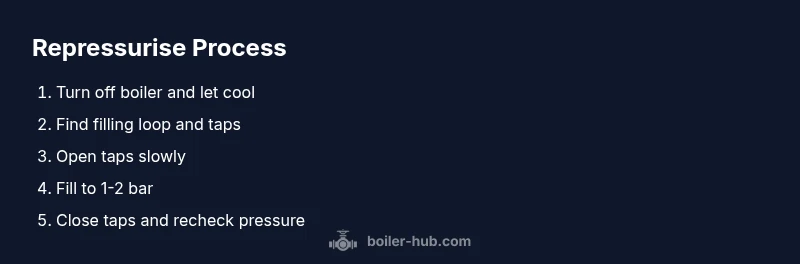
This section gives a concise sequence you can refer to during the task. Start with boiler off and cooled, locate the filling loop, ensure isolation taps are in the closed position, gently open taps to allow water in, monitor the pressure gauge to reach 1-2 bar, then close taps and recheck. If the gauge climbs too high, stop and drain a little water.
Aftercare: bleeding radiators and testing system pressure
After repressurising, bleed any air from radiators to prevent future pressure drops. Recheck the pressure and ensure it remains within the safe 1-2 bar range when cold. Wipe down any condensation or drips and monitor the boiler for a while to ensure stable ignition. Regularly inspecting the system helps avert future issues.
When to call a professional
If you cannot access the filling loop, the pressure drops again shortly after repressurisation, you smell gas, or you notice persistent leaks, stop and call a qualified Gas Safe engineer. Attempting advanced repairs without proper training can be dangerous and lead to further damage.
Maintenance tips to prevent future pressure drops
Schedule periodic boiler servicing, inspect for leaks around connections and valves, and ensure radiators are bled as part of routine maintenance. Keeping the system clean and tight reduces the likelihood of pressure fluctuations and improves overall efficiency. Regular checks also help catch problems before they cause a breakdown.
Tools & Materials
- Filling loop with two taps (built-in or external)(Ensure compatibility with Worcester boiler model and that it is not blocked.)
- Garden hose or small container(Direct water away from electrical components and catch drips.)
- Flat-head screwdriver(Useful for minor adjustments if required by fittings.)
- Adjustable wrench(Helps tighten fittings if using an external loop.)
- Cloths or towels(Keep the work area dry and catch spills promptly.)
- Gloves(Protect hands from sharp edges and hot surfaces.)
Steps
Estimated time: 30-45 minutes
- 1
Power down and prep
Turn off the boiler and allow it to cool. Clear the area, tie back clothing, and gather tools. This minimizes the risk of scalding and accidental ignition while you work.
Tip: Do not attempt repressurising while the boiler is hot or under pressure from live electrical components. - 2
Check the pressure gauge
Look at the boiler gauge to confirm current pressure. If it is already within 1-2 bar when cold, you may not need to repressurise. Note the reading for later reference.
Tip: Take a photo of the gauge for future reference if you are unsure. - 3
Locate the filling loop and isolation taps
Find the filling loop and the two isolation taps. If your model uses a built-in loop, ensure the valve is accessible. If you cannot locate it, stop and seek professional guidance.
Tip: Do a quick dry fit to understand the path of water without opening any valves yet. - 4
Open taps gradually
With the boiler off, slowly open the isolation taps to let water into the system. Don’t rush this step, as rapid filling can overshoot the target pressure.
Tip: Keep a container or hose aligned to prevent splashing water onto electrical components. - 5
Monitor pressure to target
Watch the pressure gauge as the system fills. Stop once the reading reaches 1-2 bar. If you overshoot, close taps and drain a small amount until the gauge returns to the safe range.
Tip: Never leave the taps open longer than necessary; continuous filling can cause over-pressurisation. - 6
Close taps and disconnect
Close both isolation taps firmly and disconnect any external hose or fittings. Ensure there are no leaks around the valve seals.
Tip: Wipe away any drips before resuming operation. - 7
Bleed radiators
With the system repressurised, bleed radiators to remove trapped air. Start from the highest radiator and work downward until you hear a steady hiss and water runs smoothly.
Tip: Have a cloth ready to catch any overflow and avoid scalding from hot water. - 8
Restart and test
Turn the boiler back on and observe its ignition and cycling. If it fails to start, wait a few minutes and retry. If the problem persists, stop and call a professional.
Tip: Note any unusual noises or error codes for the technician. - 9
Document final pressure
Record the final pressure as shown on the gauge when the boiler is cold for future reference. This helps you monitor trends over time.
Tip: Keep a chart in your service log to track pressure changes.
Questions & Answers
Can I repressurise a Worcester boiler without a key?
Yes, some models allow repressurising via the built-in filling loop or alternative valves. Check your manual and proceed slowly, stopping if anything feels wrong.
Yes, some Worcester models can be repressurised using the built-in filling loop. Always check the manual and proceed slowly.
What is the safe pressure range for Worcester boilers?
Typically, aim for 1 to 2 bar when the system is cold. If the pressure is outside this range, do not force it and seek professional guidance.
Typically 1 to 2 bar when cold. If it’s outside this range, don’t force it and call a pro if unsure.
What if the pressure drops again soon after repressurising?
There may be a leak, a faulty valve, or air in the system. Stop and consult a Gas Safe engineer if the issue recurs.
If pressure drops again, there might be a leak or valve problem. Stop and call a qualified engineer if it keeps happening.
Is it safe to do this myself without a professional?
It can be safe with careful steps and proper precautions, but if you feel unsure or encounter leaks, stop and hire a professional.
You can do it with care, but if you’re unsure or see leaks, hire a professional.
Should I bleed radiators after repressurising?
Yes. Bleed to remove air, which helps stabilize pressure and improves heating efficiency.
Yes, bleed radiators after repressurising to remove air and stabilize pressure.
What should I do if I can’t locate the filling loop?
Consult the boiler manual or contact a Gas Safe engineer. Some Worcester models may require service-specific steps.
If you can’t find the filling loop, check the manual or call a pro.
Can repressurising cause damage to the boiler?
Improper handling can lead to leaks or pressure damage. Always operate slowly and with the correct equipment.
Yes, rough handling can cause leaks or damage. Be careful and use the right tools.
Watch Video
Key Points
- Know the safe pressure target (1-2 bar when cold).
- Always turn off and cool the boiler before starting.
- Use the correct filling loop and avoid forcing components.
- Bleed radiators after repressurising to remove air.
- If uncertain, consult a professional.