How to Repressurise Boiler Without Filling Loop
Learn how to repressurise boiler without filling loop. This educational guide from Boiler Hub covers safe methods, common mistakes, and troubleshooting to keep your heating system reliable.


To repressurise boiler without filling loop, use the boiler’s refill point and a pressure gauge to reestablish the correct pressure while avoiding the feed loop. This approach minimizes water loss and reduces strain on seals. Follow these safety-conscious steps from Boiler Hub to restore steady pressure without introducing air or excessive water into the system.
How to repressurise boiler without filling loop
Maintaining the correct boiler pressure is essential for reliable heating and hot water. When you bypass the traditional filling loop, you’re relying on the boiler’s designated refill points and the pressure gauge to bring the system back to its optimal level. This method, when done carefully, can reduce water waste and minimize stress on seals. According to Boiler Hub, the key is to work slowly, verify readings at each step, and prioritize safety over speed. If you feel uncertain at any point, pause and consult the manual or call a qualified technician. A calm, methodical approach protects your boiler and helps prevent air locks or leaks that can compromise performance.
As you proceed, remember that different models may have slightly different refill procedures. Your boiler’s manufacturer documentation will specify the exact valve locations and target pressure range. If your system uses a pressurised filling system, ensure you’re operating the correct valve and not accidentally triggering the wrong circuit. Keeping a light, clean workspace and having a spill tray or towel nearby will help you manage any splashes or drips without creating a mess in the boiler area.
Why repressurising matters for boiler health and safety
Repressurising a boiler without filling loop is often necessary when the system loses pressure due to minor leaks, recent maintenance, or after replacing components. Low pressure can cause cold radiators, poor hot water delivery, and inefficient operation. Restoring pressure helps the boiler cycle correctly, improves cycling efficiency, and reduces the risk of air entering the system. However, over-pressurising or using the wrong refill point can lead to leaks, water hammer, or damage to safety devices. A careful, measured approach minimizes these risks and supports long-term reliability.
When you’ve established the correct pressure, the system should respond with steadier heating performance and more consistent hot water flow. If you notice persistent pressure drops after repressurising, it’s a clear sign that a leak or a valve fault requires professional assessment. Boiler Hub recommendations emphasize verifying readings after the first cycle and checking for damp spots near joints or the pressure relief valve after repressurisation.
Safety prerequisites before you start
Before you begin, ensure the boiler is OFF and has cooled. Wear safety gloves and eye protection, and keep a towel or shallow tray handy to catch water. Do not attempt repressurisation if you detect a visible leak, corroded pipes, or a damaged pressure relief valve. If your boiler is gas-fired, verify that the area is well-ventilated and that there are no ignition sources nearby. Always consult the user manual for model-specific safety instructions and pressure targets. If you’re ever unsure, contact a professional rather than risking injury or a more serious fault.
Step-by-step overview and setting expectations
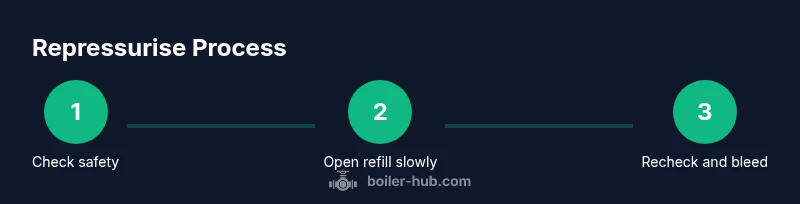
The following approach concentrates on safe techniques to restore pressure without using the full filling loop. You’ll locate the refill or filling valve, use the pressure gauge to target a reasonable pressure range, and then recheck the system after running the boiler for a short period. The aim is to reach a steady reading and confirm there are no leaks. If air is trapped in the system, you may need to bleed radiators or use a dedicated bleed point to release it before confirming the final pressure.
Tools and materials you may need (check your model first)
- Safety gloves and eye protection
- A clean towel or absorbent cloth
- A pressure gauge compatible with your boiler
- A container or tray to catch drips
- Access to the refill/filling valve (and a tool if required by your valve)
- The boiler’s user manual for model-specific guidance
Having the right tools reduces the chance of accidental overfilling and helps you work more precisely. If your system uses a pressurised replacement method, ensure you’re following the correct valve path to avoid cross-connections or unintended water flow.
Common mistakes and how to avoid them
- Opening the valve too quickly can cause a pressure surge and water hammer. Open slowly and monitor the gauge.
- Skipping the bleed step can leave air pockets that deteriorate performance. Bleed radiators if they feel cold at the top.
- Overfilling the system can trigger the pressure relief valve. Stop as soon as the gauge shows the target range and close the valve.
- Working in a damp or cluttered space increases the risk of loose connections. Keep your work area clear and dry.
- Forgetting to recheck pressure after the boiler cycles can hide a latent fault. Always verify pressure stability after a test run.
Troubleshooting after repressurisation
If the boiler struggles to reach the right pressure, recheck the refill valve position and ensure you’re using the correct valve for your model. Look for obvious leaks at joints, the filling pipe, and the pressure relief valve. If pressure climbs quickly after repressurisation or if you see frequent drops in pressure, it may indicate a more serious issue like a faulty diaphragm, a worn valve, or a hidden leak. In such cases, consult Boiler Hub’s guidelines or contact a qualified professional to diagnose the root cause and prevent further damage.
Tools & Materials
- Pressure gauge(Ensure the gauge range suits your boiler’s normal operating pressure. Reference the manufacturer’s manual for target values.)
- Access tool for the filling valve(Many boilers use a simple lever or small tool; some require a screwdriver. Check your model.)
- Towel or absorbent cloth(Catches drips and keeps the area clean.)
- Container or tray(Optional for catching water if your valve leaks during the refill.)
- Safety gloves(Protect your hands from sharp edges and hot surfaces.)
- Flashlight(Assist in locating valves in tight boiler cupboards.)
- Boiler manual(Model-specific guidance for pressure ranges and refill locations.)
Steps
Estimated time: 15-25 minutes
- 1
Power down and isolate the boiler
Switch off the boiler at the spur and disconnect from power if applicable. Allow the system to cool, then locate your boiler’s refill valve and pressure gauge. Identify any safety devices that should not be disturbed during repressurisation.
Tip: Always wear gloves and eye protection; a cool, dry workspace reduces the risk of slips. - 2
Locate the refill valve and gauge
Find the dedicated fill/ refilling valve and the attached pressure gauge. Confirm you are using the correct valve for repressurisation and that the gauge scale is readable at eye level.
Tip: If you’re unsure which valve is the refill point, consult the manufacturer’s diagram in the manual. - 3
Prepare the refill path
Place a towel under the valve to catch any drips and ensure your pathway is clear. If your boiler requires a tool to operate the valve, have it ready before you begin.
Tip: Keep the workspace dry to prevent slipping or accidental short circuits when you re-energise the boiler. - 4
Open the valve slowly to raise pressure
Gently open the refill valve and watch the pressure gauge. Stop as soon as the gauge reaches the boiler’s target operating range. Do not exceed it.
Tip: Make small, controlled adjustments; large openings can cause water hammer or a pressure spike. - 5
Close the valve and verify readings
Close the valve firmly once the target pressure is reached. Re-check the gauge after a short boiler cycle to ensure pressure remains stable.
Tip: If the reading fluctuates, there may be a leak or air in the system that needs bleeding. - 6
Bleed air if you hear gurgling
If radiators are noisy or not heating evenly, bleed air from radiators starting with the highest heat output. This helps release trapped air that can skew the reading.
Tip: Do not bleed too aggressively; release small amounts and recheck pressure afterward. - 7
Restore power and test
Reconnect power, switch the boiler back on, and run a short heat cycle. Listen for unusual noises and verify the pressure remains steady.
Tip: If pressure drops after testing, recheck for leaks and consider calling a professional.
Questions & Answers
What does repressurising a boiler involve?
Repressurising a boiler involves restoring system pressure using a refill point and gauge, then verifying the system seals and lack of leaks after a controlled fill. Always follow the manufacturer guidance to avoid over-pressurising.
Repressurising a boiler means restoring the right pressure with a refill point and gauge, then checking for leaks after a controlled fill. Follow the manual to avoid over-pressurising.
Can I repressurise without filling loop safely?
Some boilers support a direct refill through a dedicated valve. If your model does not have this feature or you’re unsure, do not proceed and consult the manual or a professional.
Some systems allow a direct refill, but if yours doesn’t, don’t proceed. Check the manual or call a professional.
How can I tell if the boiler pressure is correct?
Refer to the boiler manual for the target pressure range and compare it to the gauge reading after repressurising and running the boiler. If in doubt, stop and seek professional help.
Check the gauge against the manual’s target. If unsure, stop and consult a pro.
What are warning signs of air in the system?
Rads heating unevenly, gurgling sounds, or frequent pressure drops can indicate air pockets. Bleed radiators and recheck pressure after venting.
Noisy radiators or uneven heating can mean air in the system. Bleed the radiators and recheck the pressure.
When should I call a professional?
If you detect leaks, cannot restore stable pressure, or the pressure rises unexpectedly after repressurisation, seek a professional assessment.
Call a professional if leaks occur or you can't stabilize pressure after repressurising.
Watch Video
Key Points
- Power down and verify safety before starting.
- Use the correct refill point and gauge to target safe pressure.
- Open slowly and monitor readings to avoid surges.
- Bleed radiators if air is trapped.
- Test after repressurisation to confirm stability.