Does the boiler need to be off to repressurise? A practical guide
Discover whether you should switch off your boiler before repressurising, learn safe, step-by-step methods, and know what to do if pressure remains high. Clear, practical guidance from Boiler Hub to keep your boiler safe and efficient.


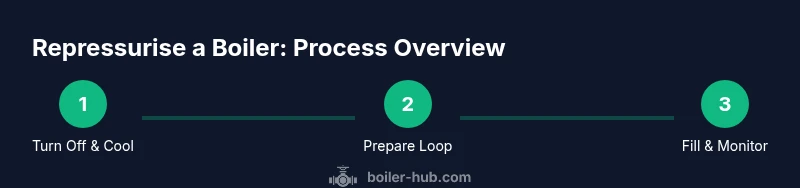
Does the boiler need to be off to repressurise? In most cases, yes. Turn off the boiler and allow it to cool before adjusting pressure. Repressurising a live or hot boiler can skew readings and risk scalding or valve damage. Always consult your boiler manual for model-specific instructions and safety guidance. For homeowners, the safe default is to switch off, isolate power, and repressurise using the filling loop when cool.
Does the boiler need to be off to repressurise? A practical baseline
When you notice a drop in boiler pressure, the natural question is does the boiler need to be off to repressurise. The safest and most common approach is to switch the boiler off and allow it to cool before you touch any fittings, valves, or the filling loop. This reduces the risk of scalding from hot water, lowers chances of inaccurate gauge readings, and protects safety devices from being tested under pressure. According to Boiler Hub, safe repressurising practices begin with powering down and isolating the system. Always start with the manual for your exact model, as some designs provide model-specific guidance that diverges from the general rule. In practice, a cooled boiler allows you to monitor pressure accurately and perform controlled filling without the risk of sudden pressure surges.
Why pressure management matters and how repressurise works
Boilers rely on a balance between fill water and residual pressure in the system. If pressure falls, radiators may take longer to heat or cold water outlets may run poorly. Repressurising reintroduces water to restore that balance, typically via a filling loop connected to the boiler’s service valves. The process should be gradual, with constant attention to the gauge. A slow fill minimizes overshoot, which could force the system to vent through safety devices or become over-pressurised. The goal is to return to the boiler’s normal operating range and then run the system for a few minutes to stabilize. Boiler Hub’s analysis emphasizes verifying both the gauge and the integrity of connections during this operation.
Safety considerations and common mistakes to avoid
Handling boiler pressure involves both mechanical and thermal risks. Always wear protective gloves and eye protection, ensure power is isolated, and never attempt to repressurise a boiler that is still hot. Common mistakes include opening the filling loop too quickly, overfilling beyond the recommended range, and failing to close the loop properly after filling. These errors can trigger leaks, valve damage, or automatic pressure relief valve activation. A careful, methodical approach reduces these risks and protects the boiler’s longevity.
Tools and checks before you start
Before touching valves or fittings, gather the essential tools and confirm the boiler type. Inspect the filling loop for signs of wear, ensure the isolation valves are accessible, and have a rag ready to catch any drips. Your boiler manual is a critical resource; model-specific steps may differ. Inspect the pressure gauge to understand the current state and note the target range for your unit. Performing a quick safety scan—cool boiler, intact insulation, and clear surrounding space—helps prevent accidents during repressurise.
What to expect during the repressurise process
When you begin repressurising, do so slowly and observe changes on the pressure gauge. The aim is to reach the boiler’s normal operating pressure without overshooting. If you see a rapid rise or if the gauge shows an abnormal spike, pause and recheck connections; there may be a leak or a faulty valve. After achieving the target pressure, close the filling loop, remove the loop if required, and recheck the gauge after a minute. Finally, switch the boiler back on and monitor for stable operation as the system heats.
Post-fill checks and maintenance considerations
After repressurising, run the boiler for a short cycle and check for any leaks around valves and joints. Bleed radiators if you notice trapped air after repressurising, and then recheck the pressure again to confirm it remains steady. If pressure drifts quickly or remains outside the normal range, there could be a faulty expansion vessel or a hidden leak. In such cases, it’s prudent to contact a qualified professional for a more thorough inspection. The Boiler Hub team emphasizes documenting readings and any anomalies for future reference.
Tools & Materials
- Filling loop key(Essential for connecting the filling loop to the boiler's service valves)
- Protective gloves(Heat-resistant and water-resistant; protects hands during handling)
- Cloth or rag(To catch drips and wipe spillage around fittings)
- Boiler manual(Model-specific instructions and safety guidelines)
- Container or tray(Catch any incidental water leaks during filling)
- Flashlight(Better visibility in tighter boiler cupboards)
Steps
Estimated time: 20-40 minutes
- 1
Turn off and cool the boiler
Switch off the boiler at the wall control and, if available, at the fuse spur. Allow the unit to cool for several minutes so the metal parts are safe to touch and the gauge readings aren’t affected by heat.
Tip: Never repressurise a hot boiler; heat expands water and can mislead gauge readings. - 2
Prepare the filling loop and valves
Locate the filling loop and ensure the isolation valves are closed before you connect. Check the loop for any signs of wear or damage and have your rag ready to catch drips once the loop is engaged.
Tip: Inspect valves for corrosion or stiffness; if it’s hard to operate, do not force it. - 3
Attach the filling loop securely
Attach the filling loop to the service valves with firm, watertight connections. Avoid overtightening, which can damage threads or seals, and keep the area dry to monitor for leaks.
Tip: Make sure the loop is horizontal and doesn’t kink during filling. - 4
Open the filling loop gradually
Slowly open the filling loop valves a small amount while watching the pressure gauge. Stop if you see rapid pressure rise or if the gauge moves past the safe range.
Tip: Open slowly, like a dimmer switch, to prevent overshoot. - 5
Stabilise and close the loop
Once the gauge reaches the recommended level, close the filling loop valves and remove the loop if required by your model. Wipe away any moisture and recheck the gauge.
Tip: Keep a mental or written record of the final reading for future reference. - 6
Resume operation and verify
Turn the boiler back on and allow it to run through a short cycle. Recheck the pressure after the system settles and bleed radiators if necessary to remove any air.
Tip: If pressure drifts over time, suspect a leak or expansion vessel issue and call a professional.
Questions & Answers
Should I switch off the boiler before repressurising?
Yes. For safety and accuracy, switch off the boiler and let it cool before repressurising. Always follow the manufacturer’s instructions for your specific model.
Yes. Turn the boiler off and let it cool before repressurising, and follow your model’s instructions.
What pressure should I aim for after repressurising?
Aim for the boiler’s normal operating range as specified in your manual. If you’re unsure, choose a safe middle point within the recommended range and recheck after a short run.
Aim for the normal operating range specified in your manual, and recheck after a short test run.
What if the pressure rises again after repressurising?
This could indicate a leak or a faulty expansion vessel. Stop further filling, shut down the boiler, and contact a qualified technician for inspection.
If pressure rises again, stop and call a qualified technician to check for leaks or expansion vessel issues.
Can I repressurise while the heating is on?
Repressurising while the heating is on is not recommended. It can skew readings and increase the risk of scalding or damage. Always perform during a cooling cycle.
Do not repressurise while the heating is on; wait for a cooling cycle.
Watch Video
Key Points
- Always switch off and cool the boiler before repressurising.
- Open the filling loop slowly and watch the gauge to avoid overfilling.
- If pressure remains high or drops unexpectedly, seek professional help.
- Consult the boiler manual for model-specific steps and safe practices.