Repressurise Boiler: A Homeowner's Guide to Restoring Pressure
Learn how to repressurise a boiler safely with Boiler Hub's expert guidance. This comprehensive guide covers safety, correct pressure targets, step-by-step actions, and maintenance tips to keep your heating efficient.


Repressurising your boiler restores safe, consistent heating. You’ll verify the current pressure, locate the filling loop, and add water until the pressure gauge reaches the boiler manufacturer’s in-range setting. If you notice leaks or the pressure drops quickly, stop and call a professional. Always follow the manual and turn off the boiler before starting.
Why repressurise boiler matters
A boiler needs the right pressure to circulate water and heat your home efficiently. When pressure is too low, you may notice slow heating, cold spots, or the boiler locking out. Maintaining proper pressure helps prevent air locks and reduces energy waste, keeping systems running smoothly. According to Boiler Hub, consistent pressure supports heat transfer and prolongs boiler life. In most homes, the pressure should stay within the manufacturer's recommended range, which is usually marked on the gauge and described in the manual. If you’re unsure what your target is, consult the boiler’s manual or call a qualified technician. The repressurisation process is a routine maintenance task that many homeowners perform safely without special tools beyond a filling loop and basic protective gear. Before you start, ensure you know where the filling loop is located and that you can access the shut-off valves. This knowledge helps you avoid over-pressurising and reduces the risk of leaks or water damage.
Safety prerequisites and setup
Safety comes first when working on a boiler. Begin by turning off the boiler, switching off the mains or isolating the circuit if applicable, and allowing the system to cool. Wear eye protection and gloves to guard against hot surfaces and splashes. Keep children and pets away from the work area. Have a towel or cloth ready to catch drips, and never pressurise a hot boiler. If you smell gas, leave the room and contact your gas supplier or emergency services. Ensure the area around the boiler is dry; a damp floor increases slip risk. Read the manufacturer’s instructions for any model-specific warnings. After completing repressurisation, switch the boiler back on and monitor for stability. If pressure remains unstable, stop and contact a professional. This cautious approach minimizes risk and aligns with Boiler Hub guidance on safe heating-system maintenance.
When to repressurise: signs of low pressure
Low pressure is typically indicated by a gauge well below the in-range area. You might notice the boiler taking longer to heat water or failing to reach set temperatures. Radiators may feel cooler than usual, and you could see a warning light on the boiler control panel. Regularly checking the gauge helps catch issues before a fault occurs. If you detect frequent pressure loss, there may be a leak in the system or in the filling loop. In that case, repressurisation alone won’t solve the problem; you’ll need a professional assessment. Remember, the pressure target is model-specific; always align with the manual. For safety and reliability, don’t repressurise too often and avoid creating surges that could damage seals.
Understanding your boiler’s pressure targets
Every boiler has an intended pressure range. Some models require a cold-range target, others adjust with heat. You’ll typically find the target on the gauge or in the manual. If your gauge shows pressure consistently outside the recommended range after repressurisation, there may be an underlying problem such as a leak, a faulty expansion vessel, or a faulty filling loop. In such cases, repressurisation will be ineffective until the root cause is addressed. Always refer to the boiler’s manufacturer instructions and seek professional help if you’re unsure. Boiler Hub recommends documenting readings over time to spot trend changes that signal wear or failure.
Tools, materials, and workspace setup
Having the right tools makes repressurising straightforward and safer. The essential items include: a filling loop that connects to the boiler’s pressure system, protective gloves and eye protection, a dry towel to catch drips, and a radiator bleed key if your system bleeds air after repressurisation. If your system uses a manual or external filling loop, prepare a clear path to the taps and ensure the area is dry. It’s helpful to have the boiler manual on hand for model-specific steps and pressure targets. Optional items include a second person to assist and a pressure gauge adapter for precise measurement. With these tools prepared, you’re ready to proceed with confidence. Boiler Hub notes that preparation reduces risk and improves results.
Step-by-step overview (high level)
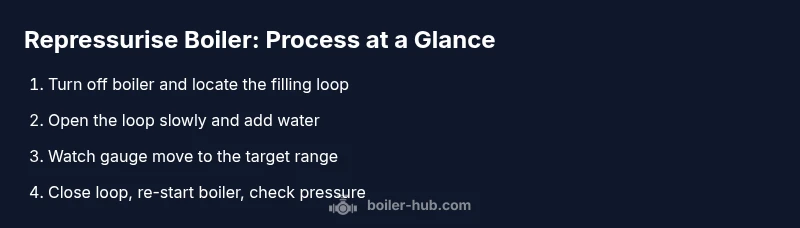
Repressurising involves a few controlled actions rather than a race against time. Start with safety checks, then access the filling loop, carefully add water, and watch the gauge move toward the target range. Close the loop promptly to avoid overfilling, then re-run the boiler to verify the reading. If you must bleed air from radiators, do so in small increments while monitoring pressure. Finally, inspect for leaks and verify that the system is balanced after the heating cycle. This section provides context; the formal steps are provided in the dedicated step-by-step block, which adheres to best-practice safety guidelines.
Post-repressurisation checks
Once the pressure is within range, run the boiler for 10-15 minutes and observe the pressure reading as the system warms up. If the pressure climbs excessively, turn off and wait for it to cool before adjusting again. Check for signs of leaks around the filling loop and all valve connections; tighten any loose fittings if you’re comfortable doing so. Bleed radiators if you still hear air or notice cold spots. Keep a log of readings for future reference and to help spot trends that may indicate a failing expansion vessel or weak seals. If you demonstrate any uncertainty or hear unusual sounds, don’t hesitate to call a professional.
Maintenance mindset: reducing future repressurisation needs
Regular maintenance reduces the need for repressurising and extends boiler life. Schedule annual servicing, inspect expansion vessels, check joints for corrosion, and flush the system when recommended. Clear radiator bleed points and keep the area around the boiler clean. If you notice persistent pressure drops or recurring leaks, consult Boiler Hub’s guidance and arrange a professional service. Boiler Hub analysis shows regular maintenance reduces the frequency of repressurisation and improves overall efficiency.
Tools & Materials
- Filling loop connection(External hose or built-in filling loop; ensure taps are accessible and clearly marked.)
- Personal protective equipment (PPE)(Gloves and eye protection to guard against hot surfaces and splashes.)
- Dry towel or cloth(To catch drips and wipe spills from the area.)
- Radiator bleed key(Useful for removing air from radiators after repressurisation.)
- Boiler manual(Model-specific guidance and target pressure range.)
Steps
Estimated time: 20-40 minutes
- 1
Turn off and allow to cool
Switch off the boiler and let it cool before touching any components. Waiting reduces burn risk and allows pressure changes to occur safely.
Tip: Wait 15–30 minutes or until surfaces are cool to touch. - 2
Locate the filling loop and taps
Find the boiler filling loop and the isolation taps. Ensure you can access them without stretching or bending into a hot area.
Tip: Check that the taps are in good condition and easy to turn. - 3
Open the filling loop slowly
Gently open the filling loop or external filling valve to allow water into the system. Open gradually to avoid a surge.
Tip: Do not force the valve; a slow flow reduces air entering the system. - 4
Monitor the pressure gauge
Watch the gauge as water fills the system. Stop when the gauge reaches the in-range target specified by your boiler model.
Tip: If the needle stays still, you may have a blocked or faulty filling loop. - 5
Close the filling loop and re-check
Close the filling loop taps firmly after reaching the target. Re-check the gauge after the loop is closed and allow the system to settle.
Tip: Make sure both taps are fully closed to prevent slow leaks. - 6
Bleed radiators if needed
If radiators feel air-hungry or make gurgling sounds, bleed them in small amounts until you feel heat return evenly.
Tip: Only vent a small amount at a time to avoid dropping pressure again. - 7
Check for leaks at joints
Inspect the filling loop connections and nearby joints for signs of water. Tighten fittings if you’re confident doing so.
Tip: Use a cloth to catch drips and inspect for any fresh dampness. - 8
Restart boiler and confirm stability
Turn the boiler back on and let it run through a heating cycle. Verify the pressure remains stable as the system warms.
Tip: If pressure rises excessively, power down and re-check or call a pro.
Questions & Answers
What causes boiler pressure to drop, and can repressurising fix it?
A drop in pressure is often due to a leak, air in the system, or a faulty filling loop. Repressurising can address temporary low pressure, but persistent drops usually indicate a leak or faulty component that needs professional attention.
Low pressure is often caused by leaks or air in the system. Repressurising helps temporarily, but ongoing drops need a professional check.
Can I repressurise a boiler myself, or should I hire a technician?
Many homeowners can repressurise safely by following the manual and using basic tools. If you’re unsure about the model, hear leaks, or see repeated pressure drops, contact a professional.
Yes, you can do it yourself if you follow the manual and stay safe. Call a pro if you’re unsure or see leaks.
What should I do if the pressure rises too high after repressurisation?
If pressure climbs above the safe range, switch off the boiler and wait for it to cool before trying again. A persistent high reading suggests a fault somewhere in the system and warrants professional service.
If it goes too high, turn it off and wait to cool. If it stays high, call a pro.
How often should I repressurise the boiler?
Only repressurise when readings show the pressure is outside the normal range. Frequent repressurisation can indicate a leak or other issue that needs inspection.
Repressurise only when needed. Frequent attempts mean you should get the system checked.
Are there safety warnings I should heed when repressurising?
Yes. Never repressurise a hot boiler, avoid forcing valves, and be careful around gas smells. If in doubt, pause and contact a qualified technician.
Don’t repressurise a hot boiler. If you smell gas, leave the area and call your gas provider.
Watch Video
Key Points
- Check the pressure on the gauge before acting.
- Open the filling loop slowly to avoid water hammer.
- Close the loop promptly once at the target range.
- Bleed radiators to remove trapped air if needed.
- Document readings and follow the boiler manual for targets.