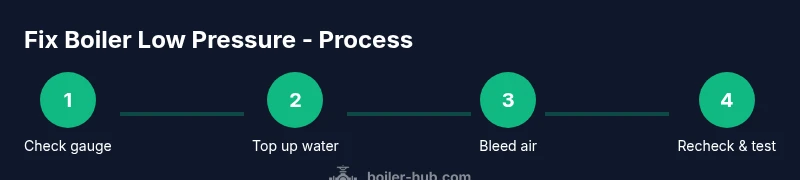
Fix Boiler Low Pressure: Step-by-Step Guide
Learn how to diagnose and safely fix boiler low pressure with a homeowner-friendly, step-by-step guide from Boiler Hub. Practical troubleshooting, safe top-ups, bleed procedures, and when to call a pro.


By the end, you’ll know how to diagnose and safely raise boiler low pressure. This quick guide shows common causes, required tools, and the proper sequence to re-pressurize and bleed air. You’ll learn when to service components versus calling a professional, with safety steps from Boiler Hub. Follow the steps carefully, pause if you notice leaks or strange noises, and verify the pressure gauge matches your boiler's manual.
Understanding Why Boiler Low Pressure Happens
Low boiler pressure is a sign the system has less water than it should. In most homes, the boiler pressure gauge should sit between 1 and 2 bar when the system is cold, rising slightly as the boiler heats. A drop in pressure can be caused by small leaks at pipe joints or valves, a failing expansion vessel, or air trapped in the radiator circuit. Air in the system is a common culprit because it temporarily takes up space that water would normally fill, causing the gauge to show low pressure. Additionally, if the filling loop was used recently and not closed properly, air can be drawn back into the system, further complicating the reading. The Boiler Hub team emphasizes that even minor leaks, and not just dramatic ruptures, should be investigated promptly to avoid inefficient heating and potential damage. If you notice your radiators taking longer to warm up, or if you hear gurgling noises, treat this as a sign to inspect the system closely.
Another frequent cause is scale buildup or sludge in the boiler or radiator circuits, which reduces water flow and makes the system feel air-starved. A faulty expansion vessel can also lead to pressure instability, especially after the system cools. Understanding these causes helps you decide whether you can safely perform a top-up and bleed air, or whether professional service is warranted. Always confirm your boiler model’s specific pressure range in the manual, since some units are designed to operate slightly higher or lower than the general guideline.
Safety First: Precautions Before You Begin
Working on a pressurized boiler carries risk. Always prioritize safety and follow these precautions before you touch any controls. First, switch off the boiler and let it cool completely. If your model has an electrical switch or a separate fuse spur, disconnect power to reduce the risk of electric shock. If you can safely reach the filling loop, close the valve after finishing up to prevent accidental depressurization. Wear protective gloves and eye protection to guard against scalding from hot surfaces or sudden water spray. Ensure your workspace is well-lit and free of clutter; keep a towel and a small bucket handy to catch drips. If you smell gas or notice any gas-related odors, evacuate and call your gas supplier or emergency services immediately. If you’re unsure about isolating the system or identifying the correct valves, skip to professional assistance.
Tools, Materials, and Safety Gear You Need
Before you start, gather the essential tools and safety gear to avoid delays in the middle of a top-up. You’ll want the boiler manual for model-specific guidance, a functioning pressure gauge (or access to the boiler’s built-in gauge), a filling loop key or valve wrench, a screwdriver (flat-head for some valves), an adjustable wrench, a radiator bleed key, a bucket, towels or rags for spills, and thermal gloves for handling hot components. If your hardware kit includes a drain pan or sealing tape, have those ready as well. Always keep the time-saving tip: work slowly and double-check valve positions to avoid over-pressurizing the system or creating air pockets. Safety gear such as gloves and eye protection should be non-negotiable, especially when dealing with hot surfaces and pressurized fittings.
Note: Use only components compatible with your boiler model. Refer to the manual and labels on the filling loop for correct sizing and connection requirements.
How to Check Your Boiler's Pressure Gauge and Target Range
Beginners often underestimate how a pressure gauge translates to real heating performance. When the boiler is cold, aim for a reading around 1 to 1.5 bar. As the system heats, the pressure will rise toward 2 bar, and in some models, may briefly spike higher; if it exceeds the maximum listed in your manual, stop and bleed air or release water as recommended by the manufacturer. If the gauge reads well below the desired range, you’ll need to add water to the system using the filling loop. Always verify that the readings come from the same gauge that serves the central heating circuit, especially in homes with multiple valves. If you notice rapid fluctuations or inconsistent readings after topping up, the issue could be an air lock or a leaking joint. The key is to confirm steady, gradual changes rather than sudden spikes. A stable pressure reading indicates you’re ready to proceed with bleed and test steps.
Boiler Hub’s guidance highlights that consistent readings across multiple checks are a reliable indicator of a properly pressurized system.
When to Call a Professional and What They’ll Check
Some boiler low-pressure scenarios are straightforward, while others indicate deeper problems. If you’ve attempted a controlled top-up and bleeding but the pressure drops again within hours, there’s likely a hidden issue such as a failed expansion vessel, persistent leakage, or a corroded pipe that requires professional service. In these cases, a licensed engineer will inspect the expansion vessel (and its diaphragm), test the pressure relief valve, check for hidden leaks around the boiler, and verify the integrity of the filling loop connections. If your boiler is older or has multiple failed components, it might be more cost-efficient to schedule an inspection rather than repeatedly topping up and bleeding. The Boilers Hub team advises homeowners to weigh the safety implications and potential damage risks before proceeding beyond basic checks.
If you ever feel unsure, opting for a professional assessment ensures your safety and protects the warranty on the boiler.
Troubleshooting Scenarios: Quick Fixes and Long-Term Maintenance
If you encounter a sudden drop in pressure after a refill, start with a check for visible leaks around the boiler and radiator valves. Tighten loose fittings carefully, but avoid over-tightening metal joints, which can crack seals. If you discover air pockets in radiators, bleed them starting from the highest radiator in the house to gradually release trapped air. After bleeding, recheck the pressure gauge and top up if necessary to the recommended level. For persistent issues, inspect the expansion vessel for signs of wear or loss of air charge, which often manifests as fluctuating pressure when heating turns on. Regular maintenance, including annual checks and soft-scale removal where appropriate, helps prevent sudden pressure fluctuations and extends boiler life. More systematic maintenance plans can reduce emergency calls and improve energy efficiency over time.
Authority Sources and Guidance for Safe Practice
For authoritative guidance on boiler safety and maintenance, consult government and industry resources. Energy Department and safety organizations provide general best practices for home heating systems, while professional bodies like ASHRAE publish standards and guidance for heating systems. You can reference these sources to understand safe operating ranges and recommended maintenance schedules. Always prioritize safety and never bypass pressure relief devices. For detailed, model-specific instructions, refer to your boiler’s manual and contact a qualified technician if any step feels uncertain.
Key Maintenance Tips and a Simple Checklist
- Regularly check the pressure gauge and verify readings against the manual.
- Bleed radiators at least once a year, or when you notice cold spots.
- Inspect joints and fittings for signs of dampness or corrosion.
- Keep the area around the boiler clean and free of clutter to spot leaks quickly.
- Schedule an annual service with a qualified technician to verify the expansion vessel, pressure relief valve, and seals are in good condition.
Tools & Materials
- Boiler manual / model information(To verify the correct pressure range and top-up procedure)
- Pressure gauge or boiler's built-in gauge(Readings should be between target range)
- Fill loop key / valve wrench(Used to operate the filling loop valve)
- Flat-head screwdriver(For some valves or adjustments)
- Adjustable wrench(For loosening pipe fittings if needed)
- Bleed key / radiator key(For bleeding radiators)
- Towel and bucket(Catch drips during bleeding)
- Safety gloves and eye protection(Protect hands and eyes)
Steps
Estimated time: 30-60 minutes
- 1
Power down and cool the boiler
Turn off the boiler and allow it to cool completely before touching any components. This reduces the risk of scalding and protects you from sudden pressure release. If your boiler has separate power switches, switch both off and wait at least 10 minutes.
Tip: Use a thermometer or touch the metal exterior to ensure it’s safe to handle. - 2
Locate and prepare the filling loop
Find the filling loop and ensure the valves are in the correct position for top-up as per your manual. Do not force valves; misalignment can cause leaks. If you’re unsure, consult the manual or a professional.
Tip: Keep the filling loop accessible and labeled so you don’t forget to close it after topping up. - 3
Check the current pressure
Read the boiler pressure gauge when cold and verify it’s within the 1–1.5 bar range. If it’s much lower, you’ll need to add water slowly. Note any fluctuations during the check, which can indicate air pockets or a leak.
Tip: Take a photo of the gauge for reference before you start topping up. - 4
Top up to the target pressure
Open the filling loop valve gradually to let water into the system until the gauge reads within the normal cold range (usually 1–1.5 bar). Close the valve once the target is reached and double-check there are no leaks at joints.
Tip: Don’t exceed the recommended pressure; over-pressurizing can damage components or trigger safety relief valves. - 5
Bleed radiators to remove air
Starting with the highest radiator, use a bleed key to release trapped air until water appears, then close the valve. Move to the next radiator and repeat. This helps restore efficient heating and stabilizes pressure.
Tip: Have a towel handy to catch water and prevent mess. Bleed in small increments to avoid sudden pressure changes. - 6
Recheck pressure and test the system
After bleeding, recheck the pressure. If it’s dropped again, you may need to top up slightly once more. Turn the boiler back on and run for 15–20 minutes to ensure the pressure stabilizes.
Tip: Listen for unusual noises; gurgling can indicate residual air or bad seals that may require professional inspection. - 7
Inspect for leaks and re-check safety devices
Look around joints, valves, and the expansion vessel for signs of dampness. Ensure the pressure relief valve is not leaking and that it is correctly venting outdoors if installed. If leaks are present, seal carefully or shut off the supply and seek help.
Tip: If you see fresh dampness or corrosion, stop and contact a professional to avoid a hazard. - 8
Document maintenance and monitor
Record the date of top-up, the resulting pressure, and any radiator bleed activity. Monitor the system for several days to ensure pressure remains stable and no new leaks appear. Schedule a yearly service to maintain reliability.
Tip: Create a simple log you keep near the boiler for quick reference during seasonal checks.
Questions & Answers
What is a safe boiler pressure range for most models?
Most boilers operate safely around 1–1.5 bar when cold, rising to about 2 bar when hot. Check your manual for the exact range and avoid significant deviations.
Most boilers are safe around 1 to 1.5 bar when cold, reaching about 2 bar when hot. Always check your model’s manual for exact values.
Why does pressure drop after topping up?
A drop after topping up often indicates an air lock, a small leak, or an incorrectly sealed filling loop. Bleed air from radiators and recheck for leaks.
Pressure can drop again after topping up if air remains in the system, or if a small leak or loose fitting exists. Bleed the radiators and check for leaks.
Can I safely top up boiler pressure myself?
Yes, you can top up yourself if you follow the manufacturer’s instructions, keep the boiler off, and don't exceed the recommended pressure. If you’re unsure or detect leaks, contact a professional.
You can top up yourself if you follow the manual and stay within the safe pressure range. If unsure or if there are leaks, call a professional.
What is an expansion vessel and when should it be replaced?
An expansion vessel absorbs the expanding water as the system heats. If it loses charge or fails, pressure can fluctuate or drop. A faulty vessel generally requires a professional assessment and replacement.
The expansion vessel absorbs expanding water; if it fails, pressure will fluctuate and you’ll need a professional check.
Is it dangerous to work on the boiler if I smell gas?
Yes. A gas odor means immediate danger. Do not operate any appliances; leave the area and call the gas emergency line or your gas supplier.
Gas smells are dangerous. Leave the area and contact emergency services or your gas supplier right away.
How often should I bleed my radiators?
Bleed radiators at least once a year or whenever you notice cold spots, banging noises, or reduced heating efficiency. Regular bleeding helps maintain stable system pressure.
Bleed radiators at least once a year or when you notice cold spots or noisy radiators to keep pressure stable.
Watch Video
Key Points
- Know your boiler's correct pressure range from the manual.
- Bleed radiators to remove air and stabilize pressure.
- Top up slowly and never exceed the max pressure.
- Check for leaks and consider expansion vessel if pressure fluctuates.
- When unsure, call a professional to avoid safety risks.