Problem Boiler Troubleshooting: Urgent Fix Guide
Facing a problem boiler? This urgent troubleshooting guide walks homeowners through quick checks, diagnostic flow, and safe fixes. Learn when to call a pro and how to prevent future boiler problems with Boiler Hub.


Most boiler problems begin with power, ignition, or thermostat issues. Start by confirming the unit is powered and the breaker is on, then check the gas supply or electrical ignition and verify thermostat settings. If you smell gas or hear hissing, evacuate and call emergency services. Use this quick flow to triage safely before deeper fixes.
Understanding the urgency of a problem boiler
A boiler that won’t heat water or fails to stay on can disrupt comfort, safety, and even your family’s health in cold seasons. In many homes, a problem boiler is not just inconvenient—it’s a potential safety risk if a gas leak or carbon monoxide buildup is involved. The Boiler Hub team emphasizes acting quickly but calmly, following a safe, methodical troubleshooting flow. Start with the simplest checks and progressively verify critical systems such as power, gas supply, and ignition. By prioritizing safety, homeowners and facility managers can minimize downtime and prevent further damage to the boiler or surrounding equipment. This guide walks through a practical, stepwise approach designed for non-experts, with clear safety warnings and escalation steps. Keep CO detectors active, ventilate the area as needed, and never bypass safety devices in the name of speed. The goal is to restore comfort while maintaining a safe environment for everyone in the building. The problem boiler scenario is common, but a calm, structured method yields reliable results in most cases.
Common causes of a boiler not firing or heating
Boilers fail to start or heat for several reasons, and a rational, prioritized checklist helps identify the root cause without guesswork. The most frequent culprits are power issues (tripped breakers or blown fuses), ignition problems (pilot light or electronic ignition failure), thermostat or timer faults (misconfigured schedules, dead batteries, or faulty sensors), and low or uneven water pressure (which can prevent safe operation). In gas-fired boilers, a closed gas valve or a blocked gas line can also stop ignition. Some noises or banging indicate air in the system or water hammer; leakage or corrosion can degrade performance and safety. For steam boilers, leaky radiators and pressure valve issues may manifest as reduced output. By separating mechanical/electrical faults from control/setting problems, you can target your repair efficiently and reduce the risk of unnecessary disassembly. If you’re unsure, start with the simplest items first—power and settings—and progressively move toward more complex checks.
Safety-first checklist before you begin
Before touching any boiler components, take these safety precautions: 1) Turn off the boiler's power at the switch or fuse box and, if you can do so safely, shut off the gas supply valve. 2) Allow the system to cool and vent any stored heat. 3) Ensure CO detectors are functioning and the area is well-ventilated. 4) Wear eye protection and gloves when handling panels or damp components. 5) Keep a clear path to the emergency shutoff and have a fire extinguisher nearby. 6) Never bypass safety devices or attempt to light a pilot if you detect a gas odor that lingers after ventilation. This section helps you perform preliminary checks without risking injury or damage, and it sets the stage for a controlled diagnostic process.
Diagnostic flow: symptom to solution
Begin with the symptom the boiler is showing, then move through a logical sequence to narrow down the cause. Common symptoms include: no heat, insufficient heat, frequent cycling on and off, strange noises, or error codes on the controller. Start by verifying power and breaker status, then inspect the gas supply and ignition system if applicable. If the boiler runs but produces cold water, check the pressure gauge and make sure the system is charged to the correct range. For older systems, inspect the condensate trap and drainage to prevent automatic shutdowns. Document any error codes from the control panel, as they guide the troubleshooting path. If the symptom persists after these checks, escalate to professional service—gas appliances and high-pressure systems require licensed technicians. This flow helps you move from simple, safe checks to targeted fixes and ensures you don’t miss a critical safety step in the process.
Practical, step-by-step fixes for the most common causes
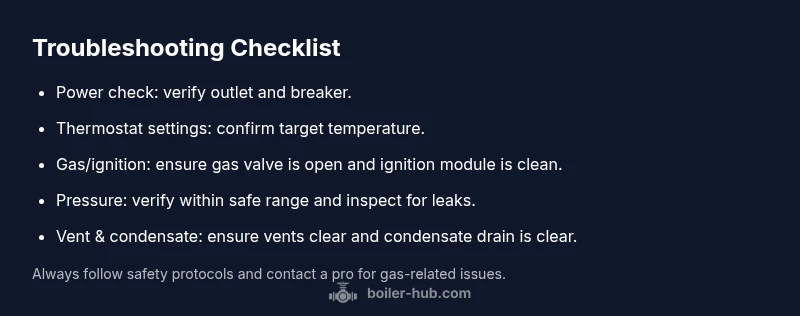
Fix 1: Power and safety reset — verify the boiler is plugged in, the outlet has power, and the wall switch is on. Reset the boiler following the manufacturer’s guidelines if the status indicator suggests a fault. Fix 2: Thermostat and timer settings — confirm the thermostat setpoint is high enough for comfort and verify that timers aren’t disabling heat during peak hours. Replace batteries if needed and ensure the control wiring is secure. Fix 3: Ignition issues — for gas boilers, check that the gas valve is open and that any electronic ignition module is clean and free of debris. If you see a pilot light, ensure it is steady and blue; yellow or absent flames indicate a problem. If the ignition circuit won’t arouse, do not attempt to force start; call a pro. Fix 4: Pressure and water — check the pressure gauge, fill if needed within the safe range, and inspect for leaks. Low pressure can cause the boiler to refuse to operate, while high pressure can trigger safety shutoffs. Fix 5: Venting and condensate — ensure vent pipes are clear and condensate traps are not blocked. A blocked vent or trapped condensate can cause poor performance and shutdowns. The most common fixes are straightforward and safe, but if in doubt, stop and seek professional help. Tip: document each fix you test to avoid repeating steps.
Prevention and maintenance to avoid future problems
Set a monthly self-check routine: listen for unusual noises, inspect radiators, bleed air if needed, and verify pressure. Schedule annual professional service to inspect burner, heat exchanger, seals, valves, and venting. Replace worn gaskets and seals promptly and maintain CO detectors. Keep a log of maintenance tasks and any fault codes to share with a technician. Regularly cleaning the condensate trap and ensuring safe drainage can prevent many common shutdowns. Finally, keep a calendar reminder for safety checks, and ensure your team knows how to shut off power and gas in an emergency. This proactive approach reduces downtime and extends boiler life.
Steps
Estimated time: 60-90 minutes
- 1
Power check and safety disconnect
Locate the boiler service switch and the circuit breaker. If the boiler isn’t responding, flip the dedicated breaker off and back on to reset the circuit. Ensure you are standing on a dry surface and wearing protective gear.
Tip: If you must touch live components, keep one hand in your pocket to reduce shock risk. - 2
Verify pressure and water supply
Look at the boiler pressure gauge and compare it to the manufacturer’s recommended range. If pressure is low, locate the filling loop and slowly add water until the recommended level is reached while watching for leaks.
Tip: Do not overfill; too high pressure can trigger safety shutoffs. - 3
Check thermostat and timers
Ensure the thermostat is set to a temperature that will trigger heating. Check for a tripped timer or disabled cooling schedule that might prevent heating during the day. Replace batteries if the remote thermostat is wireless.
Tip: Note down current settings before making changes. - 4
Inspect ignition system or pilot light
For gas boilers, confirm the gas valve is open and the ignition module is clean. If there is a pilot light, verify it is bright blue and steady. If the pilot won’t stay lit, do not force ignition; seek professional help.
Tip: Avoid touching ignition components with wet hands. - 5
Assess venting and condensate
Check that vent pipes are clear and condensate traps are draining properly. A blocked vent or a full condensate trap can cause the boiler to shut down or fail to ignite.
Tip: Never vent modifications without a licensed technician. - 6
Call a professional if necessary
If basic steps don’t restore heat or you detect a gas smell, shut off power and gas and contact a licensed technician immediately. Gas-fired boilers require professional service for safe repair.
Tip: Provide the technician with all fault codes and steps you’ve taken.
Diagnosis: Boiler won't ignite or provides no heat
Possible Causes
- highPower issue (tripped breaker or blown fuse)
- mediumGas supply or ignition fault
- mediumThermostat or control settings fault
- lowLow water pressure or faulty pressure switch
Fixes
- easyReset the breaker or replace blown fuse; verify power at the boiler and outlet
- mediumCheck gas supply valve position, ensure gas line is open, and inspect ignition module; clean or replace if needed
- easyTest and adjust thermostat/setpoint; verify timers aren’t disabling heat during required times
- easyCheck and restore proper system pressure; inspect for leaks and inspect pressure switch operation
Questions & Answers
Why won't my boiler turn on?
Common causes include power issues, a tripped breaker, faulty thermostat, or a safety lock triggered by unsafe conditions. Start with power and thermostat checks, then verify gas supply if applicable. If unresolved, contact a licensed technician.
Common causes are power, thermostat, or gas issues. Begin with power and thermostat checks, then check the gas supply if applicable. If it still won't start, contact a licensed technician.
How do I reset a boiler safely?
Turn off power at the switch, wait a moment, then switch back on. If the boiler has a reset button, press it following the manufacturer’s instructions. If a fault code persists, consult the manual or a professional.
Turn off power, wait, then switch back on. Use the reset button if present and follow the manual. If faults persist, get professional help.
What should I do if I smell gas near the boiler?
Evacuate the building immediately and call the gas emergency line from outside. Do not operate electrical switches or flames. Once safe, have a licensed technician inspect the installation.
If you smell gas, leave the area right away and call the gas emergency line. Do not switch on lights or anything electrical until you’re safe.
Can air in the system cause the boiler to stop heating?
Yes, air can impede circulation and reduce heating. Bleed radiators and check for trapped air if you notice cold spots or banging sounds. If the issue persists, have a pro assess the system.
Air in the system can stop heating. Bleed radiators, then call a pro if needed.
When is professional service necessary?
If basic checks fail to restore heat, if you detect a gas odor, or if high-pressure or dangerous components are involved, contact a licensed technician promptly. Professional service ensures safe and compliant repairs.
Call a licensed technician if simple fixes don’t work or you suspect gas or high-pressure issues.
Watch Video
Key Points
- Identify the dominant cause first for quick wins
- Never bypass safety devices during troubleshooting
- Regular maintenance prevents many problems
- Call a licensed pro for gas, high-pressure, or emergency work