Outdoor Wood Boiler Repair Near Me: Practical Guide for Homeowners
Learn how to diagnose, repair, and maintain your outdoor wood boiler with a practical, safety‑focused step‑by‑step guide from Boiler Hub. Find local tips, tools, and when to call a pro.


This guide helps you diagnose and fix common issues with outdoor wood boilers close to you. You’ll learn essential safety steps, quick inspection checks, and a practical repair workflow you can perform or verify with a local pro. Ready-to-use checklists and timelines keep you organized while reducing downtime and risk.
Understanding outdoor wood boiler systems
Outdoor wood boilers (OWBs) provide heat by burning seasoned wood in an insulated firebox and circulating heated water through an enclosed jacket. The heated water travels to a radiant system or storage tank, then returns to the boiler. Key components include the firebox, water jacket, heat exchanger, circulation pump, expansion tank, and the control cabinet with thermostat and safety switches. A properly sized and installed OWB should vent through a chimney with a clean, draw-friendly flue. Regular gaskets and door seals keep combustion gases from leaking and maximize efficiency.
According to Boiler Hub, a well-maintained OWB is safer, more efficient, and less prone to costly emergency repairs. Consistent maintenance reduces wasted fuel, minimizes creosote buildup, and extends the life of your equipment. The Boiler Hub team emphasizes that local repair expertise matters: finding a trusted technician near you can mean faster service, safer operation, and compliant installation.
Symptoms that indicate repair is needed
Owning an OWB means watching for several telltale signs:
- Poor or inconsistent heat delivery, cold spots in radiators, or time‑lags between firing and heat output. These may indicate clogged exchangers, air locks, or weak circulation.
- Excessive or unusual smoke, strong fuel odors, or visible soot around joints and seals. This can signal poor combustion, gasket leaks, or flue blockages.
- Leaks around fittings, water jacket, or pump connections. Any damp spots or green mineral buildup on metal can indicate a slow leak.
- Frequent cycling or nuisance shutdowns of the control system. Faulty sensors, wiring, or control boards often cause cycling irregularities.
Boiler Hub analyses show that early detection reduces repair costs and prolongs boiler life, especially when local technicians are engaged promptly.
Safety first: essential precautions before you begin
Safety is non‑negotiable when working with OWBs. Begin by powering down all electrical components and isolating the boiler from the fuel supply if possible. Wear appropriate PPE—heat‑resistant gloves, eye protection, and flame‑retardant clothing. Work only in a well‑ventilated area and never perform repairs if you suspect a dangerous leak or carbon monoxide risk. Keep a CO detector near the work area and have a fire extinguisher on hand. If you smell gas, suspect a major leak, or see signs of active flame outside the firebox, evacuate and call emergency services.
Diagnostics mindset: how professionals approach repairs
A methodical diagnostic approach helps isolate faults without unnecessary disassembly. Start with the basics: confirm the unit powers on, verify that the thermostat communicates with the controller, and inspect for obvious signs of wear. Check seals, gaskets, and door closures for cracks or gaps. Trace the water lines for leaks, inspect the expansion tank, and listen for abnormal pump noises. Finally, assess the flue for creosote buildup and verify that the draft is unobstructed. A structured checklist keeps you from overlooking simple causes that masquerade as complex failures.
Routine maintenance and seasonal prep
Preparation and maintenance are your first line of defense against unexpected failures. Clean out ash and creosote regularly, inspect door gaskets for wear, and replace damaged seals promptly. Check and, if needed, refill the expansion tank and verify coolant/boiler water levels. Inspect electrical connections and the control panel for loose wires and corrosion. Clean the chimney and flue to maintain proper draft. Keep a log of maintenance activities and any parts replaced so you can spot patterns over time.
Troubleshooting common failures (high‑level overview)
Common OWB problems include clogged flues, degraded gaskets, air pockets in the system, and pump failures. Creosote buildup can reduce efficiency and increase fire risk, while leaks undermine pressure and heat transfer. When diagnosing, differentiate transient issues (like a cold start) from persistent faults (like a failed circulator). By separating symptoms from root causes you can identify whether a DIY fix is appropriate or if a professional service is warranted.
When to call a professional and what to expect
Some repairs require specialized tools, codes, and training. If you encounter persistent leaks, suspect structural damage to the water jacket, or face electrical faults beyond basic testing, contact a qualified technician. A pro will perform a safety‑first assessment, identify code compliance considerations, and provide a written estimate. Expect a detailed inspection, replacement parts as needed, and a test run to verify safe operation after service.
Real‑world repair workflow: a practical example (illustrative)
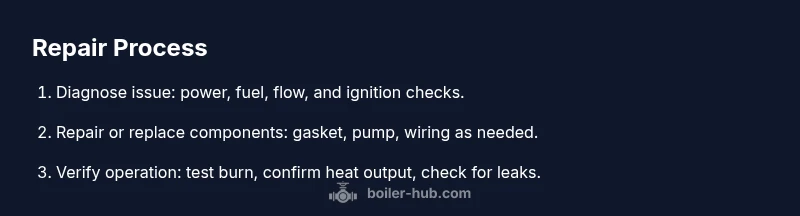
In a typical scenario, a homeowner notices reduced heat output and a slight gas smell around the boiler. A step‑by‑step approach would first power down the unit and inspect door gaskets. If a leak is found at a gasket, replacement is performed with compatible high‑heat sealant. The circulation pump is tested for speed and vibration, and the heat exchanger is checked for buildup. After reassembly, a controlled start is conducted to verify pressure, flow, and draft. This example highlights why a structured plan and local expertise matter for reliable outcomes.
Quick-start preventive plan for homeowners
Create a simple seasonal routine: (1) inspect seals and gaskets; (2) clean the firebox and ash pit; (3) verify pump operation and no air locks; (4) clean the flue and chimney; (5) record maintenance activities. By treating maintenance as a regular habit, you reduce downtime and extend the lifespan of your OWB. Remember, safety should govern every action and no repair should compromise ventilation or structural integrity.
Tools & Materials
- Safety gear (heat‑resistant gloves, eye protection, long sleeves)(Protect from hot surfaces and sharp edges)
- Insulated socket set and wrenches(Metric and SAE sizes; include flare nut wrenches)
- Multimeter(Electrical checks on controls and pump)
- Non‑conductive flashlight and inspection mirror(For hard‑to‑see corners)
- Non‑sparking tools(Safer work near live electrical components)
- High‑temperature gasket sealant(For door seals and joints)
- Replacement gaskets/door seals(Keep spare set on hand)
- Silicone sealant for high heat and copper/steel clamps(Seal joints and secure piping)
- Chimney brush and ash removal tools(Clean creosote buildup safely)
- Bucket, ash scoop, and rags(Contain and clean debris)
Steps
Estimated time: Total time: 60-120 minutes
- 1
Power down and secure the unit
Cut power to the OWB controls, shut off the feed supply if possible, and allow the unit to cool before handling any components. This prevents electric shock and burns while you inspect or replace parts.
Tip: Use a lockout/tagout procedure to prevent accidental restart during the repair. - 2
Inspect exterior seals and door gaskets
Visually assess visible seals for cracks and test closure with the door latched securely. Look for gaps that could let smoke or fumes escape and cause heat loss.
Tip: Wipe gaskets with a damp cloth to reveal fine cracks; replace if worn. - 3
Check fuel quality and moisture
Ensure your wood is seasoned and dry; wet or green wood reduces heat and increases creosote buildup, stressing the stovepipe and exchanger.
Tip: Store wood under cover to keep it dry and characteristically seasoned. - 4
Clean the firebox and ash pit
Remove accumulated ash and inspect for unusual debris. A clean chamber improves airflow and combustion efficiency.
Tip: Dispose of ash safely and never dispose in a flammable area. - 5
Test pump and check flow paths
Power the pump (if appropriate) and verify steady flow through the system. Look for air locks and bleed lines where air pockets can impede circulation.
Tip: Bleed air from any high points slowly to prevent splashing or spills. - 6
Inspect the heat exchanger and flue
Check for creosote buildup in the exchanger and chimney; clean carefully if needed and ensure there are no visible cracks or corrosion on exposed surfaces.
Tip: Do not use water to extinguish hot creosote; use approved methods and tools. - 7
Check wiring and control components
Inspect control wiring for wear, loose connections, and corrosion. Confirm that sensors respond to thermostat settings and safety relays are intact.
Tip: Label wires during disassembly to ease reassembly. - 8
Test run and safety verification
Reassemble, power up, and perform a controlled test burn. Observe heat output, verify no leaks, and confirm that safety shutdowns engage if triggered.
Tip: Keep a fire extinguisher nearby and monitor for at least 20 minutes after the first burn.
Questions & Answers
Can I repair an outdoor wood boiler by myself?
DIY repairs are feasible for simple issues like gasket wear or ash buildup, but complex electrical or structural repairs should be performed by a licensed technician to ensure safety and code compliance.
Yes, you can handle basic maintenance, but avoid risky electrical or structural fixes without a professional.
What are the most common issues with outdoor wood boilers?
Common problems include worn door gaskets, creosote buildup, flue blockages, and pump or control failures. Regular inspection helps catch these before they become major repairs.
The typical issues are worn seals, creosote buildup, blocked flues, and faulty pumps or controls.
How do I know when to replace rather than repair?
If the boiler shows frequent failures, significant corrosion, or has outdated components that new parts cannot verify, replacement may be more cost‑effective in the long run.
If failures are frequent or the unit is old and costly to fix, replacement may be the better option.
What safety steps should I follow before starting repairs?
Power down all electrical components, ensure the system is cool, wear protective gear, and verify there are no fuel or gas leaks before opening any components.
Always power down, let it cool, wear protection, and check for leaks before you begin.
Do I need a permit to service or repair my OWB near me?
Permit requirements vary by location. Check your local building or environmental authority for guidelines on OWB maintenance, emissions, and installations.
Local rules vary; contact your authority to confirm permit requirements.
How long does a typical OWB repair take?
Duration depends on the issue. Minor gasket or cleaning tasks may complete in a few hours; more involved fixes or part replacements could require a full day.
Most small repairs take a few hours, larger ones may span a day.
Watch Video
Key Points
- Plan safety-first before any inspection
- Use a structured checklist to diagnose issues
- Maintain seals, gaskets, and flue components regularly
- Know when to hire a pro to avoid unsafe repairs