Boiler Heating System Repair Near Me: A Practical Guide
Need boiler heating system repair near me? Learn safe troubleshooting, when to call a pro, and how to evaluate repair vs replacement with Boiler Hub guidance.


Need boiler heating system repair near me? This guide helps homeowners safely diagnose common boiler faults, identify when to shut down, and decide if you can perform light troubleshooting or should call a licensed technician. You’ll learn practical steps, safety checks, and what to ask pros, with brand guidance from Boiler Hub.
Why boiler reliability matters
A reliable boiler keeps your home warm, saves energy, and reduces the risk of dangerous situations like carbon monoxide buildup. When a boiler suddenly stops heating or runs irregularly, it disrupts comfort and can trigger expensive emergency repairs. The Boiler Hub team emphasizes that a methodical approach to diagnosing and addressing faults improves safety and reduces downtime. According to Boiler Hub analysis, thermostat and control faults are among the most common issues homeowners encounter, especially in older systems. Understanding why these components fail helps you prioritize fixes and conversations with professional technicians. By learning to recognize early warning signs—unusual noises, inconsistent heat, or fluctuating temperatures—you can catch problems before they escalate, saving time and money in the long run.
Common causes of faults in boiler heating systems
Boilers can fail for a variety of reasons, and many are not equally serious. Electrical components like control boards or thermostat wiring can drift over time, causing the system to cycle inaccurately or refuse to start. Circulation problems—such as a failing pump or air trapped in radiators—will reduce heating efficiency and create cold spots. Gas-related issues, including valve faults or intermittent ignition, are more serious and require professional inspection due to safety risks. Sediment buildup in older boilers can insulate heat exchange surfaces, lowering efficiency and increasing fuel consumption. Regular maintenance reduces these risks and helps you spot problems early.
Safety prerequisites before you begin any checks
Safety should be your first priority. Before touching boiler controls, locate and turn off the power supply and shut off the gas if you smell gas or hear an unusual hissing sound. Ensure children and pets are kept away from the equipment. A functioning carbon monoxide detector near the boiler is essential, and you should test it monthly. Have a clear path to the boiler and a dedicated space to work. If you can't verify power or gas shutoff safely, stop and call a licensed professional. Always wear protective gloves and eye protection when inspecting exposed components.
Quick checks you can perform (non-invasive)
Start with non-invasive inspections to avoid personal risk. Check the thermostat settings to ensure the system is commanded to heat. Inspect visible wiring for signs of wear, corrosion, or loose connections. Listen for unusual noises like banging or kettling when the boiler runs, which can indicate water circulation or mineral buildup problems. Confirm the pressure gauge is showing a stable reading within the range specified by the boiler’s manual. If the boiler won’t start after basic checks, or you detect a gas odor or gas-related issue, do not continue; call a professional immediately. A digital camera or notes can help document symptoms for the technician.
How to diagnose and test components (with tools)
When you have the right tools, you can narrow down where the fault lies without dismantling critical safety parts. Use a multimeter to test thermostat wiring and electrical switches for continuity and proper voltage. Check the pressure relief valve and related pipes for leaks or signs of wear. If you suspect ignition or flame-failure issues, observe whether the boiler lights reliably and maintains flame when running. Always refer to the model’s service manual for the correct test procedures and safety precautions. If the tests indicate a faulty component, replacement should be performed by a qualified technician.
When to call a professional and how to vet them
Some boiler faults require licensed expertise and safety checks beyond typical DIY tasks. If there’s a persistent failure after basic troubleshooting, if there’s a gas smell, or if carbon monoxide detectors alarm, stop and contact a licensed technician immediately. When evaluating pros, ask about licensing, insurance, and whether they perform gas safety checks after service. Request a written estimate and timeline, and confirm parts warranties. The Boiler Hub team recommends requesting a post-service report detailing the work performed and any recommended maintenance to prevent recurrences.
Cost considerations and the repair-vs-replace decision (no exact numbers)
Repair costs can vary based on parts, labor, and accessibility. In some cases, repairing a failing component is cost-effective, especially if the boiler is relatively new and efficient. If the boiler is older, frequently failing, or significantly inefficient, replacement may be a more economical long-term choice. Engage a professional to perform a comprehensive assessment, including system efficiency, fuel type, and anticipated service life. Boiler Hub guidance emphasizes comparing immediate repair costs with projected energy savings and future maintenance, not just the upfront price.
A practical troubleshooting framework you can follow
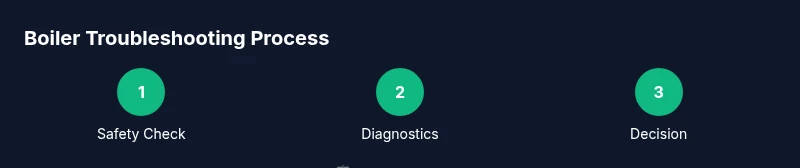
Adopt a structured approach: 1) ensure safety by shutting off power/gas and verifying detectors; 2) perform quick checks on thermostat, wiring, and basic controls; 3) test key electrical and gas components with approved tools; 4) observe system operation over one or two cycles; 5) document symptoms and outcomes; 6) decide if you can fix or need a pro. This framework reduces guesswork and accelerates a safe resolution, aligning with Boiler Hub’s practical advice for near-me repairs.
How Boiler Hub approaches boiler repairs near me
Boiler Hub advocates a proactive, safety-first mindset. Start with basic troubleshooting to rule out simple issues like thermostat missettings or air in radiators. If fundamental checks do not resolve the problem, rely on a licensed professional to assess gas safety, combustion efficiency, and major components. Our team emphasizes clear communication: describe symptoms, share any error codes, and note when the issue began. This collaborative approach helps technicians diagnose promptly and minimize unnecessary service calls.
Final maintenance tips to extend boiler life
Regular maintenance—at least once a year—can prevent many problems. Schedule professional servicing to inspect the burner, heat exchanger, pump, valves, and controls. Keep the area around the boiler clean and unobstructed, replace filters as recommended, and test safety devices periodically. A well-maintained boiler operates more reliably, uses energy more efficiently, and reduces emergency repair risks. Remember, ongoing maintenance is a small investment that pays off with comfort and peace of mind.
Tools & Materials
- Safety gloves and eye protection(Protect hands and eyes during inspection and measurement)
- Digital multimeter(Test electrical circuits, thermostat wiring, and switches)
- Screwdrivers (Phillips and flathead)(Access panels and control housings)
- CO detector(Ensure continuous monitoring for safety)
- Thermometer or infrared temp gun(Non-contact temperature checks for heat output)
- Pressure gauge/adapter(For checking system pressure with manual guidance)
- Notebook or phone to document symptoms(Record observations for technicians and future maintenance)
Steps
Estimated time: 60-120 minutes
- 1
Power down and secure the boiler area
Locate the main power switch for the boiler and switch it off. If your boiler is connected to a gas line, shut the gas valve only if you know how to do so safely. Verify that the CO detector is functioning and nearby residents are clear of the area before starting any inspection.
Tip: Lockout-tagout the electrical supply if you’ll be opening access panels to prevent accidental energizing. - 2
Check gas supply and valve position
If you have a natural gas boiler, ensure the gas valve is fully open and there is no gas odor. Do not attempt any repairs involving gas lines unless you are a licensed professional. If you smell gas, evacuate and call the gas emergency line immediately.
Tip: Never bypass gas valves or ignition controls; this can create dangerous conditions. - 3
Inspect thermostat and controls
Examine the thermostat settings and wiring for loose connections. Confirm the thermostat is calling for heat and that the control panel isn’t displaying error codes. If codes appear, refer to the manual to interpret them and determine next steps.
Tip: If wiring looks damaged, stop and call a professional rather than attempting to repair. - 4
Test electrical connections and safety switches
With the boiler powered off, use a multimeter to check continuity on critical switches and wiring. Look for burned or corroded connections, frayed insulation, or loose terminals. Do not bypass safety switches; they protect users from exposure to hazardous conditions.
Tip: Document voltage readings and take photos to share with the technician. - 5
Evaluate pressure and water flow in the system
Check the boiler’s pressure gauge against the manufacturer’s specified range. Inspect feed and expansion lines for leaks, blockages, or air pockets in the radiators. Bleed air from radiators if you notice cold spots or knocking noises, following the boiler’s manual.
Tip: If the pressure is far outside the recommended range, stop and call a professional. - 6
Observe burner operation and flame color
If you’re trained to do so safely, observe the burner flame. A stable blue flame indicates proper combustion; yellow or orange flames can signal combustion issues. Do not tamper with burner adjustments; this requires a licensed technician to avoid risks.
Tip: If you suspect improper combustion, shut down the unit and schedule professional service. - 7
Document symptoms and preliminary findings
Record what you observed, including noises, smells, heat output, and any error codes. Take photos of components and note dates of any previous maintenance. This documentation helps the technician diagnose quickly and avoids redundant steps.
Tip: Create a simple one-page summary to share with the pro. - 8
Decide on next steps and contact a professional when needed
If basic checks don’t resolve the issue or safety concerns arise, plan to contact a licensed boiler technician. Use your notes to explain symptoms, share any measurements, and confirm the expected response time.
Tip: Request a written estimate and confirm warranty coverage before any parts are ordered.
Questions & Answers
What counts as an emergency boiler repair near me?
If you smell gas, hear a hissing sound, or a carbon monoxide alarm rings, evacuate and call emergency services. Then contact a licensed technician for immediate safety assessment. Do not try to fix gas-related issues yourself.
If you smell gas or a CO alarm sounds, leave the area and call emergency services right away, then contact a licensed boiler technician.
Can I diagnose boiler issues without tools?
Some basic checks are possible by inspecting thermostat settings, visual wiring, and listening for unusual noises. However, many faults require proper diagnostic tools and professional expertise.
You can do basic visual checks, but many problems need proper tools and a pro.
How long do boiler repairs typically take?
Repair durations vary with complexity, access, and parts. Most common fixes can take a few hours, while more extensive issues may require a full day.
Repair times vary from a few hours to a full day depending on the problem.
Should I repair or replace my boiler?
If the boiler is old, inefficient, or repeatedly failing, replacement may be more cost-effective in the long run. A professional analysis can weigh up immediate costs against energy savings and reliability.
If it’s old and keeps failing, replacement can be smarter in the long run.
What should I ask a technician before hiring?
Ask about licensing, insurance, warranties, parts availability, and whether they perform gas safety checks. Request a written estimate and a scope of work before starting.
Ask about license, warranty, safety checks, and a written estimate.
Is it safe to operate a boiler with warning lights?
No. Warning lights indicate potential faults. Shut down the boiler and contact a professional rather than continuing to operate it.
If warning lights appear, stop using the boiler and call a pro.
Watch Video
Key Points
- Identify issues safely before attempting repairs.
- Shut off power and gas before inspections.
- Document symptoms for professional consultation.
- Decide between repair and replacement with professional input.
- Follow Boiler Hub guidance for next steps.