Who Fixes Boilers Near Me: Finding Local Repair Pros
Discover how to locate licensed boiler repair pros near you, verify credentials, compare quotes, and hire safely. Boiler Hub guides homeowners and facility managers through the process.


If you’re wondering who fixes boilers near me, start with licensed plumbers or HVAC technicians who specialize in boilers. Look for nearby, insured pros with boiler repair experience, ask for licenses and references, and request a written estimate before any work. For urgent issues, contact a local gas-safe engineer immediately.
Who Fixes Boilers Near Me and Why It Matters
When your boiler falters, knowing who to call matters for safety, speed, and cost. The central question many homeowners ask is who fixes boilers near me. The typical answer is a mix of licensed plumbers and HVAC technicians who specialize in domestic heating systems. According to Boiler Hub, most boilers are serviced by professionals who hold current trade licenses and carry appropriate insurance. In a standard diagnostic, the right pro will confirm the malfunction, distinguish between a quick fix and a part replacement, and provide a written estimate before work begins. Local pros can also share maintenance practices that reduce future breakdowns and extend your unit's life. This early step—identifying the right local expert—sets the foundation for a safe, code-compliant, and cost-effective repair. The guidance becomes critical in regions with gas-fired boilers where gas-safety rules require proper credentials and adherence to code. When you search, look for established local businesses with transparent pricing, clear warranties, and documented service histories. If you are facing no heating or a suspected gas issue, seek emergency service from a nearby licensed engineer promptly; safety should never be postponed. For homeowners and facility managers, the aim is to balance speed with quality workmanship to minimize downtime and energy waste. Boiler Hub’s guidance emphasizes practical, compliant choices that protect occupants and budgets.
Types of Professionals Who Service Boilers
Boilers are complex, and the people who fix them come from a few different professional tracks. The most common are HVAC technicians who specialize in heating systems and licensed plumbers who handle water-side and safety components. Gas engineers or technicians with gas-safe credentials are essential when the boiler uses gas and the work involves gas lines, burners, or vent piping. In many communities, you will find hybrid service teams that combine electrical, mechanical, and gas expertise. When you explore options near you, ask specifically about boiler repair experience, not just general plumbing or heating work. A qualified pro should be able to diagnose electrical or control issues, check the heat exchanger for wear, test the expansion tank, and verify that pressure relief devices function properly. For facilities with multiple boilers or zone controls, an HVAC contractor with building-management integration experience may be most efficient. The main takeaway is to choose a local, credible pro who demonstrates both technical proficiency and a clear safety mindset.
How to Verify Qualifications and Credibility
Verifying a pro's qualifications is not optional—it's a safety and reliability issue. Start by asking for licenses and registration numbers; contact the issuing authority to confirm current status. Confirm that the technician carries liability insurance and workers' compensation coverage; request certificate numbers and a copy of the policy. Check references from recent boiler repairs and read independent reviews on reputable platforms. Clear written estimates are essential; compare parts and labor, and ensure the estimate includes anticipated timelines and any potential additional charges. Ensure the contractor provides warranty terms on both parts and labor, and confirm whether the warranty transfers if you sell the property. If your boiler is tied to a warranty, verify that service from the right provider will maintain coverage. In cold-weather months, response time matters; ask about on-site arrival windows and after-hours options. Finally, ask about codes and safety practices, such as CO detectors, venting checks, and gas dampers where appropriate. This due diligence reduces the risk of misdiagnosis and ensures the repair aligns with local safety standards.
Practical Steps to Hire a Local Boiler Repair Pro
To hire the right person efficiently, follow a simple, repeatable process. Step 1:Define the problem by noting all symptoms (no heat, leaking flue gas, strange noises) and whether you recently had a service. Step 2: Collect referrals from neighbors, property managers, or online communities and shortlist two to four candidates. Step 3: Verify credentials (license, insurance, and references) before scheduling on-site visits. Step 4: Request written estimates that itemize parts, labor, travel, and disposal fees; ask about overtime charges and guarantees. Step 5: Compare quotes not just on price but on scope—ensure all requests are identical across bidders. Step 6: Check availability and schedule a time that minimizes downtime, particularly during cold periods. Step 7: Confirm a written warranty on parts and workmanship and secure a clear plan for communication during the repair. By documenting expectations and keeping a record, you can protect yourself against scams and miscommunications while securing a higher standard of service.
Common Boiler Issues and Who Handles Them
Different boiler problems fall to different specialists depending on the root cause. No heat or no power is often an electrical or control issue that an HVAC technician or a boiler specialist will diagnose first. Leaks—whether from pipes, valves, or the pressure relief valve—are usually handled by plumbers who can isolate the water side and then coordinate with HVAC professionals for firing or vent problems. Strange banging noises, cycling, or improper flame could involve the burner, gas valve, or heat exchanger and are commonly addressed by gas-safe technicians or HVAC pros. Inefficiency or short-cycling may be tied to thermostat calibration, zoning, or air flow, and could involve an HVAC contractor familiar with building-management systems. For all issues, ensure the pro tests gas pressure, checks venting, confirms CO detector operation, and follows local safety codes. Understanding who should be on site helps prevent misdiagnosis and ensures the right expertise is applying the fix.
Safety, Compliance, and Insurance Considerations
Boiler work intersects with gas safety, electrical codes, and environmental considerations. Always ensure your chosen pro follows strict safety practices, uses calibrated testing equipment, and documents the work. CO detectors should be present in every area around the boiler and tested after any service. Keep a record of maintenance and any parts replaced, including serial numbers. Check that the contractor has appropriate insurance and offers a written warranty for their labor and installed components. In some jurisdictions, permits may be required for significant boiler work or vent-system changes; a compliant contractor will handle permit applications or guide you through the process. If you have a rental property or multi-unit building, seek a contractor with experience in multi-unit boilers and clear communication channels for tenants. By prioritizing safety and compliance, homeowners and facility managers reduce risk and ensure reliable operation over time. Boiler Hub emphasizes that choosing a qualified pro who adheres to local regulations is the foundation of a long-lasting boiler solution.
How Boiler Hub Recommends Finding Help
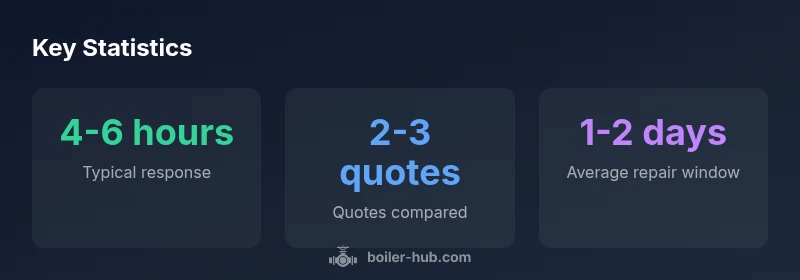
Boiler Hub's approach blends practical steps with trusted vetting. Start by compiling a short list of nearby boiler repair pros who emphasize safety, transparent pricing, and clear warranties. Cross-check credentials with state licensing boards, verify insurance, and read at least three recent customer reviews. Compare two or three written estimates, then select the option that offers the best balance of price, scope, and response time. If you want a quick route, contact a local HVAC or plumbing firm with a track record of boiler service and a reputation for reliability. For facilities with ongoing needs, establish a preferred-providers program to streamline future repairs and maintenance. Finally, remember that no heating emergencies should be delayed; if you suspect a gas leak or CO risk, evacuate and call emergency services. The Boiler Hub team recommends prioritizing licensed, insured professionals who provide transparent pricing and durable warranties, ensuring you get safe, dependable operation for years to come.
Common provider options for boiler repairs
| Provider Type | Pros | Cons |
|---|---|---|
| Independent plumber | Flexible scheduling | Limited boiler repair specialization |
| HVAC contractor | Comprehensive service | Higher cost |
| Manufacturer service | Warranty compatibility | Longer wait times |
Questions & Answers
What type of professional should I call for boiler repairs near me?
Typically licensed plumbers or HVAC technicians with boiler repair experience. In urgent cases, a gas-safe engineer is essential. Always verify licenses and insurance before work.
Call a licensed plumber or HVAC pro with boiler repair experience; verify credentials.
How can I verify a technician's qualifications?
Ask for license numbers, proof of insurance, and recent references. Check online reviews and confirm warranty options before starting.
Ask for licenses, insurance, and references; check reviews.
Is manufacturer service always better for warranty?
Manufacturer service may be required for specific warranty terms, but local pros often offer faster response and competitive pricing. Review warranty details before deciding.
Manufacturer service may be needed for warranty; compare terms.
What should I ask before agreeing to repair?
Request a written estimate with a parts-labor breakdown, timeline, and any potential extra charges. Confirm warranty terms for both parts and labor.
Get a written estimate and warranty details.
How quickly can a repair be completed?
Turnaround depends on parts and schedule; many issues are diagnosed the same day, with repairs often completed within 1-2 days.
Depends on parts; many fixes take 1-2 days.
When should I consider replacement rather than repair?
If repair costs approach or exceed replacement price, or the boiler is inefficient, replacement may be wiser for long-term savings.
If repair is pricey or boiler is inefficient, consider replacement.
“Choosing a nearby, licensed pro with clear pricing and a solid warranty is the safest choice for boiler repair. It reduces downtime and protects your investment.”
Key Points
- Identify licensed pros with boiler repair experience
- Verify licenses, insurance, and references before work
- Obtain written estimates and compare scope, not just price
- Check warranty terms and safety compliance upfront
- Prioritize safety and clear communication in emergencies