Repair Boiler Near Me: Trusted Local Technicians Guide
Find reliable, licensed boiler repair near me options with practical tips, cost ranges, and a clear path to safe, efficient service in 2026. Learn how to vet pros, understand pricing, and decide between repair or replacement for long-term reliability.


If you need a repair boiler near me, start by locating several licensed, insured technicians in your area and requesting written estimates. Prioritize providers with emergency options, transparent pricing, and current safety certifications. Expect a diagnostic call that includes a safety check, parts availability, and a clear price range before any work begins.
Why Finding a Repair Boiler Near Me Matters
In both homes and facilities, uptime is critical for comfort, safety, and operating costs. When a boiler falters, a local repair service is often the fastest route back to full heat and hot water. The phrase repair boiler near me should trigger quick access to nearby technicians who can arrive promptly, assess safety, and provide a transparent plan. According to Boiler Hub, proximity matters not only for response time but also for follow-up support and parts availability. Local pros tend to understand regional fuel types, venting requirements, and building codes—key factors that reduce the risk of recurrent issues. Start by identifying 2–4 nearby options, verify licenses and insurance, and request a written diagnostic before any work. A local, reputable technician can align scheduling with building operations and offer more predictable service outcomes. This is especially true in 2026 where rapid response supports safety and comfort for busy homes and facilities.
How to Vet Local Boiler Technicians
Choosing a trusted boiler repair near me means more than a quick callback. Look for licensed, insured professionals with verifiable credentials and a track record in your area. Check for current safety certifications, liability coverage, and worker compensation. Ask for references from recent customers and read independent reviews. Verify their license status with the appropriate regulatory body and request proof of ongoing training or manufacturer certification. When you call around, note how clearly they explain the problem, present options, and stand behind a written estimate. Local familiarity matters: technicians who know your region’s gas supply characteristics, venting rules, and relevant codes are better equipped to prevent repeat issues and ensure compliant repairs.
What Services to Expect During a Boiler Repair Call
A typical repair visit starts with a safety assessment and diagnostic tests. Expect checks of burner operation, ignition, pressure, thermostat settings, flame quality, and potential leaks. A qualified technician should perform a combustion analysis, verify venting integrity, confirm system pressure, and test the safety devices. After diagnosis, you should receive a written estimate outlining parts, labor, and any potential contingencies. Reputable pros will discuss warranty options on parts and labor and provide a clear timeline for completion. If additional parts are needed, they should order them promptly and inform you of any potential delays.
Red Flags That Warrant Immediate Service
If you notice gas smells, a pilot light that won’t stay lit, or warning lights such as CO alarms indicating danger, shut off the boiler and call emergency services or a professional immediately. Water pooling around the boiler or leaking pipes, excessive boiler noise, or frequent cycling (short cycling) are signs of potentially serious problems. These issues can indicate dangerous gas leaks, blocked vents, or failing safety valves. Do not attempt DIY fixes in these situations. Prioritize professionals who can implement a safe shutdown, diagnose the root cause, and restore safe operation with appropriate parts.
Costs, Scheduling, and Insurance Considerations
Understanding cost structure helps you avoid surprise charges. Typical service calls involve a diagnostic fee and hourly labor rates, plus parts if replacements are needed. Expect written estimates that itemize labor, parts, and any disposal fees. Emergency or after-hours work often carries a premium. Confirm whether the provider’s price includes warranty coverage on repairs or if you’ll pay out-of-pocket. If you’re within a property management regime, coordinate with the facility manager to align on maintenance windows, access to service bays, and potential multi-unit scheduling. Always obtain a written contract before work begins.
Maintenance to Reduce Future Breakdowns
Proactive maintenance is your best defense against unexpected boiler failures. Schedule annual or semi-annual service visits to inspect burners, heat exchangers, ignition systems, and safety controls. Regularly bleed radiators, check for water leaks, verify expansion tank pressure, and monitor system pressure settings. Replace worn seals, gaskets, or worn-out sensors promptly. Keep an eye on fuel efficiency and combustion efficiency indicators reported during service. A well-maintained boiler runs more efficiently, uses less energy, reduces emissions, and extends its lifespan, saving both downtime and money over time.
When to Repair vs Replace
Boilers typically last 10–15 years with proper maintenance; older units often become less economical to repair due to recurring failures and rising replacement parts costs. If repair costs approach a significant fraction of a new unit’s price, or if the heat exchanger is corroded, replacement may be the smarter long-term choice. Factor in energy efficiency—modern boilers can offer substantial savings through better AFUE and smarter controls. For large facilities or aging systems, a phased replacement plan can minimize downtime and budget impact. Weigh short-term patchwork against long-term reliability when deciding:
Preparing for a Technician Visit: A Practical Checklist
To maximize a service call, gather key information before the technician arrives. Note the boiler’s make and model, age, and recent performance issues. Ensure access to the boiler room is clear, include gas and electrical shut-off locations, and provide any previous service records. Prepare a list of symptoms, times of day when issues occur, and whether the problem is intermittent. Have a contact who can authorize work and relay building access instructions if this is a multi-tenant property. Clear the path to the unit and provide utilities access to avoid delays.
Safe and Sustainable Practices for Modern Boiler Care
Safety and energy efficiency go hand in hand. After repairs, consider upgrading to smarter thermostats, proper zoning, and high-efficiency boilers if appropriate for your building size and fuel type. Regular maintenance reduces energy waste and extends equipment life, aligning with sustainability goals. When selecting a repair near me, look for contractors who emphasize safety compliance, proper venting, and sustainable practice. Boiler Hub advocates for proactive planning, documented service histories, and transparent cost structures to ensure dependable, safe operation for years to come.
Typical boiler repair cost components
| Item | Description | Typical Range |
|---|---|---|
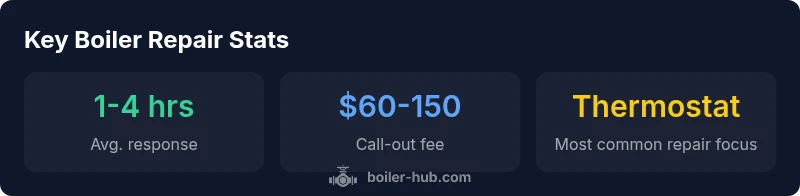
| Call-out fee | Average diagnostic or service call fee | 60-150 |
| Labor rate | Hourly charges for technician time | 80-150 |
| Diagnostic time | Time to identify the root cause | 0.5-2 hours |
Questions & Answers
How do I find a reliable repair boiler near me?
Start with 2–4 nearby providers, verify licenses and insurance, and read recent customer reviews. Always request a written diagnostic and a clear estimate before any work starts.
Begin with a short list of local providers, check their licenses, and ask for a written estimate before any repairs.
What should I ask before agreeing to a repair?
Ask about licenses, warranties on parts and labor, expected diagnostic time, and whether the price includes future maintenance. Request a step-by-step plan and a written estimate with costs.
Ask for licenses, warranties, diagnostic time, and a written cost estimate.
How long does boiler repair typically take?
Repair duration varies by problem complexity and parts availability. Most diagnostic visits are completed within a few hours, with same-day parts delivery possible in many regions.
Duration depends on the issue and parts; many repairs are completed within a day.
Are emergency boiler repairs more expensive?
Emergency repairs often carry a premium due to after-hours labor and parts availability. Expect a higher diagnostic and labor rate than standard daytime service.
Yes, after-hours repairs usually cost more due to urgency and availability.
Should I repair or replace an old boiler?
If repair costs approach the price of a new unit or if the boiler is nearing end-of-life, replacement may be more economical and energy-efficient in the long term.
If repair costs add up or the boiler is old, replacement might be smarter.
Can I perform boiler maintenance myself?
Some basic maintenance like flame inspection, filter checks, and thermostat settings can be done safely. Always follow manufacturer guidelines and consult a pro for complex tasks.
Some simple steps you can do, but for complex tasks, hire a pro.
“Regular maintenance and selecting a licensed, insured technician are the two most reliable paths to prevent costly boiler failures.”
Key Points
- Know your local options and compare 2–4 providers.
- Verify licenses, insurance, and recent customer feedback.
- Request a written diagnostic before work begins.
- Balance repair costs with potential replacement costs.
- Prioritize safety and energy efficiency in every repair.