Commercial Boiler Repairs Near Me: A Practical Guide for 2026
Find licensed commercial boiler repair pros near you. Learn how to evaluate bids, verify licensing, ensure safety, and minimize downtime with Boiler Hub's practical 2026 guidance.


Commercial boiler repairs near me require fast, safe, and compliant service from licensed technicians who specialize in gas-fired or oil-fired systems. The top priority is a qualified contractor with OEM parts, clear warranties, and emergency coverage. This guide helps business owners and facility managers evaluate bids, understand typical repair steps, and minimize downtime while staying compliant with safety regulations.
Defining the scope of commercial boiler repairs near me
When business operations depend on reliable heat and hot water, the phrase commercial boiler repairs near me has practical implications. Commercial boilers are typically larger, multi-zone systems designed to serve multiple floors or departments, with higher gas or oil input, sophisticated controls, and frequent integration with building management systems. Repairs for these units are not simply about fixing a stubborn flame; they involve flame monitoring safety systems, condensate handling, boiler feedwater quality, and possibly parallel equipment like pumps and air separators. According to Boiler Hub, the first step is to confirm the type, rating, and manufacturer of the unit, and to identify whether a single-site technician can service all equipment or if you need a brand-certified specialist for different models. In most cases, you will want a local contractor who can respond quickly, has access to OEM parts, and can work within your maintenance windows to minimize operational downtime. This means evaluating proximity, on-call coverage, and the ability to coordinate with facility management during service windows.
How to evaluate potential contractors
Choosing a contractor for commercial boiler repairs near me is a multi-criteria decision. Start with credentials: confirm a valid state or provincial contractor license where required, verify insurance coverage, and ask for client references from similar facilities. Next, assess technical qualifications: do they hold manufacturer certifications, and can they provide OEM parts or approved aftermarket components? Request a written scope of work and a warranty for both parts and labor, plus a clear emergency-response plan with expected response times. On-site evaluations are invaluable; invite at least two bidders to inspect your system and produce a phased repair plan with milestones. Finally, check communication practices: can they coordinate with your building management system, facility team, and any third-party service providers? A solid bid should include safety considerations, permit implications, and a defined handover process after repair works.
Common failure modes in commercial boilers
Commercial boilers experience various failure modes that disrupt operation and elevate risk. Fuel delivery problems (gas or oil), burner misalignment, or ignition faults can leave the system unavailable during peak demand. Circulation issues from failed pumps or clogged filters reduce efficiency and elevate stack temperatures. Corrosion, leaks at joints or pressure boundaries, and degraded heat exchangers can lead to inefficiency and safety hazards. Control-system faults—housed in modern BMS-enabled units—may cause unexplained shutdowns or erratic boiler cycling. Condensate handling can back up, especially in colder climates, leading to water hammer or piping damage. Finally, improper combustion tuning often results in high fuel consumption and elevated emissions. Understanding these failure modes helps you prioritize preventive maintenance and rapid response readiness.
Safety and compliance considerations
Safety is non-negotiable when dealing with commercial boilers. Work performed by unqualified personnel can introduce serious hazards, including gas leaks, carbon monoxide exposure, or combustible-air imbalances. Ensure technicians hold current licenses (as required by your jurisdiction) and follow local codes for venting, combustion, and electrical integration. Maintain functional carbon monoxide detectors in the boiler room and ensure proper ventilation. Documentation should include a maintenance log, inspection checklists, and certificates of compliance. In the United States, NFPA 85 provides risk-based guidelines for boiler operation and safety; similar standards exist in other regions. Establish a lockout/tagout procedure for maintenance, and ensure technicians test run the system and verify safe restart procedures before handing the plant back to operations.
What to expect during a service call
A typical service call for commercial boiler repairs near me begins with safety-scoping and an on-site assessment. The technician will confirm equipment model numbers, pressure settings, and fuel type, then diagnose issues with pressure drops, ignition faults, or sensor signals. After diagnosing, you should receive a written scope of work, an estimated timeline, and a transparent parts-and-labor quote. Refrigerant-free boilers (non-condensing) and condensing boilers require different checklists, especially around condensate traps and venting. The team will order OEM parts if needed, perform the repair, re-test safety devices, and perform a commissioning run to ensure the boiler operates within specified parameters. Finally, expect an updated maintenance plan and a short-term service window to monitor performance.
Maintenance as a strategic choice
Preventive maintenance for commercial boilers is a strategic investment that reduces unplanned downtime and extends equipment life. A structured maintenance plan includes periodic combustion tuning, pump and valve checks, gas line inspections, and vent system testing. Regular cleaning of heat exchangers and hydraulic seals minimizes fouling and improves efficiency. A robust maintenance contract should specify response times, technician qualifications, and a schedule aligned with your facility’s operating hours. While maintenance has a cost, the ROI often manifests as lower energy bills, reduced emergency calls, and more predictable downtime scheduling. In practice, maintenance should be viewed as an operating expense that yields uptime and reliability benefits.
Repair vs replacement: a decision framework
Older boilers may become cost-prohibitive to repair, especially if efficiency has declined, spare parts are scarce, or downtime costs are mounting. A data-informed decision should compare repair costs (parts, labor, downtime) against replacement costs (capital expenditure, installation, commissioning) and potential energy savings from modern equipment. Consider life expectancy, downtime risk, and the availability of compatible components. If a replacement is selected, plan a staged transition to minimize business disruption and ensure compatibility with existing building management systems. Boiler Hub advocates a holistic approach: evaluate total cost of ownership, including future maintenance, energy use, and resilience to demand surges.
How Boiler Hub can help you
Boiler Hub provides guidance tailored to owners and facility managers seeking practical, data-driven advice. Our approach emphasizes licensed technicians, transparent pricing, and safety-first practices. We encourage proactive maintenance planning, clear warranties, and a collaborative approach with building teams to minimize downtime and ensure regulatory compliance. By partnering with reputable local contractors who share these standards, you can reduce risk and maintain reliable heating and hot-water delivery across your facilities.
Common service scenarios for commercial boiler repairs
| Scenario | Typical Duration | Notes |
|---|---|---|
| Emergency repair | 2-8 hours | On-site diagnosis and immediate parts replacement |
| Preventive maintenance visit | 1-2 days | Comprehensive inspection and adjustments |
Questions & Answers
What counts as a commercial boiler?
Commercial boilers are larger-capacity units used to serve multiple zones or facilities. They often require specialized fuel handling, pumps, and controls, and may integrate with building management systems.
In businesses, a commercial boiler is a larger system that serves multiple areas and needs specialized servicing.
How do I verify a contractor's license and insurance?
Ask for license numbers, verify with the state or local registry, and request a current certificate of insurance. Confirm they carry general liability and workers’ comp coverage.
Always verify licenses and insurance with the issuing authority before work begins.
What is the typical timeline for an emergency repair?
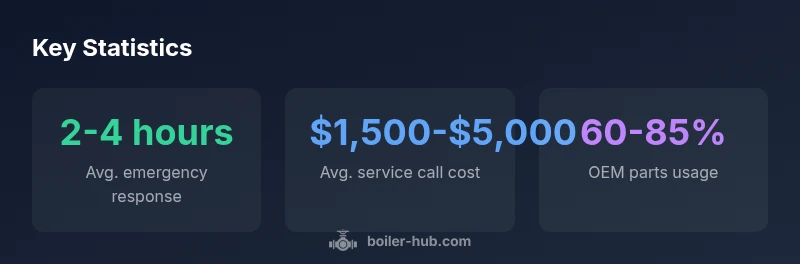
Emergency repairs vary by parts availability and crew scheduling. Aim for on-site service within 4-8 hours in many markets, with a provisional safety plan if parts are delayed.
Emergency repairs should come quickly; if parts are delayed, implement safety measures and communicate a clear ETA.
Repair or replace after a major failure?
Consider the boiler’s age, condition, and total lifecycle costs. If parts are scarce or energy efficiency is poor, replacement may offer better long-term value.
If it's old or inefficient, replacement might be smarter than costly repairs.
What maintenance reduces downtime?
Schedule periodic combustion tuning, pump checks, and vent inspections. Regular cleaning and calibration keep efficiency high and downtime low.
Regular maintenance prevents surprises and keeps downtime down.
How can I minimize downtime during repair?
Plan around low-use windows, consider a temporary boiler if feasible, and ensure staff communication is clear during shutdowns.
Plan ahead and communicate with teams to keep downtime as short as possible.
“"Reliable commercial boiler repairs hinge on licensed technicians who understand your system and local codes. OEM parts and clear warranties protect uptime and safety."”
Key Points
- Hire licensed pros with OEM-part access
- Verify licenses, insurance, and warranties
- Prioritize emergency-response capability
- Implement a preventive maintenance plan
- Evaluate repair vs replacement on total-cost basis