Learn How to Fix Boilers: Step-by-Step Guide
Practical, safety-first guidance from Boiler Hub to diagnose and fix common boiler issues for homeowners and facility managers. Includes tools, steps, and maintenance tips.


By following this guide, you will learn how to safely diagnose and fix common boiler issues and perform basic maintenance before calling a professional. You’ll identify symptoms like no heat, insufficient heat, or odd noises, verify controls and safety devices, bleed air from radiators, and test the system after adjustments. This approach emphasizes safety and practical, evidence-based steps.
Understanding boiler systems
A residential boiler is a compact, high-efficiency machine that heats water for radiators or radiant floors. According to Boiler Hub, a typical boiler uses fuel to heat water, which then circulates through a closed loop. Key components include the burner, heat exchanger, circulating pump, expansion vessel, and controls. Knowing how these parts interact helps you diagnose problems more accurately. Always prioritize safety: shut off power and fuel to the unit before inspecting, and vent the area if you suspect a gas leak. Most faults arise from improper venting, low pressure, dirty filters, or aging components. By confirming the basics first, you reduce unnecessary repairs and gain clarity about what’s actually wrong. Boiler Hub Analysis, 2026 highlights that pressure irregularities, air in the system, and misconfigured controls are common culprits.
Common boiler problems and their causes
No heat or cold radiators often point to low system pressure, a tripped safety switch, or an airlock in the loop. Uneven heating can stem from a thermostat fault, restricted circulation, or a dirty heat exchanger. Strange banging, gurgling, or whistling typically indicates trapped air, mineral buildup, or a failing pump. Leaks around joints or the expansion tank suggest worn seals or corrosion. Constant cycling on and off may be caused by faulty controls, improper fuel flow, or a dirty burner. When diagnosing, start with simple checks (visual inspection, button presses, status lights) before moving to mechanical testing. Keep a maintenance log to detect patterns over time; this helps you decide whether to repair or replace components. Many fixes are safe, but some situations require licensed gas work.
Safety first: when to call a pro
Working on boilers involves gas, electricity, and pressurized vessels. If you smell gas, hear hissing, or see an unusual flame, evacuate and contact the gas emergency line. Do not touch gas valves or seals while the system is live. If your boiler is under warranty, review terms before attempting DIY repairs that could void coverage. For high-risk tasks—gas work, combustion tuning, or replacing pressure vessels—hire a licensed technician. Even confident DIYers can misread a fault, leading to carbon monoxide exposure or property damage. When safety concerns exist, err on the side of professional support. The goal is to keep people and property safe; if in doubt, pause and call a pro.
Diagnostic checklist you can run safely
With power and fuel safely isolated, perform a structured diagnostic. Check the display for error codes and consult the manual to interpret them. Inspect the pressure gauge and compare it to the manufacturer’s recommended range; if it’s outside, follow the manual’s guidance for a safe adjustment. Look for leaks around joints, pipes, and the expansion vessel. Inspect venting and condensate lines for blockages. Bleed radiators one at a time to remove trapped air, using a cloth to catch any water. After adjustments, reconnect power and test the system through a heat cycle, watching for consistent ignition and heat delivery.
Step-by-step troubleshooting flow
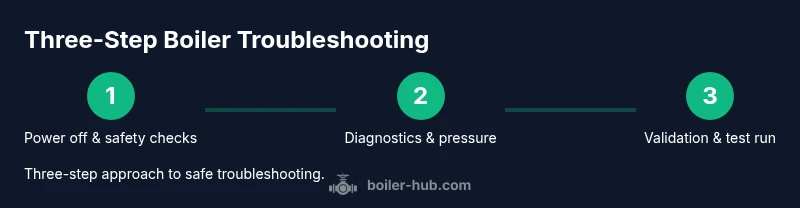
- Power down and isolate: Turn off the boiler and, if possible, shut the gas valve. Let components cool before touching panels. Tip: keep a clear workspace and note any readings.
- Check controls and codes: Read the display, document codes, and verify thermostat settings. Tip: take photos for reference.
- Evaluate pressure and fill safely: If pressure is low, use the proper filling procedure to restore it without overfilling. Tip: apply soap solution to suspect joints to reveal leaks.
- Bleed air from radiators: Open valves one by one until air stops and water flows steady. Close valves firmly. Tip: have towels ready and avoid steam burns.
- Inspect for leaks and seals: Look for damp patches on fittings and expansion devices. If you locate a leak, shut down and call a pro. Tip: document with photos.
- Test ignition and run a heat cycle: Reignite and observe burner operation. Confirm heat delivery and listen for abnormal sounds. Tip: if ignition fails, discontinue attempts and seek professional help. Estimated total time: 60-90 minutes.
Maintenance tips to prevent future issues
Regular maintenance reduces the likelihood of boiler faults and extends equipment life. Schedule an annual professional service to inspect burner operation, venting, and electrical connections. Between visits, keep the area clean and free of dust, ensure vents are clear, and check for corrosion or leaks. Bleed radiators as needed and monitor system pressure. Maintain a simple maintenance log noting readings, fixes, and codes to spot trends over time. This proactive approach improves safety, reduces downtime, and boosts efficiency. The Boiler Hub team recommends consistent upkeep to keep boilers reliable throughout 2026 and beyond.
Tools & Materials
- Safety gear (gloves and eye protection)(Heat-resistant gloves advised; ensure eye protection.)
- Digital multimeter(Test voltages in control circuits and ignition wiring.)
- Adjustable wrench(For gas line fittings and service connections.)
- Screwdrivers (Phillips and flat-head)(Remove panels and access screws.)
- Pressure gauge or manometer(Used to verify system pressure against spec.)
- Leak-detection soap solution(Check for gas and water leaks safely.)
- Rags, bucket, towels(Contain spills and keep area clean.)
Steps
Estimated time: 60-90 minutes
- 1
Power down and isolate
Turn off the boiler at the control panel, shut off the gas supply if accessible, and allow components to cool before touching anything. This reduces burn risk and prevents accidental gas release.
Tip: Keep the area well-ventilated and document any codes. - 2
Check controls and codes
Read the display, note any error codes, and verify thermostat settings. Consult the manual for code meanings and recommended resets.
Tip: Take photos of the display and codes for service calls. - 3
Evaluate pressure and fill safely
If the pressure is low, follow the boiler’s approved filling procedure to restore it without overfilling. Check for leaks while filling.
Tip: Use soap solution to reveal slow leaks along joints. - 4
Bleed radiators to remove air
Open each radiator’s bleed valve one at a time until air stops and water flows steadily. Wipe away any drips.
Tip: Bleed one radiator at a time with the boiler off and cool. - 5
Inspect for leaks and seals
Look for damp patches around fittings, pipes, and the expansion vessel. If you find a leak, shut down and call a pro.
Tip: Note location and take photos for reference. - 6
Test ignition and run a heat cycle
Reconnect power and gas, ignite the burner, and observe flame color and heat delivery. Ensure the system reaches temperature smoothly.
Tip: If ignition fails, do not force the system; seek professional help.
Questions & Answers
Can I safely fix a boiler myself?
Basic checks like bleeding radiators or resetting within guidelines are possible, but many boiler repairs involve gas or pressure risks. When in doubt, hire a licensed technician.
Basic checks are possible, but for gas or high-risk issues, hire a pro.
What are the most common boiler problems?
Low pressure, air in the system, thermostat or ignition faults, and leaks are among the most frequent issues homeowners face.
Common problems include low pressure and air in the system.
How often should a boiler be serviced?
Annual professional servicing helps prevent faults and keeps efficiency high; this is a standard practice for most boilers.
Most boilers benefit from a yearly professional service.
What should I do if I smell gas near the boiler?
Leave the area immediately and call the gas emergency line or your gas provider. Do not operate switches or doors that could ignite gas.
If you smell gas, get away and call emergency services.
When should I replace a boiler instead of repairing?
If repairs are frequent, energy efficiency is poor, or the boiler is very old, replacement is often more cost-effective in the long run.
If repairs become frequent, consider replacement for efficiency and reliability.
Watch Video
Key Points
- Assess system basics before action
- Shut off power and gas before inspecting
- Bleed radiators to remove air safely
- Use the maintenance log to spot recurring faults
- Call a pro for gas, ignition, or high-risk work