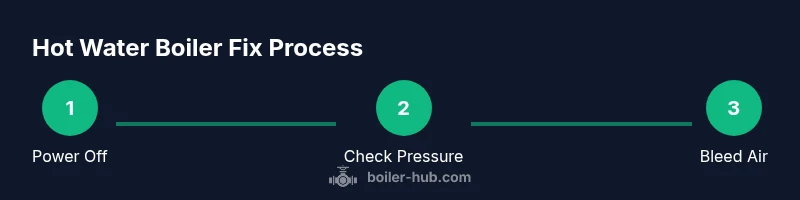
How to Fix Boiler for Hot Water: A Home Guide
Practical, safety-focused guide for diagnosing and fixing common boiler issues that affect hot water. Learn essential checks, troubleshooting steps, and when to call a professional.


Today you will learn how to fix boiler for hot water by performing safe, basic troubleshooting to restore warm showers. This guide covers common symptoms, essential safety steps, and when to call a professional. You’ll verify water supply, pressure, and controls, bleed air, and reset or re-prime the system as needed. By following these steps, you reduce downtime and protect your home.
Why hot water boiler reliability matters
Reliable hot water is fundamental to daily comfort and safety; a failing boiler can disrupt showers, laundry, and even space heating in cold seasons. According to Boiler Hub, addressing minor boiler faults early can prevent larger problems and extend equipment life. This article outlines practical steps homeowners and facility managers can take to diagnose common issues and safely restore hot water without unnecessary downtime. You will learn how to interpret symptoms, perform safe checks, and decide when professional service is warranted. Throughout, you’ll find clear explanations, real-world examples, and references to typical boiler configurations, including system boilers, combi boilers, and heat-only models. The goal is to empower you with confidence to handle routine fixes while protecting your safety and home.
Safety first: risks and prerequisites
Boilers operate with electricity and often gas or oil; working on them without precautions can cause burns, electric shock, gas leaks, or carbon monoxide exposure. Before starting any inspection, switch off the boiler's power at the breaker and set the thermostat to off. If you smell gas, evacuate and call the gas emergency line immediately. Wear eye protection and gloves, keep a tidy workspace, and never bypass safety devices. Having the model's manual at hand helps you follow model-specific steps and safety warnings. If your system is unfamiliar, treat it as high risk and seek professional help rather than improvising.
Common symptoms and what they mean
Symptoms vary: no hot water, inconsistent temperatures, water that's too hot, strange noises, or leaks. Each symptom points to different culprits: pressure issues, thermostat faults, air locks, or blocked vents. If you encounter gas smells or smoke, stop immediately and call professionals. For the question of how to fix boiler for hot water, identifying whether the issue is hydraulic, electrical, or venting related guides your next steps and reduces needless parts swapping.
Basic checks you can do before calling a pro
Before you call a technician, perform some safe checks. Verify that the cold-water supply to the boiler is on and that the boiler has power. Check the pressure gauge; most systems require a certain pressure when cold, and you should compare current readings to your manual. Inspect the pressure relief valve for leaks; ensure any visible wiring is undamaged. If your boiler has a separate expansion tank, ensure it is intact and not waterlogged. Document readings with a notebook for reference and to share with a technician if needed.
Step-by-step troubleshooting flow
This section outlines a practical sequence to diagnose hot-water issues. Start with the simplest potential causes—power, valves, and the thermostat—before moving to more involved tasks like bleeding air or checking venting. Treat each step as a focused test: verify, observe, and record results. If something feels out of scope or dangerous, stop and call a professional. The goal is to create a logical flow that minimizes guesswork and potential harm while keeping your hot water restoration on track.
Resetting, repressurizing, and priming the system
If your boiler includes a reset function, use it exactly as shown in the manual. Refill the system slowly to bring the pressure into the recommended range; do not exceed the maximum. If your expansion tank is present, ensure it is pre-charged (as specified by the manual) and not waterlogged. After restoring pressure, recheck the water temperature settings and test the hot water output at taps to confirm stable operation.
Venting, air, and distribution checks
Air trapped in the system is a frequent cause of cold spots and uneven heating. Bleed radiators on all zones to release trapped air, starting with the highest-radiant rooms. Inspect vent pipes and ensure there are no blockages or corrosion. Look for leaks around joints and valves, and test the safe operation of the exhaust flue. If you notice effervescence, soot, or an unusual flame color, stop and seek professional evaluation.
Maintenance to prevent future cold-water issues
Prevention beats cure. Schedule annual professional service to inspect combustion, venting, and safety devices. Regularly flush or power-flush the system if recommended for your boiler type, and replace worn gaskets or seals as needed. Keep filters clean, inspect the expansion tank, and monitor the pressure gauge monthly. Maintaining a simple log of readings, service dates, and any irregularities helps catch issues before they escalate.
When to call a professional and what to expect
If basic checks do not restore hot water, call a licensed boiler technician. A pro will perform combustion analysis, vent integrity tests, and may replace faulty valves, pressure regulators, or circulators. Request a written estimate and ensure the technician checks carbon monoxide detectors and all safety devices. For persistent problems, a qualified professional offers diagnostics and repairs that align with code requirements and warranty terms.
Tools & Materials
- Owner’s manual for your boiler(Keep for model-specific procedures and warnings.)
- Digital multimeter(Check electrical components and switches.)
- Screwdrivers (flat-head and Phillips)(For panels and valve adjustments.)
- Wrench set(Loosen fittings and relief valves.)
- Boiler pressure gauge or manometer(To verify fill pressure; reference manual.)
- Towels, rags, and bucket(Contain spills and protect surfaces.)
- Leak detection solution(Spot any small leaks around joints.)
- Replacement parts (gaskets, valves) if applicable(Only after confirming faulty components.)
- Gloves and eye protection(Personal safety.)
- Gas detector (optional)(Use if you suspect gas presence.)
Steps
Estimated time: 60-120 minutes
- 1
Power off and safety check
Begin by turning off the boiler at the breaker and switching off the thermostat. Confirm there are no flames, smells, or signs of active leaks. This step prevents shocks and accidental ignition.
Tip: Always verify power is isolated with a tester before touching wiring. - 2
Verify water supply and boiler pressure
Ensure the cold-water supply is on and observe the boiler pressure gauge. If pressure is too low or high, note the reading and consult your manual for the correct range before proceeding.
Tip: Record the current pressure to track changes during testing. - 3
Check thermostat and controls
Verify that the thermostat is set correctly and that any boiler switch or circulator is active. Maladjusted controls can mimic more serious failures.
Tip: If the display is blinking or unreadable, reset from the manual and re-test. - 4
Bleed air from the system
If radiators are cold at the top or you hear banging, bleed air from each radiator using the bleed valve. Collect any water in a bucket to monitor flow consistency.
Tip: Bleed from the highest radiator first to maximize efficiency. - 5
Reset and repressurize
If available, perform a controlled boiler reset. Refill the system slowly to bring pressure into the recommended range; avoid rapid changes that stress seals.
Tip: Check for leaks during re-pressurization and stop if you see water spraying. - 6
Inspect venting and flue
Inspect the vent and flue for blockages, cracks, or corrosion. A blocked vent can cause backdraft and gas safety concerns in non-condensing boilers.
Tip: Do not operate the boiler if you suspect vent damage. - 7
Check for leaks and corrosion
Look around joints, valves, and the expansion tank for signs of moisture or corrosion. Tighten connections only to the manufacturer’s torque spec.
Tip: If you find a leak, isolate the area and call a professional rather than attempting a DIY repair. - 8
Decide on next steps and call for help if needed
If you cannot identify the issue or if the boiler shows gas smells, CO alarms, or persistent failure, contact a licensed technician. A professional can safely perform diagnostics and repairs.
Tip: Prepare your notes and readings to share with the technician for faster service.
Questions & Answers
What are the most common causes of no hot water from a boiler?
No hot water is usually due to low pressure, a faulty thermostat, airlocks, or a failed circulator. Start with checking pressure and power, then inspect possible valve issues. If problems persist, consult a professional.
Common causes include low pressure and thermostat faults; start with the basics before calling a pro.
Can I fix boiler hot water issues myself?
You can perform basic safety checks if you follow the manual and shut off power and gas. More complex tasks like gas valve repair should be left to a licensed technician.
You can do basic safety checks if you follow the manual; for gas valves, call a pro.
What should I check first if the boiler is not turning on?
Check power supply, thermostat settings, and safety switches; verify the boiler is receiving power and the circuit is not tripped.
First, check power, thermostat, and safety switches.
Is there a risk of carbon monoxide when working on a boiler?
Yes, gas boilers can produce CO if venting is blocked or the burner misfires. Ensure detectors are installed and never run the boiler if you smell gas.
Yes, CO is a serious risk; install detectors and call a pro if you smell gas.
When is it appropriate to replace the boiler?
Consider replacement if the boiler is old, inefficient, or requires frequent repairs; consult a professional for a diagnosis and cost estimate.
Replacement is worth considering if repairs rise above a significant portion of a new unit's cost.
How long do boiler repairs take?
Repair time varies; simple fixes may take a few hours, while complex diagnostics could require a service visit. A pro can provide an estimate.
Durations vary; a pro will give you an time estimate after assessing the issue.
Watch Video
Key Points
- Power off and gas safety come first
- Check pressure and water supply before adjusting
- Bleed air from radiators if needed
- Call a pro for gas issues or persistent failures