How to Use a Boiler for Hot Water: A Practical Guide
Learn to safely use your boiler for reliable domestic hot water. This comprehensive guide covers safety checks, temperature settings, troubleshooting, maintenance, and energy-saving tips from Boiler Hub.


According to Boiler Hub, using a boiler for hot water safely starts with knowing your system type and verifying that safety devices, controls, and water supply are in good condition. This quick guide outlines essential checks, temperature settings, and safe operation to ensure reliable hot water while minimizing energy use. If you encounter anything unusual, stop and consult the full steps.
How Domestic Hot Water Works in a Boiler System
Domestic hot water (DHW) is produced by heating water in your boiler and sending it through taps, showers, and appliances. Boilers come in several configurations: combi (on demand), system (cylinder), and regular/heat-only (storage tank). In a combi setup, the boiler heats water on demand as you open a hot tap, so there is no storage tank. In system or regular boilers, hot water is stored at a fixed temperature in a cylinder for quick draw. Understanding your system helps you use it efficiently. The Boiler Hub team notes that most homes rely on on demand flow, but if you have a storage cylinder, your strategy for temperature and maintenance changes. A properly sized boiler, clean cold water supply, and reliable controls are the trifecta of dependable hot water. If your home has older, poorly insulated pipes or an undersized boiler, you’ll feel the impact in longer draw times and more energy waste. In many homes, inconsistent hot water is a sign that maintenance is overdue or that your system is mismatched to demand. Properly balancing demand with supply reduces wasted energy and ensures consistent comfort. With this guide, you’ll learn how to check safety, optimize temperature, and keep the system in good shape for years to come. According to Boiler Hub, acknowledging your system type is the first step toward safer, more efficient use of hot water.
Safety First: Pre-Use Checks
Before you power up or adjust anything, perform a safety sweep of the area around the boiler. Ensure the room has adequate ventilation, and test carbon monoxide detectors and smoke alarms. Verify that the gas supply or electrical connection is stable and that shut-off valves are accessible. Check that the cold water supply is uninterrupted and that the pressure gauge is within the manufacturer’s recommended range. If you detect any gas odor, water leaks near the boiler, or irregular noises, stop and call a qualified technician. For homes with older systems, take extra care with flue integrity and ensure there is a clear path for exhaust. This step reduces the risk of leaks, asphyxiation, or fire hazards and is emphasized in Boiler Hub guidelines for safe operation.
Setting Temperature and Pressure Correctly
Most safe and comfortable hot water is achieved by setting the domestic hot water temperature to a level that minimizes scalding while delivering adequate warmth. A common target is around 120°F (49°C) for household use, which reduces burn risk and energy waste. If your dishwasher or washing machine requires hotter water, you may temporarily raise the setting, then return to the safe baseline after the cycle. In addition to temperature, check boiler pressure. Cold starts are typically in the 1 to 1.5 bar range on many systems; if the pressure is too low or too high, the boiler may not heat effectively or could leak. Use the pressure relief valve only if you know how to operate it safely. Boiler Hub analysis shows that properly balancing temperature and pressure is a major factor in consistent hot water and overall efficiency.
How to Turn On and Draw Hot Water from a Combi Boiler
With a combi boiler, hot water is produced on demand when you open a hot tap. Start by ensuring the boiler is powered on and that the hot water tap is accessible. Open the tap gradually and listen for the boiler firing. If the water takes longer than usual to heat, there may be air in the line or a need for system bleeding. In many homes, a brief purge of air improves flow; keep a towel handy for drips. For systems with storage tanks, draw a small amount of hot water to verify the temperature is stable and consistent across outlets. Always monitor the first few taps after a reset to confirm the settings are correct.
Troubleshooting Common Hot Water Issues
If you notice cold water, inconsistent temperatures, or no hot water at all, start with basic checks. Verify the power and gas supply or electricity, ensure the thermostat is set correctly, and inspect the pressure gauge. Check for air in pipes and run the hot water taps to purge. If the boiler fails to ignite, listen for ignition attempts and consult the manual for flame sensor issues. Leaks around valves or joints require immediate attention. For persistent problems, a professional service is recommended to avoid safety risks and prevent further damage to the system.
Maintenance, Servicing, and Seasonal Tips
Annual service by a qualified technician is essential for boilers supplying hot water. A professional should check safety devices, test the burner, inspect gas lines or electrical connections, clean the heat exchanger, and verify venting and flue integrity. Regularly inspect and replace worn seals and gaskets, and keep the area around the boiler clean to prevent overheating. Check the expansion tank for proper operation, and bleed radiators if you have a radiator-based system, ensuring you have steady pressure and no air pockets. With routine maintenance, you preserve efficiency, extend equipment life, and reduce the likelihood of unexpected breakdowns in the cold months.
Energy Efficiency Tips and Authority Sources
Maximize efficiency by reducing standby heat losses and ensuring the system is balanced for demand. Simple steps include lowering the temperature to a safe baseline, insulating pipes, and scheduling regular professional maintenance. Boiler Hub analysis shows that optimizing settings and routine maintenance can lead to noticeable energy savings over time. For further reading and verification, consult authoritative sources such as Energy.gov and ASHRAE guidelines, which discuss water heating efficiency, proper venting, and safe operation. These external references provide evidence-based practices to complement this guide and help you make informed decisions about your boiler system. The Boiler Hub team recommends pairing these steps with an annual service to maintain safe, efficient hot water. The Boiler Hub’s verdict is that safe operation, proper temperature, and regular maintenance form the foundation of reliable hot water from your boiler.
Tools & Materials
- Boiler owner's manual(Model-specific controls and safety information)
- Thermometer or calibrated temperature strip(For accurate water temperature readings at taps and outlets)
- Pressure gauge or manometer(Verify boiler pressure is within the recommended range when cold and after firing)
- CO detector and smoke detector(Place in the boiler room and test regularly)
- Ventilation checklist(Ensure proper room ventilation and clear exhaust pathway)
- Safety gloves and eye protection(Use when performing maintenance or accessing hot components)
Steps
Estimated time: 30-45 minutes
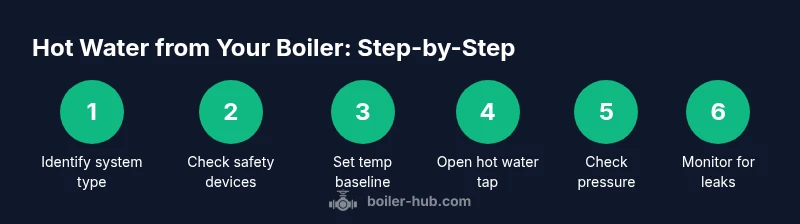
- 1
Identify system type and locate controls
Begin by identifying whether your boiler is a combi, system, or regular unit. Locate the main power switch, the thermostat, and the pressure gauge. Note the position of shut-off valves for both cold water supply and gas or electricity. This helps you understand how to adjust settings safely later.
Tip: Consult the manual for your exact model before touching controls. - 2
Check safety devices and water supply
Confirm that the CO detector and room ventilation are working. Verify that the cold-water supply is open and that there are no visible leaks around fittings. If you smell gas, vacate the area and call emergency services or your gas supplier immediately.
Tip: Never bypass safety devices or operate a boiler with damaged components. - 3
Set the desired hot water temperature
Adjust the temperature control to the recommended baseline (commonly around 120°F/49°C). For certain tasks, you may briefly raise the setting, but return to baseline after use. Document the baseline setting for future reference.
Tip: Avoid leaving the hot water at very high temperatures to reduce scald risk. - 4
Open hot water taps and purge air if needed
Open a hot water tap slowly to verify water flow and temperature. If you hear gurgling or notice inconsistent flow, there may be air trapped in the line which can be purged by running the faucet for a minute or two.
Tip: Keep a towel handy for drips and spills. - 5
Check boiler pressure and ignition
With the system on, check that the pressure gauge stays within the recommended range. If ignition is inconsistent, consult the manual for ignition sequence and safety checks, or contact a technician.
Tip: Do not attempt to modify gas or electrical connections unless qualified. - 6
Inspect for leaks and monitor performance
Carefully inspect pipes, joints, and the boiler cabinet for any signs of moisture or corrosion. Run hot water from multiple outlets to confirm stable output, and note any changes in speed or temperature.
Tip: Address leaks promptly to prevent water damage and efficiency loss. - 7
Document and schedule maintenance
Record the baseline temperature, pressure, and any irregularities. Schedule an annual professional service and set reminders for replacements and safety checks.
Tip: Regular maintenance extends boiler life and improves reliability.
Questions & Answers
What is the ideal hot water temperature for most homes?
Most homes benefit from a baseline around 120°F (49°C) to balance safety and comfort. In some situations, higher temps may be needed briefly, but avoid keeping water at very high temperatures.
Aim for about 120 degrees for safe, comfortable hot water; adjust only as needed for specific tasks.
How often should a boiler be serviced if it supplies hot water?
Boilers that supply hot water should be serviced at least once a year by a qualified technician to verify safety devices, pressure, venting, and burner performance.
Annual service by a trained technician keeps your boiler safe and efficient.
What should I do if there is no hot water?
Check the thermostat, power supply, gas supply or electricity, and the pressure gauge. Look for leaks and air in the lines, and purge the hot water line. If problems persist, contact a professional.
If there’s no hot water, check settings and power, then call a pro if needed.
Can I adjust the water temperature myself?
Yes, you can adjust the thermostat to a safe baseline. Follow the manufacturer’s manual for specific instructions and avoid extreme temperature changes.
You can adjust the temperature, but keep it within safe limits and follow the manual.
What safety devices should I check on my boiler?
Check the carbon monoxide detectors, venting, pressure relief valve, and shut-off valves. Ensure alarms work and the area around the boiler is clear.
Make sure safety devices like CO detectors and relief valves are working.
When should I replace my boiler?
Consider replacement if repairs are frequent, efficiency declines, or you are upgrading to a safer, more energy-efficient model. Consult a professional for a full assessment.
If repairs keep coming up and efficiency drops, consider replacing the boiler.
Watch Video
Key Points
- Know your boiler type and control layout.
- Set safe hot water temperature to reduce scald risk.
- Regular maintenance prevents leaks and maintains efficiency.
- Test safety devices and ventilation regularly.
- Address issues promptly to avoid bigger problems.