Is Boiler Cycling Bad? A Practical Troubleshooting Guide
A practical, urgent guide to diagnose and fix boiler short cycling. Learn common causes, safety considerations, step-by-step fixes, and when to call a pro. Brought to you by Boiler Hub.


Boiler short cycling is usually a sign of underlying issues like mismatched heat load, thermostat problems, or an oversized boiler. A quick fix includes relocating or recalibrating the thermostat, confirming the boiler size matches the home’s load, and ensuring zone valves aren’t stuck. If cycling persists, consult Boiler Hub Team for a detailed inspection.
Why Boiler Cycling Matters
Is boiler cycling bad? In short, yes. Frequent on/off cycling wastes fuel, accelerates wear on the heat exchanger and circulator, and can lead to comfort swings in your home. According to Boiler Hub, addressing short cycling not only improves comfort but also extends equipment life and reduces operating costs over time. Understanding why it happens is the first step toward a durable fix, not a quick bandaid. This section explains how cycling begins, why it matters, and what you should do first to protect your system and your wallet.
At its core, a boiler should maintain steady heat while meeting demand. When cycling becomes constant, it indicates the boiler is repeatedly starting, heating, and stopping before reaching optimal temperature. That short cycle reduces efficiency because the boiler spends more time starting up rather than running smoothly. It also cycles the pump and valves, which can wear these components sooner than expected. For homeowners, recognizing early signs—short bursts of heat with intervals of cooling—helps catch problems before they escalate.
Safety is a top priority. If you notice hissing, strange smells, or smoke around the boiler, shut it down and call a professional immediately. In many homes, cycling is fixable with simple adjustments, but some causes require licensed service to avoid gas or electrical hazards. The Boiler Hub team emphasizes not to override safety controls in pursuit of a quick fix; always prioritize safe operation.
Common Causes of Short Cycling
There are several frequent culprits behind boiler short cycling. First, check thermostat issues: misplacement, inaccurate calibration, or a failing thermostat can tell the boiler to heat when there isn’t real demand. Second, an oversized boiler will heat a space quickly and then shut off, only to re-fire soon after. Third, a dirty heat exchanger or blocked condensate traps can throttle heat delivery. Fourth, low water temperature or low flow can trigger protection cycles. Fifth, zoned heating with stuck valves may demand heat when it isn’t needed. Sixth, an incorrect pressure or faulty aquastat can create unstable cycling. Seventh, an air-bound system or blocked radiators can create resistance that makes the boiler work harder than it should. Finally, poor insulation or leaky windows can make the heating load larger than the boiler can handle efficiently, prompting repeated cycles.
Boiler Hub analysis shows that addressing cycling often reduces unscheduled startup/shutdown events and improves system balance across zones. By examining these causes in a structured way, you can identify the real culprit without replacing equipment unnecessarily.
To approach this methodically, start with the simplest check first, then move to more complex diagnostics. This keeps you from wasting time and money on unlikely causes. If you’re unsure at any step, it’s wise to involve a professional.
Tip: Keep a simple log of when cycling occurs—the hour of day, thermostat setting, and outdoor temperature. Patterns can point to load changes or thermostat issues.
Safety Considerations When Troubleshooting
Safety is non-negotiable when dealing with boilers. Gas-fired boilers require proper venting, gas connections, and CO detectors. If you smell gas, hear a hissing sound, or notice a persistent pilot light issue, evacuate and call your gas utility or emergency services. Do not attempt to light or relight a pilot yourself. Electrical components pose shock risks; always switch off power at the breaker before performing checks that involve wiring or access panels.
Only perform non-invasive checks if you aren’t trained in boiler service. If you observe any of the following, contact a certified technician immediately: abnormal flame color (orange or yellow rather than blue), water leaks near the boiler, damp or corroded connections, or your unit making unusual noises beyond a normal burn cycle. The Boiler Hub team stresses that safety controls—thermostat limits, pressure relief, and high-limit switches—must not be bypassed to chase a quick fix.
Finally, remember that some cycling causes involve pressure and temperature ranges that require professional calibration. Don’t hesitate to call in a pro if you’re unsure about gas safety or electrical work.
How to Diagnose Short Cycling
A structured diagnostic approach helps you distinguish quick fixes from real problems. Start by confirming basic operation: is the thermostat functioning, properly located away from heat sources, and wired correctly? If yes, verify boiler size and design load: an oversized unit or a misfit for the home’s heating demand commonly causes rapid cycling. Next, inspect water flow: ensure valves and pumps move freely, radiators aren’t air-locked, and there’s no trapped air. Check the pressure gauge and ensure it sits within the recommended range for your system. If pressure is consistently high or low, the system may cycle due to safety limits. Finally, test the aquastat or limit switch: a faulty setting or worn component can cause repetitive firing. If you find a failed part, replacement is usually straightforward but must be done by a pro if you’re uncertain.
Throughout the process, use a service manual for your exact boiler model and consult the manufacturer’s troubleshooting steps. This minimizes the risk of misadjustment and ensures you adhere to warranty requirements.
When you suspect a more complex issue—such as heat exchanger fouling, pump failure, or a defective control module—schedule a professional inspection. The goal is to confirm a safe, reliable, and energy-efficient operation.
Quick Fixes You Can Try Today
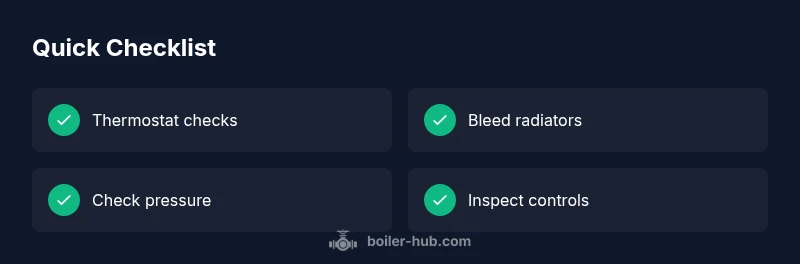
If you’ve ruled out dangerous conditions, here are practical fixes you can attempt in a safe, controlled manner. First, reset the thermostat and verify it’s not misreading room temperature. Recalibrate or relocate the thermostat away from drafts, direct sunlight, or heat sources like lamps or electronics. Second, bleed radiators to eliminate air pockets that impede heat distribution. Third, check for closed or blocked zone valves and ensure pumps are circulating. Fourth, inspect for dirty filters or restricted condensate lines that could throttle heat output. Fifth, verify that boiler pressure is in the recommended range and reset if necessary. Sixth, check for blockages in condensate traps or flues that might trigger the safety shutoff. If any step requires gas work, electrical work, or replacement of safety components, pause and call a licensed technician to avoid hazardous conditions.
Keep notes of what you adjust, as this will help a technician diagnose the underlying cause faster if the problem persists. Consistent small adjustments are better than forcing the system to operate outside its design parameters.
When to Call a Professional
If your boiler continues to cycle after reasonable troubleshooting, or if you notice warning signs—gas smell, water leaks, error codes, or erratic flame behavior—schedule a professional service. A licensed technician can verify gas pressure, flame quality, venting integrity, and electrical connections. They can also check for more subtle issues like concentric vent blockages, improper pump sizing, or faulty temperature controls. If your boiler is under warranty, servicing by an unapproved contractor could void coverage, so prefer a service provider who specializes in your brand and model. The sooner you involve a pro, the less risk of excessive fuel consumption, accelerated wear, and potential safety hazards.
Boiler Hub emphasizes proactive maintenance as the best defense against short cycling. Regular inspections and timely repairs save money and keep your heating system dependable when you need it most.
Maintenance to Prevent Future Short Cycling
Prevention is easier than repair. Schedule annual professional tune-ups and annual heat-exchanger cleanings if your system tends to accumulate scale. Replace worn out sensors and limit switches before they fail and trigger cycling. Check the expansion tank for correct pre-charge pressure and inspect piping for insulation gaps that increase heat loss. Maintain proper water chemistry in open-loop systems to prevent mineral buildup. Finally, ensure your home’s insulation remains in good condition; draft-proofing reduces heat load, which minimizes opportunities for cycling. Consistent maintenance reduces the odds of nuisance cycling and extends boiler life. The Boiler Hub team recommends aligning maintenance activities with seasonal changes to address load variations and ensure consistent comfort.
Steps
Estimated time: 60-90 minutes
- 1
Check thermostat placement and settings
Inspect the thermostat location for drafts, sun exposure, or heat sources nearby. Verify it is calibrated to the correct room temperature and that the wires are secure. If needed, replace the battery or the thermostat unit.
Tip: A well-placed thermostat reduces false demands for heat. - 2
Verify boiler load and size
Review the home's heating load and compare with the boiler's output rating. An oversized unit is a common cause of short cycling. If unsure, a professional can run a heat-loss calculation.
Tip: Sizing is key to preventing rapid cycling. - 3
Inspect heat circulation and flow
Check that circulator pump and zone valves move freely. Bleed radiators to release trapped air that can disrupt flow and cause cycling.
Tip: Air pockets mimic demand; bleeding often fixes it. - 4
Check pressure and safety controls
Look at the pressure gauge and ensure it’s within the recommended range. Test the high-limit switch and safety devices to confirm they’re functioning properly.
Tip: Don’t bypass safety devices to speed up fixes. - 5
Reset or recalibrate aquastat if needed
If you have a programmable aquastat, verify the setpoint matches desired temperature and stability. Replace faulty sensors or controllers if readings are erratic.
Tip: A stable setpoint reduces cycling triggers. - 6
Test operation after each change
Return power to the boiler and observe cycling behavior over a full rise in heat demand. If cycling continues, escalate to a professional diagnosis.
Tip: Document changes to share with a tech.
Diagnosis: Boiler cycles on and off frequently
Possible Causes
- highThermostat issues (misplacement, calibration, or fault)
- highOversized boiler for heating load
- mediumDirty heat exchanger or restricted flow
- lowFaulty aquastat or control settings
Fixes
- easyRelocate or recalibrate thermostat; verify wiring and placement away from heat sources/drafts
- mediumConfirm boiler size matches home heat load; consult a professional if load calculation shows mismatch
- mediumClean heat exchanger, clear condensate traps, and ensure unobstructed water flow
- hardTest and adjust aquastat/limiter or replace faulty control components
Questions & Answers
What is boiler short cycling and why does it happen?
Short cycling is when the boiler turns on and off quickly, often due to mismatched heating load, thermostat problems, or an oversized unit. It wastes fuel and wears components. Diagnosing the cause helps restore efficiency.
Short cycling happens when your boiler keeps turning on and off rapidly, usually from a mismatch between heat demand and the boiler’s size or thermostat issues.
Can a faulty thermostat cause boiler cycling?
Yes. A faulty or poorly placed thermostat can misread room temperature and signal the boiler to fire unnecessarily. Recalibration or relocation often fixes this quickly.
A bad thermostat often tricks the boiler into starting heat too soon. Fixing or relocating it usually helps.
Is it dangerous to ignore short cycling?
Ignoring cycling can lead to energy waste and accelerated wear. It can also mask safety issues like venting or gas problems that require urgent attention.
Ignoring cycling wastes energy and could hide safety problems. If you smell gas or hear strange noises, call for help immediately.
What steps can I take before calling a professional?
Check thermostat placement, reset the thermostat, bleed radiators, verify flow and pressure, and ensure no obvious blockages. If cycling persists, schedule a professional inspection.
Start with thermostat checks and bleeding radiators. If it keeps cycling, call a pro.
How often should I service a boiler to prevent cycling?
Annual professional maintenance is recommended to prevent short cycling and ensure safe operation. Regular checks catch worn parts before they fail.
Have a pro inspect your boiler once a year to keep it running smoothly.
Can expansion tank issues cause cycling?
Yes, a faulty expansion tank can cause pressure fluctuations that trigger cycling. A technician can test and replace the tank if needed.
A bad expansion tank can cause pressure changes that lead to cycling; get it checked by a pro.
Watch Video
Key Points
- Identify if short cycling signals a sizing or control issue
- Start with thermostat and load checks before shelling out for parts
- Safety first: never bypass gas/electric safety devices
- Regular maintenance prevents future cycling and extends boiler life