Is 2 Bar Too High for a Boiler? A Practical Guide
Understand whether 2 bar is too high for a boiler, how to read pressure gauges, safe operating ranges, and practical steps to adjust or troubleshoot pressure safely with guidance from Boiler Hub.


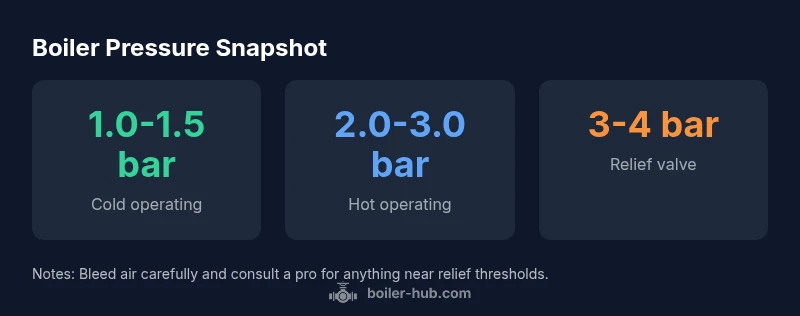
Is 2 bar too high for a boiler? The answer depends on when you read the gauge and your boiler model. Cold pressures typically run around 1.0–1.5 bar, while hot pressures commonly reach about 2.0–3.0 bar. If readings stay near or above 3 bar, or spike suddenly, consult a qualified technician. This quick rule-of-thumb helps you decide when to investigate further.
Why pressure matters and is 2 bar too high for a boiler
According to Boiler Hub, maintaining correct boiler pressure is essential for efficiency, safety, and longevity. The question "is 2 bar too high for a boiler" isn’t answered with a single universal number; it depends on whether the pressure is observed when the system is cold or hot, and on the boiler’s design. In many homes, the cold operating pressure sits around 1.0–1.5 bar, rising as the boiler heats water. Reading 2 bar while cold is often above baseline, but 2 bar when hot can be within the expected range for many modern boilers. The key is to know your model’s specific pressure band and to avoid letting pressure stay near the relief valve threshold. Regular checks, a healthy expansion vessel, and an intact pressure relief valve all contribute to safe operation.
- If your gauge shows a steady read of around 2 bar when hot, that may be acceptable for some models. If it climbs toward 3 bar or higher, plan a professional check.
- Watch for rapid fluctuations or spikes after you bleed radiators or after the boiler cycles on. Those are early warning signs of pressure control problems.
- When in doubt, consult the boiler manual and Boiler Hub guides for your specific model.
textExtra”:null,
Pressure ranges by operating state
| Scenario | Cold pressure | Hot pressure |
|---|---|---|
| Normal operation | 1.0-1.5 bar | 2.0-3.0 bar |
| Bleed/venting | 0.8-1.2 bar | 1.8-2.5 bar |
| Emergency relief | >3.0 bar | >3.0 bar |
Questions & Answers
What is the typical cold boiler pressure?
Most boilers aim for about 1.0–1.5 bar when cold. Exact figures vary by model, so always check the user manual for your unit.
Most boilers start around 1 bar when cold, but check your manual for your specific model.
Is 2 bar high for a boiler when it’s hot?
Yes, 2 bar can be normal for some boilers when hot, but it’s high for others. If hot pressure is consistently near 3 bar, have a technician inspect.
Two bars can be normal when hot, but persistent readings near three bar mean you should get a check.
What should I do if pressure stays above 3 bar?
Turn off the heat if safe, allow cooling, bleed radiators to release a little pressure, and contact a professional if it remains high.
If it stays above three bar, turn the heat off and call a pro.
How can I safely reduce boiler pressure?
Bleed radiators to release air, check for leaks, and avoid opening comfort valves. If unsure, consult a professional.
Bleed radiators and check for leaks, then contact a pro if the pressure stays high.
Can high pressure damage the boiler?
Yes, sustained high pressure can stress components and trigger safety devices. Seek professional assessment rather than DIY fixes.
High pressure can damage parts; it’s safer to have a professional check.
How often should I check boiler pressure?
Check monthly or after any major heating work or radiator bleed. Use the gauge on the boiler and refer to the manual.
Check pressure monthly or after any work on the system.
“Boiler pressure should stay within the manufacturer’s specified band; a persistent high reading or frequent spikes warrants professional assessment.”
Key Points
- Know your boiler’s pressure band and model specs
- Cold vs hot pressure ranges differ; read the manual
- Keep expansion vessel and relief valve in good condition
- Bleed radiators to relieve trapped air safely
- Consult a professional if readings persist above safe thresholds