If Boiler Pressure Is Too Low: Troubleshooting Guide
Learn a safe, practical, step-by-step guide to diagnose and fix low boiler pressure from Boiler Hub, with actionable checks, repressurizing steps, and professional help when needed.


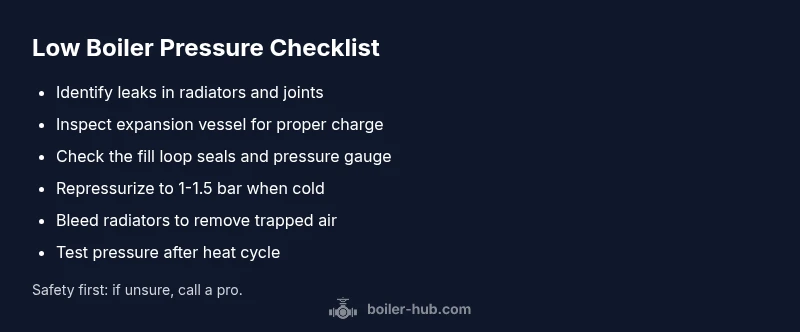
If boiler pressure is too low, repressurizing the system with the filling loop is the quickest fix. After restoring the correct pressure, bleed radiators to remove trapped air and recheck the gauge. If pressure drops again, inspect for leaks, a faulty expansion vessel, or a failed pressure relief valve. When in doubt, contact a licensed boiler technician for a safety assessment.
If boiler pressure is too low: understanding the warning signs\n\nMaintaining the correct pressure on a boiler is essential for stable heating and safe operation. The pressure gauge on most boilers should read around 1.0 to 1.5 bar when the system is cold, rising slightly when hot. If boiler pressure is too low, the boiler may cycle on and off, fail to heat effectively, or even lock out. Early signs include radiators that take longer to warm up, cold spots on radiators, and unusually frequent boiler restarts. Regularly checking the gauge and comparing it to the manufacturer’s specifications helps you catch a decline before a leak or component failure develops. Always turn off the boiler and let it cool before touching any fittings, and wear eye protection when inspecting joints or valves.
Common Causes of Low Boiler Pressure\n\nA drop in pressure usually has a tangible cause. Visible radiator leaks or corroded joints can silently drain the system over days or weeks. A failed expansion vessel, which acts as a buffer for pressure changes, is another frequent culprit. Bleed valves left ajar or recent refilling without tightening can also introduce air, causing the gauge to misread. If you recently had a service or a power flush, it's possible the system was repressurized incorrectly, leaving lower baseline pressure. Finally, some boilers exhibit pressure drift due to worn seals or age-related part degradation. If any of these issues are suspected, plan to inspect carefully and address leaks first, then repressurize and observe readings over the next heating cycle.
Safety First: Critical checks before you touch the filling loop\n\nBefore attempting repressurization, ensure you know the exact operating pressure range for your model—most boilers sit around 1-1.5 bar when cold. Switch off the boiler, disconnect from power if safe, and inspect for signs of water leaks, scorch marks, or a strong gas smell. If you smell gas, evacuate immediately and call your gas provider or emergency services. Wear protective gloves and eye protection, and avoid forcing fittings or prying at joints. Keep children and pets away from the work area. If you’re unsure about any step, don’t proceed; professional service is the safest option.
Repressurizing the Boiler: When and how to do it safely\n\nRepressurizing is the primary fix for low pressure on many modern boilers. Start by locating the filling loop, typically under the boiler with two valves. Close the valves when finished and ensure the hose is not kinked. Open the filling loop slowly and monitor the gauge; once you reach the recommended pressure (usually 1-1.5 bar when cold), close the loop and seal the valves. Do not exceed the maximum pressure marked on your gauge. If your system has an automatic refill feature, it may take only seconds; be careful not to overfill. After repressurizing, wait a few minutes and recheck the gauge to confirm stability.
Bleeding Radiators and Stabilizing the System\n\nAir trapped in radiators can masquerade as low pressure symptoms. With the boiler off, run each radiator’s bleed screw slowly using a radiator key or screwdriver until you see a steady stream of water, then close the valve. Wipe away any drips and recheck the pressure gauge. If the pressure has dropped, repressurize again following the steps above, then recheck after a full heating cycle. Finally, bleed repeatably across all radiators to equalize the system and prevent future pockets of air. Consider balancing radiators to optimize heat distribution and avoid pressure fluctuations during cold snaps.
Preventing Low Pressure in the Future: maintenance and monitoring\n\nThe best way to prevent unexpected pressure drops is proactive maintenance. Schedule an annual boiler service, inspect the expansion vessel every few years, and replace worn seals before leaks appear. Keep a simple log of pressure readings, especially after filling, bleeding, or after long periods of inactivity. Ensure your system is correctly charged at the manufacturer’s specified pressure and consider upgrading to a modern pressure relief valve if your model is older. Address any signs of dampness around joints promptly; catching a leak early saves water and energy.
Steps
Estimated time: 30-45 minutes
- 1
Power down and prep for safety
Turn off the boiler and switch off electrical supply if safe. Allow the unit to cool completely before touching any pipes. Gather a clean cloth, a shallow tray, and protective gloves.
Tip: Never work on hot surfaces; burns are common when handling live fittings. - 2
Find and inspect the filling loop
Locate the filling loop under the boiler. Check isolation valves and look for signs of wear or leaks. Do not connect anything until you’ve confirmed both ends are compatible with your system.
Tip: If you’re unsure of the fit, consult the manual or take a quick photo before disconnecting anything. - 3
Attach the filling loop and prepare to repressurize
Attach the filling loop per the manufacturer’s instructions. Ensure the area around valves is dry and the hose is secure. Have a helper hold the gauge in view as you begin.
Tip: Avoid wedging or forcing the fitting; a misfit can cause leaks. - 4
Repressurize to the recommended pressure
Gently open the filling loop valves and watch the pressure rise to the cold target (usually 1-1.5 bar). When reached, close the valves and detach the loop. Confirm the gauge stays stable for a few minutes.
Tip: Do not exceed the recommended limit; over-pressurizing can trigger safety devices. - 5
Bleed radiators to remove air
Starting with the highest radiator, loosen the bleed screw slowly until water, not air, comes out. Wipe any drips and recheck the system pressure; top up if necessary.
Tip: Bleed one radiator at a time to avoid large pressure swings. - 6
Test the system and plan next steps
Turn the boiler back on and run a heating cycle. Monitor the pressure for 15-30 minutes. If stable, you’re done; if it drifts down again, schedule a professional inspection.
Tip: Keep a log of readings after each step to identify recurring issues.
Diagnosis: Low or dropping boiler pressure readings on the gauge
Possible Causes
- highLeaks in radiators, joints, or pipework
- highFailed expansion vessel
- mediumFaulty filling loop or pressure relief valve
- lowAir trapped after refilling or maintenance
Fixes
- easyPatch leaks and tighten fittings; replace faulty radiator valves as needed
- mediumInspect or replace expansion vessel; refill and repressurize to recommended pressure
- hardReplace faulty pressure relief valve or filling loop seals; test for proper sealing
- easyBleed radiators to remove air pockets and balance system
Questions & Answers
What is considered safe boiler pressure?
Most boilers operate safely around 1-1.5 bar when cold; consult your model’s manual for the exact range. If your numbers are consistently outside this range, schedule a service.
Most boilers are safe around one to one and a half bars when cold; check your manual for your exact range. If readings stay outside this range, contact a service.
Can I repressurize my boiler myself?
Yes, many homeowners can repressurize using the filling loop, provided they follow the manual and take safety precautions. If you’re unsure, seek professional help.
Yes, you can repressurize at home if you follow the manual and safety steps. If unsure, call a professional.
Why does pressure drop again after repressurizing?
Repeated drops usually indicate a leak, a faulty expansion vessel, or leaking valves. Inspect for damp areas and have a pro assess persistent drops.
If pressure keeps dropping after repressurizing, it’s often a leak or a faulty part. Have a professional check if the issue persists.
Is bleeding radiators necessary if there’s no air?
Bleeding helps only if air pockets exist; if all radiators feel warm and pressure is stable, bleeding may not be needed. Do not force the bleed valve.
Bleeding is only needed if you detect air; if everything heats evenly, it may not be required.
When should I call a professional?
If pressure repeatedly drops after repressurizing, you notice persistent leaks, or you smell gas, contact a qualified boiler technician promptly.
If pressure keeps dropping or you notice leaks or gas smells, call a professional right away.
Can expansion tank failure be prevented?
Regular boiler maintenance and periodic testing of the expansion vessel can prevent sudden pressure drops. If the vessel is old or stiff, replacement is usually recommended.
Regular maintenance helps prevent expansion tank failure; replace an old or stiff tank as needed.
Watch Video
Key Points
- Check for leaks first and fix them promptly
- Repressurize carefully to the recommended range
- Bleed radiators after repressurizing
- Monitor pressure and call a pro if it drops again