How to Turn On a Baxi Boiler: Safe, Step-by-Step Guide
Learn how to safely turn on a Baxi boiler with a clear, house-friendly sequence. This guide covers power checks, thermostat settings, gas safety, ignition steps, and when to call a professional. Built for homeowners and facility managers by Boiler Hub for reliable, safe heating in 2026.


Goal: safely turn on a Baxi boiler by validating power, thermostat, and gas supply, then performing the ignition sequence. This quick guide emphasizes safety, recognizing warning signs, and knowing when to call a professional. It helps homeowners restore heat confidently while minimizing the risk of gas leaks or carbon monoxide exposure.
Introduction and scope
According to Boiler Hub, turning on a boiler safely begins with confirming the basics: power supply, user controls, and the gas valve. If you’re looking for a practical procedure, this article walks you through a model-agnostic approach that applies to most Baxi boilers installed in homes or small facilities. It emphasizes safety, due diligence, and a cautious ignition sequence. If you’re unsure about any step, pause and seek professional help. For readers asking how to turn boiler on baxi, this guide answers with clear, actionable steps that minimize risk while restoring heat. The emphasis is on preserving safety first, then achieving reliable ignition. This approach aligns with Boiler Hub’s guidance for responsible boiler operation.
Boiler Hub analysis, 2026, highlights that successful ignition hinges on three pillars: power integrity, proper thermostat configuration, and safe gas supply handling.
Tools & Materials
- Multimeter or voltage tester(Check that the boiler's electrical supply is live; use a non-contact tester if available)
- Non-flammable cleaner(Clear the area around the boiler of dust or debris before ignition (do not spray cleaner while system is energized))
- Soft-bristle brush or vacuum(Remove dust from any vents or air intake to ensure proper combustion air)
- Owner’s manual for your specific Baxi model(Model-specific steps or cautions may differ; keep on-site for quick reference)
- Flashlight(Use to inspect access panels and controls in dim areas)
Steps
Estimated time: 25-40 minutes
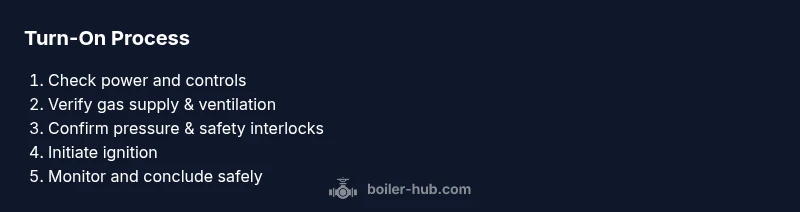
- 1
Verify power and basic controls
Start by ensuring the boiler is connected to a live electrical outlet. Check that the wall switch (and any optional eco or standby switches) are in the ON position. Confirm the room thermostat is set to a temperature above the current room temperature so the system has a call for heat. If your model has a status indicator or digital display, verify there are no fault codes. WHY: Electrical or control faults are a common reason for ignition failure and must be resolved before attempting ignition.
Tip: If you see a fault code, consult the manual or call a professional before proceeding. - 2
Confirm fuel supply and safety devices
Inspect the gas supply valve to ensure it’s fully open. Do not force a valve; if the handle is stiff, contact a professional. Verify there is proper ventilation and that CO detectors are functioning. Check that the pressure relief valve and any expansion components are in their safe states. WHY: A closed gas valve or blocked ventilation can prevent ignition and create dangerous conditions.
Tip: Never bypass safety devices; they’re there to protect occupants. - 3
Check boiler pressure and seals
Reach for the pressure gauge (usually labeled in bar). Make sure the pressure is within the manufacturer’s recommended range, typically between 1 and 2 bar when cold. If pressure is low, you may need to top up with the filling loop according to the manual. Ensure all access panels are securely closed before ignition.
Tip: Incorrect pressure is a frequent ignition obstacle and can cause cycling faults. - 4
Reset controls if applicable
Some Baxi models include a reset or diagnostic button. If a fault persists, resetting can clear temporary glitches. Do not press reset repeatedly if the boiler indicates a persistent fault code. Wait a few minutes after a reset to re-check indicators.
Tip: Use reset sparingly; persistent issues require inspection by a technician. - 5
Initiate ignition sequence
With power and gas verified, use the ignition control to start the burner. If your model uses an electronic ignition, listen for a click and then a steady flame. For standing pilot models, ensure the pilot is lit before engaging the main burner. WHY: Proper ignition depends on a clean fuel-air mix and a functioning ignition source.
Tip: If you smell gas at any point, stop and ventilate the area, then contact a professional. - 6
Monitor operation and safety indicators
Observe flame color (bright blue is typical), listen for unusual noises, and watch for error codes on the display. If the boiler runs normally for 5–15 minutes with consistent heat output, you can cautiously monitor for the next hour for stability. If anything abnormal appears, shut down and seek professional assistance.
Tip: Document any odd signs (codes, noises, temperature swings) to aid diagnosis. - 7
Finalize safety and routine checks
Ensure all safety covers are reinstalled, venting is clear, and CO detectors remain functional. Note the date of the ignition attempt and schedule regular maintenance to reduce future ignition failures. WHY: Routine checks prevent small issues from becoming major safety concerns.
Tip: Set a reminder for annual service to maintain reliability. - 8
Recordkeeping and next steps
Keep a simple log of ignition attempts, fuel levels, and ambient conditions. If you are unsure about any step, stop and contact a licensed technician. This keeps your system safer and ensures compliance with local regulations.
Tip: Having a log helps technicians diagnose issues faster if you call for service later.
Questions & Answers
Is it safe to turn on a boiler by myself?
Turning on a boiler can be safe if you complete all basic safety checks: power, gas supply, ventilation, and manual-specific ignition steps. If you detect gas, smell fuel, or see persistent fault codes, stop and call a licensed technician.
You can turn it on if you perform all safety checks first, but contact a professional if you notice anything unusual.
What should I check before trying to ignite a Baxi boiler?
Check that the power is on, the thermostat is calling for heat, the gas valve is open, and there is clear ventilation. Verify the pressure is within the manufacturer’s range, and inspect for any fault indicators on the display.
Make sure power, gas supply, and pressure are correct before ignition.
What if the boiler doesn’t ignite after following steps?
If ignition fails after the sequence, do not force ignition. Turn off the boiler, wait a few minutes, recheck safety devices, and consult the manual or a professional. Repeated failures may indicate a faulty thermocouple, ignition electrode, or gas supply issue.
If it won’t ignite after trying, stop, and get a professional to check the gas and ignition components.
Can I reset the boiler to fix ignition?
Resetting can clear temporary faults, but it won’t fix underlying problems. Only reset if the manual instructs it for your model, and if the fault persists after reset, call a technician.
Reset only when the manual says so, and if the issue continues, seek professional help.
How often should I have maintenance on a Baxi boiler?
Annual service is recommended for most boilers to ensure safe operation and efficiency. Regular checks help catch issues before they affect ignition or heat output.
Have a pro service your boiler annually for safety and reliability.
What should I do if I smell gas during ignition?
Immediately stop attempting to light, evacuate the area, and contact your gas supplier or emergency services. Do not switch electrical interfaces or lights on or off in the space.
If you smell gas, leave the area and call for help right away.
Watch Video
Key Points
- Verify power and controls before ignition
- Check gas supply and ventilation for safety
- Monitor for normal flame and indicators during ignition
- Use resets sparingly and consult a professional for persistent faults
- Maintain a maintenance log for future reliability