How to Get Boiler Started: A Complete Step-by-Step Guide
Learn how to safely start a home boiler with a clear, step-by-step process. Boiler Hub covers safety checks, fuel and power verification, ignition, and ongoing maintenance for reliable heat.


Starting a boiler safely at home requires a careful check of power, fuel, controls, and venting. This quick guide outlines the essential steps and safety precautions to help you get your boiler started with confidence. Always consult your manual and consider professional service for complex systems. The Boiler Hub team provides general guidance for homeowners and facility managers.
Pre-Start Safety and System Check
If you’re wondering how to get boiler started safely, begin with a safety-first mindset. The goal is to confirm that the power is off, the fuel supply is ready, and the space is well ventilated before any action. This simple check dramatically reduces risk of fire, gas leaks, or carbon monoxide exposure. Start by surveying the boiler room for clutter, ensuring a working carbon monoxide detector, and confirming clearances around the boiler. Then open the manual to locate the model’s start procedure and note any safety interlocks or warnings. If your system uses electronic controls, verify the display is active and the battery status is good. If you smell gas, hear hissing, or notice dripping, stop immediately and contact the utility or a licensed technician. Following this disciplined preparation keeps the ignition sequence safe and predictable, aligning with Boiler Hub’s best-practice guidance for practical home heating. In short: safety first, and only proceed when the environment is prepared for a controlled start.
Safety reminders: never bypass safety devices, never ignore abnormal odors, and always wear protective gear during inspections.
Safe environment setup: ensure ample ventilation, clear access to the boiler, and functional CO alarms before any starting actions. Keeping the area tidy minimizes the risk of accidental contact with hot surfaces or moving parts. This block anchors the start process in a safe, methodical routine that homeowners and facility managers can replicate daily.
Tools & Materials
- Owner's manual(Have model-specific start procedure and safety interlocks in hand)
- Multimeter or voltmeter(Check electrical supply and control circuits)
- Non-contact infrared thermometer(Verify surface temperatures if needed)
- Adjustable wrench(Tighten or loosen fittings as required)
- Flathead & Phillips screwdrivers(Assist in accessing controls and panels)
- Soapy water spray bottle(Check for gas leaks around connections)
- Gas leak detector solution(For thorough leak testing if you’re trained)
- Protective gloves and eye protection(Personal safety gear)
Steps
Estimated time: 60-90 minutes
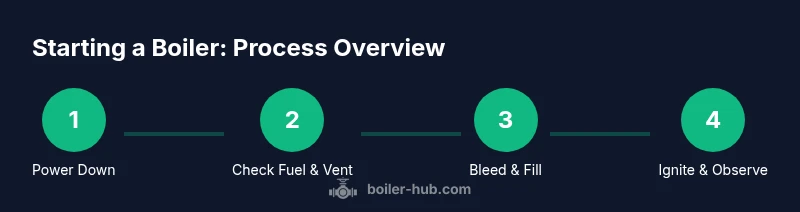
- 1
Power down and secure the area
Confirm the boiler’s power switch is off and the main breaker is in the off position. Clear the surrounding area of obstacles and ensure no one can accidentally restart the unit during inspection. This first action prevents electric shock and accidental ignition.
Tip: Double-check that any clock or smart plug related to the boiler is also off before proceeding. - 2
Check fuel supply and valve position
If you’re using gas, verify the main shutoff valve is fully open and that there are no gas odors in the area. If you suspect a leak, do not operate the boiler; evacuate and contact the gas supplier. For boilers with oil, confirm a visible fuel line and adequate storage.
Tip: Never test for leaks with a flame or spark—use a soap solution to look for bubbles at joints. - 3
Inspect ignition and controls
Inspect the control panel for readiness: display should be active, settings visible, and any fault indicators reset. If your boiler uses a remote thermostat or smart controller, ensure it is communicating with the boiler and set to the desired heat level.
Tip: If the display is dim or unresponsive, replace batteries or reset the controller according to the manual. - 4
Bleed air from the system
With the boiler off, bleed air from radiators or the system purge valve to remove trapped air. This helps avoid airlock and improves circulation when the boiler starts. Collect the drained water in a suitable container.
Tip: Work from the lowest radiator upward to balance air release across floors. - 5
Fill and pressurize the system
If your manual instructs, top up the system to the recommended pressure range using the fill loop. Avoid over-pressurizing, which can stress components. Recheck the level once the system stabilizes.
Tip: Always reference the manufacturer’s guidance on acceptable pressure range to prevent damage. - 6
Reset and prepare for ignition
Reset any fault codes and ensure all safety interlocks are engaged. Set the thermostat and any priority zones, then prepare to initiate ignition in the approved manner described by the manual.
Tip: If you hear unusual sounds when attempting ignition, stop and consult a technician. - 7
Initiate ignition and observe flame
Follow the model’s ignition sequence to start the burner. Observe the flame color: a steady, blue flame generally indicates proper combustion; a yellow or dull flame may indicate incomplete combustion or air/fuel imbalance. If ignition fails, do not retry blindly; consult the manual or a pro.
Tip: Allow a brief stabilization period after ignition to verify steady operation. - 8
Verify operation and secure the system
Once the boiler runs, monitor for abnormal noises, leaks, or unexpected shutoffs. Record startup readings such as flame stability and temperature. Reclose any panels and ensure the area remains clear for safe operation.
Tip: Schedule a professional service if any fault codes appear or if performance is inconsistent.
Questions & Answers
Why won't my boiler start even when I hear a click?
A clicking sound without ignition often indicates an ignition failure, fuel supply issues, or control faults. Check power, reset controls, and verify the fuel supply. If the problem persists, consult the manual or a professional technician to diagnose burner or safety interlock faults.
If your boiler clicks but won’t light, check power and controls first, then confirm fuel supply. If it still won’t start, contact a technician.
What safety checks should I perform before starting a boiler?
Ensure the area is well ventilated, CO detectors are functional, and there is no gas odor. Confirm power is off before inspection, verify that safety interlocks are intact, and review the manual for model-specific warnings. Do not proceed if any hazard is present.
Check ventilation and detectors, power off, and follow the manual. Do not start if you smell gas or detect hazards.
Is it safe to start my boiler without a professional?
For standard residential boilers, a careful owner can perform basic pre-start checks and lighting procedures if they follow the manual. However, complex systems, leaks, or any sign of trouble should be handled by a licensed technician to prevent gas, electrical, or fire hazards.
Basic checks can be done safely, but call a pro for leaks or complex issues.
What should I do if there is a gas smell?
If you smell gas, evacuate the area immediately and contact your gas utility or emergency services. Do not operate electrical switches or flames. After the area is declared safe by professionals, you can reassess how to start the boiler with guidance from a technician.
Leave the area, call the gas company, and do not operate any switches.
How often should I bleed radiators during startup?
Bleed radiators as needed to remove trapped air during initial startup or when cold areas appear on radiators. Regular bleeding is not required unless performance indicates air is present in the system.
Bleed if radiators feel cold at the top; don’t overdo it.
What tools do I need to start a boiler?
A basic set includes the boiler manual, protective gear, a wrench, screwdrivers, and a soap solution to test for leaks. Always refer to the model-specific requirements in your manual.
Keep the manual, protective gear, and essential hand tools on hand.
Watch Video
Key Points
- Start with safety: power off, gas checks, and ventilation.
- Bleed air and ensure proper pressure before ignition.
- Observe flame color and listen for abnormal sounds during startup.
- Document results and seek professional help for faults.