How to Switch on a Boiler: A Practical Step-by-Step Guide
Learn how to switch on a boiler safely with our practical, step-by-step guide. From safety checks to ignition, pressure, and verification, Boiler Hub covers it all for homeowners and facility managers.


This guide shows you how to switch a boiler on safely and efficiently. Before you begin, verify gas supply, power, and ventilation, and ensure a working carbon monoxide detector. You’ll learn the exact steps, how to handle common problems, and when to call a professional. By the end, you’ll confidently restore heat without compromising safety.
Safety first: prerequisites and risk awareness
When you perform any action to switch on a boiler, safety must come first. In this guide on how to switch boiler on, you’ll perform essential checks before touching controls. According to Boiler Hub, the safest approach is to verify power, gas supply, ventilation, and working carbon monoxide detectors. If you detect a gas odor, or if the CO alarm sounds, do not proceed—evacuate and contact the appropriate emergency service. Wear protective gloves and keep children and pets away from the work area. Before you even think about turning a dial, inspect the boiler room for loose wiring, corroded valves, or signs of leakage. If you notice anything unusual, pause and seek professional help. The goal of this stage is to reduce ignition risk and to ensure any subsequent steps don’t create dangerous conditions. A methodical pre-check is the difference between a warm home and a risky situation.
Understanding boiler controls and indicators
Boilers use a combination of controls, indicators, and safety devices. Key elements you may encounter include the main on/off switch, a thermostat or programmer, pressure gauge, and, in gas boilers, a pilot light or electronic ignition. Familiarize yourself with the location of these controls by consulting your model’s manual. In many modern boilers, a simple toggle labeled 'on' or 'auto' governs whether the boiler fires. The indicator lights tell you if the unit is in standby, heating, or fault condition. If you see a fault code, note it down and refer to the manual or the manufacturer’s website. Knowing what each control does helps you respond quickly if something goes wrong during ignition. Boiler Hub’s guidance emphasizes reading the user guide and not forcing operation beyond the designed safety features.
Preparing the boiler and the area
Before you switch on, prepare the space: clear away clutter, ensure adequate ventilation, and verify that all safety devices are functioning. Remove nearby flammable materials, position a helper if you’re unfamiliar with the procedure, and have your CO detector tested. Gather your tools (see Tools & Materials section) and ensure you have a clear exit path in case of an emergency. If you’re in a multi-unit building, inform others that you’re testing the boiler so they don’t close doors or block vents. Set the thermostat to a comfortable baseline and confirm the heating schedule. Finally, review the manufacturer’s safety guidelines for your specific boiler model; using equipment outside of the recommended parameters can void warranties and increase risk.
Step-by-step overview of the ignition sequence
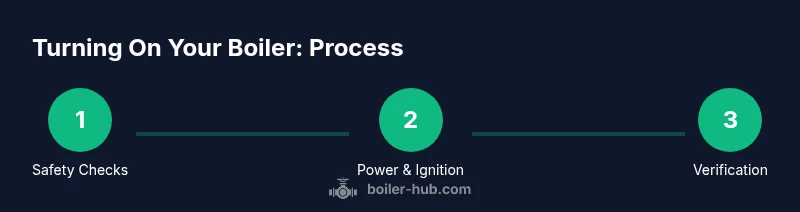
While the exact sequence varies by model, the core logic remains the same: ensure safety checks are complete, confirm power, initiate ignition, and verify heat delivery. Start by confirming power is on and the boiler room is well-ventilated. If your boiler uses manual ignition, follow the instructions to light the burner with the approved procedure. If your system uses an electronic ignition, wait for the processor to run its self-check, then listen for the ignition sequence. After ignition, monitor the flame or burner status, then check the outlet radiators for warmth. Throughout this process, keep a hand nearby so you can respond quickly to any abnormal sounds or smells. The following steps in the STEP-BY-STEP block provide precise actions for your model.
Troubleshooting common issues when switching on the boiler
Sometimes the boiler won’t switch on despite your best efforts. Common causes include power supply issues, a tripped breaker, a faulty thermostat, air in the system, or low boiler pressure. Start with a quick power check and reset the boiler if the manual indicates a reset procedure. If the unit shows fault codes, record them and consult the manual. For gas boilers, ensure the gas valve is open and the gas line isn’t blocked. Do not attempt to relight a stubborn pilot if you smell gas. If the boiler fires briefly and shuts down, inspect the pressure gauge and look for leaks in the system. Persistent issues require a professional assessment.
Operational safety and efficiency tips to keep on top of turning on
To keep operating errors from creeping in, follow best practices for boiler operation. Maintain clean air intakes, keep the area around the boiler unobstructed, and schedule annual servicing. Use the thermostat to set daily targets rather than turning the unit on and off manually. When possible, stagger hot-water heating to avoid short cycling. Document any issues and update the service records. Regularly test CO detectors and replace batteries at least once a year. These steps help protect occupants and improve efficiency.
Post-ignition verification: confirming heat delivery
After you switch on, verify that heat is being delivered and that the system is responding to temperature changes. Feel radiators for warmth within 5–10 minutes, and check the boiler’s display for normal operation and absence of fault codes. If you use a programmable thermostat, ensure that the schedule aligns with your desired temperatures. Listen for unusual noises, gas odors, or popping sounds that indicate air in the system or combustion issues. If the boiler does not heat or stops intermittently, shut it off and consult your manual or a professional. Regular testing of the safety devices remains essential.
When to call a professional and what they will check
Not every problem is safe to handle alone. Call a licensed technician if you detect gas odors, persistent fault codes, low boiler pressure, slow ignition, frequent cycling, or water leaks. A professional will inspect gas lines, venting, condensate drains, pressure relief valves, and combustion efficiency. Keep your service records handy and schedule preventive maintenance. Boiler Hub recommends proactive inspections to minimize emergency failures and protect residents.
Tools & Materials
- Non-contact voltage tester(Check for live circuits before touching wiring)
- Phillips-head screwdriver #2(For service panels and access panels)
- Adjustable wrench(Used to check fittings)
- Gloves (insulated)(Protect hands from heat and sharp edges)
- Flashlight(Bright light to inspect corners)
- Carbon monoxide detector(Ensure CO detector is functioning; placed near boiler)
- Towel or non-slip mat(For comfort and stability)
- Owner’s manual or model-specific guide(Have it handy for controls and pressure ranges)
Steps
Estimated time: 30-45 minutes
- 1
Check safety and environment
Ensure the area is clear, ventilated, and free of flammable materials. Confirm CO detector is functional and there are no gas odors. If anything is unsafe, pause and seek professional help.
Tip: If you smell gas, evacuate immediately and call the gas emergency line. - 2
Verify power and basic readiness
Confirm the boiler’s power switch is on and the circuit breaker is not tripped. Use a non-contact tester to confirm electrical supply at the boiler.
Tip: Do not bypass safety switches or reset without consulting the manual. - 3
Set mode and temperature
Choose heating mode (heating or hot water) and set the thermostat to a conservative starting temperature. This reduces risk while confirming the system responds.
Tip: Start with a lower setpoint and increase gradually as needed. - 4
Check ignition readiness (gas boilers)
If your system uses gas and ignition, ensure the gas valve is open. If the pilot is out, follow the manufacturer’s safe relighting procedure or consult a professional.
Tip: Never relight if you detect a strong gas odor. - 5
Monitor pressure and air
Check the boiler pressure gauge. If it’s out of the recommended range, top up or vent according to the manual. Listen for air in the system and bleed if necessary.
Tip: Use a clean cloth to avoid introducing debris into vents or valves. - 6
Confirm heat delivery
Turn on the system and observe burner activity or flame. Check radiators for warmth within 10 minutes and verify thermostat responds to changes.
Tip: If there are no changes after 15 minutes, re-check power and ignition steps, then call a pro if needed.
Questions & Answers
What is the first thing I should do before turning on the boiler?
Begin with a safety check: ensure ventilation, power, and no gas smell. If anything seems unsafe, pause and seek help. This prevents risky ignition and equipment damage.
Start with a safety check: venting, power, and gas smell. If anything seems unsafe, stop and get help.
Why won’t my boiler turn on after a power cycle?
Check the circuit breaker, thermostat wiring, and the boiler’s power switch. If the issue persists, consult the manual or a technician to avoid electrical hazards.
Check the breaker and thermostat wiring first; if it still won’t start, consult the manual or a pro.
Is it safe to relight a pilot light myself?
Relighting a pilot light can be safe if the manual is followed exactly and there’s no gas odor. If you smell gas or are unsure, do not attempt relighting and contact a professional.
Only relight if you’re sure there’s no gas smell and you’re following the manual. If unsure, call a pro.
What should I do if boiler pressure is too high or low after turning it on?
Check the pressure gauge, top up or vent per the manual, and look for leaks. If pressure stays out of range, turn off the boiler and contact a technician.
Check gauge, top up or vent as instructed, and call a tech if pressure stays off.
When should I call a professional?
Call a licensed technician for gas smells, persistent fault codes, corroded components, or leaks. Regular servicing by a pro reduces emergency failures.
Call a licensed technician for gas smells, persistent faults, or leaks, and schedule regular service.
How can I improve boiler reliability over time?
Schedule annual servicing, replace worn components, and keep safety devices in working order. Record maintenance and keep an updated safety checklist.
Get annual service, replace worn parts, and keep safety devices current.
Watch Video
Key Points
- Start with robust safety checks before ignition
- Know your boiler’s controls and mode options
- Follow the step-by-step ignition sequence
- Verify pressure and heat delivery after turning on
- Call a professional for persistent or dangerous issues