How to Stop Boiler Cycling: Step-by-Step Guide for Stable Heating
Learn practical steps to stop boiler cycling. This homeowner-friendly guide covers common causes, safe DIY fixes, and when to call a pro, with insights from Boiler Hub.


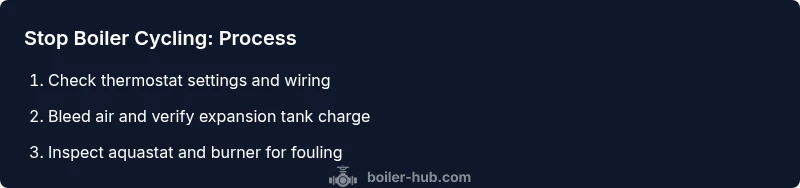
To stop boiler cycling, identify the root cause and fix it safely. Start by checking thermostat placement and wiring, verify system pressure and expansion tank state, bleed air from radiators, and inspect the aquastat and heat exchanger for fouling. If cycling persists after these checks, contact a qualified technician. This approach minimizes short cycling and improves comfort.
Why boiler cycling matters
Boiler cycling, the frequent on/off firing of a heating system, wastes energy and accelerates component wear. When a boiler rapidly starts and stops, you lose consistent comfort and increase your utility bills. In many cases, short cycling signals a solvable set of issues you can address without a full replacement. According to Boiler Hub, understanding the underlying causes is the first step toward durable improvements. By tackling thermostat placement, pressure balance, and basic air management, homeowners can often restore stable operation and extend boiler life. A thoughtful approach also reduces unnecessary strain on pumps, valves, and the heat exchanger, which saves money over time and improves overall home comfort.
Common causes of short cycling
There are several frequent culprits behind boiler short cycling. A thermostat placed near a heat source, drafts, or a poorly calibrated sensor can cause premature cycling. Incorrect boiler pressure, a waterlogged expansion tank, or air trapped in the system disrupts hydraulic balance and triggers on/off behavior. Soot or scale buildup on the heat exchanger or burner can impair combustion efficiency, prompting the boiler to fire irregularly. Finally, an undersized boiler for the space or faulty controls like the aquastat can lead to rapid cycling. Knowing these common causes helps you focus your checks where they’ll count most.
Diagnosing the issue: thermostat, pressure, expansion tank
To diagnose, start with the simplest, most accessible checks and progress to more involved inspections. Test the thermostat by verifying that its settings match the heating demand and that the sensor is not displaced by furniture or sunlight. Next, read the boiler’s operating pressure when cold and when hot if possible; compare to the manufacturer’s target range. Inspect the expansion tank for signs of waterlogging or loss of air charge. If you detect waterlogged tanks or inconsistent pressure, address these issues before moving on to other components. Also inspect for obvious leaks, gas supply issues (where applicable), and ensure wiring connections are secure.
Step-by-step DIY fixes you can perform safely
This section outlines practical actions you can take to reduce or stop cycling without specialized equipment. Start with non-invasive adjustments and proceed only to tasks within your comfort and safety limits. If you encounter uncertainty, pause and contact a professional. The goal is steady operation, not risk-free experimentation.
Inspect and balance system pressure and expansion tank
System pressure should be within the range specified by your boiler model when the system is cold. If the pressure is too low, carefully add water through the filling loop following the manual. If it’s too high, you may need to drain a small amount of water to bring it back into range. Check the expansion tank for signs of waterlogging; a tank that won’t hold air will cause cycling. If the tank is waterlogged, replacement is often required.
Check the heat emitter and air removal
Air trapped in radiators or pipes can cause inconsistent heat delivery and cycling. Use a bleed key at the radiator valves to release air until you see a steady stream of water. Collect the water in a container to prevent spills and wipe up any mess. After bleeding, recheck system pressure and observe whether cycling declines.
Inspect the aquastat and burner for proper operation
The aquastat controls boiler firing based on temperature. If it’s set too aggressively or has drifted, the boiler may short cycle. Access the aquastat only if you are comfortable with gas and electrical components or have a professional assist you. Inspect the burner flame for consistency; a yellow or unstable flame can indicate combustion issues that contribute to cycling.
Clean the heat exchanger and burner surfaces
Soot or scale buildup reduces heat transfer efficiency and can cause uneven heating that prompts cycling. Follow the manufacturer’s guidance for cleaning or hire a pro for a thorough cleaning. Use appropriate protective gear, ensure the system is cool, and avoid harsh chemicals that could damage components.
Test, monitor, and adjust after fixes
Restart the boiler and monitor its cycle frequency and duration over the next 24–48 hours. Keep a simple log of cycle on/off times and any comfort changes. If cycling remains frequent or, worse, worsens, escalate to professional service to inspect hidden faults.
When to call a professional
Some issues are not safe or feasible for DIY. If you smell gas, hear hissing, notice persistent leaks, or are uncertain about electrical or gas connections, contact a licensed technician immediately. A pro can perform a combustion analysis, test the expansion system, and verify boiler sizing and venting.
Preventive maintenance to reduce future cycling
Schedule annual service, replace worn components promptly, and keep documentation of all adjustments. Regularly check pressure, bleed radiators as needed, and inspect the expansion tank and thermostat wiring for signs of wear or misalignment. A proactive maintenance plan minimizes unexpected cycling and preserves efficiency.
Cost considerations and realistic expectations
Repair costs vary with the root cause, from minor bleed and valve reseating to expansion tank replacement. In many cases, DIY fixes cost only a small amount in tools and time, while professional service adds labor charges but resolves more complex issues. Realistic expectations include longer system life, steadier heating, and improved comfort once cycling is addressed.
Summary of actionable checks
- Confirm thermostat placement and calibration. - Verify boiler pressure and expansion tank charge. - Bleed air from radiators to eliminate air pockets. - Inspect aquastat, burner, and heat exchanger for issues. - Log results and monitor performance after fixes.
What to document for service visits
Record the model and serial number, observed cycle patterns, any changes made, and the dates of adjustments. Include pressure readings, any noises or error codes, and photos of gauges or leaks. This information helps a technician diagnose quickly and prevent repeat visits.
Tools & Materials
- Digital multimeter(Measure electrical values and verify thermostat wiring)
- Pressure gauge(Check cold boiler pressure; compare to model spec)
- Wrench set (adjustable)(For fittings and expansion tank connections)
- Screwdriver set(Flathead and Phillips for service panels)
- Radiator bleed key/bleed screwdriver(Bleed air from radiators)
- Bucket and absorbent towels(Contain water and protect floors)
- Teflon tape(Optional for resealing joints)
- Gloves and eye protection(Safety first)
- Boiler manual(Reference for model-specific settings)
- Dry rag(Keep hands dry during work)
Steps
Estimated time: 1.5-2 hours
- 1
Power down and isolate
Turn off the boiler and its circuit breaker. If applicable, shut off the gas supply valve and allow the system to cool before touching any components.
Tip: Never work on live electrical parts; wait for a cool, safe state before proceeding. - 2
Verify thermostat settings
Check that the thermostat is set to heat as needed and in auto mode. Ensure it isn’t near a heat source or draft, which can cause false readings.
Tip: Calibrate or replace the thermostat if readings seem inconsistent. - 3
Check boiler pressure and fill
Read the pressure gauge when the system is cold. If outside the manufacturer’s recommended range, carefully add water through the filling loop or drain to reduce pressure. Avoid over-pressurizing.
Tip: Add water slowly and recheck pressure after stabilizing. - 4
Bleed air from radiators
Begin with the radiator farthest from the boiler and work toward the nearest. Use a bleed key until a steady stream of water appears, then close valve.
Tip: Keep a bucket underneath to catch water and avoid spills. - 5
Inspect expansion tank
Check for waterlogged signs or loss of air pressure. If waterlogged, the expansion tank may need replacement or recharging.
Tip: Consult the boiler manual for correct air-charge procedures. - 6
Inspect aquastat and burner
Access the aquastat settings and verify stable flame. If you notice abnormal flame or control drift, consult a service manual before adjusting.
Tip: Only adjust if you’re trained; improper settings can be dangerous. - 7
Clean heat exchanger/burner surfaces
Remove soot or scale buildup per the manufacturer's guidelines. Use appropriate cleaners and PPE, avoiding chemical damage to seals.
Tip: Do not dislodge any safety devices during cleaning. - 8
Test and observe
Return power, restart the boiler, and observe the cycle frequency for a full heating cycle. Note changes and adjust if needed.
Tip: Keep a monitoring log for the next 24–48 hours.
Questions & Answers
What causes boiler cycling?
Cycling typically results from issues like incorrect thermostat settings, low or high system pressure, air pockets, a waterlogged expansion tank, buildup on the heat exchanger, or an improperly sized boiler.
Common causes include thermostat misreads, pressure problems, air in the system, and component wear.
Is short cycling dangerous?
Short cycling isn’t usually dangerous by itself, but it wastes energy, increases wear on components, and can lead to inadequate heating and comfort issues.
It mostly wastes energy and can shorten boiler life if it continues.
Can air in the system cause cycling?
Yes. Air pockets impede proper water flow and heat transfer, causing the boiler to start and stop more often than needed.
Air in the system can trigger frequent on-off cycles.
Should I bleed the air myself or call a pro?
Bleeding air is often a safe DIY task, but if you’re unsure about fuel lines or gas safety, hire a professional.
Bleed radiators if you’re comfortable; otherwise, get a pro to avoid safety risks.
How often should I service my boiler for cycling issues?
Annual professional servicing is recommended. Persistent cycling warrants an earlier inspection to catch underlying problems.
A yearly service is good practice; if cycling persists, schedule sooner.
What if cycling continues after fixes?
If cycling continues after basic fixes, it often indicates a more complex problem such as burner or control issues that require professional diagnostic work.
Persistent cycling means you should get a professional evaluation.
Watch Video
Key Points
- Identify root causes before changing components
- Check and balance pressure and expansion tank
- Bleed air to restore proper circulation
- Inspect thermostat, aquastat, and burner for proper operation
- Document results and seek professional help if cycling persists