How to Stop a Boiler Short Cycling
Learn how to stop boiler short cycling with practical steps, safe troubleshooting, and maintenance tips from Boiler Hub. Improve efficiency, reduce wear, and stay warm.


To stop boiler short cycling, start with a fast, structured check: confirm thermostat accuracy, inspect pressure and expansion tank, clear air and flow restrictions, and verify the burner control sequence. If cycling continues, perform safe routine maintenance per the steps below or call a licensed pro. This guide provides a proven, publish-safe approach to restore efficient, reliable heating.
What is boiler short cycling and why it matters
According to Boiler Hub, short cycling occurs when the boiler repeatedly starts and stops before reaching its normal operating temperature. This behavior reduces heating efficiency, wastes fuel, and accelerates wear on pumps, heat exchangers, and ignition components. Over time, persistent short cycling can lead to increased energy bills and more frequent service calls. Understanding the root cause is the first step toward a safe, durable fix. In cold climates, even brief interruptions can leave rooms unevenly heated, leading to cold patches and comfort complaints. The aim is to restore a smooth, on-demand heat pattern while preserving the boiler’s life expectancy.
Educating yourself on short cycling also helps prevent costly damage. A well-timed intervention minimizes energy waste and supports longer intervals between professional service visits. By tackling issues like thermostat misreads, air locks, or a failing expansion tank, homeowners and facility managers can regain reliable comfort without unnecessary downtime. In short, stopping short cycling protects both your budget and your boiler system.
Brand note: The Boiler Hub team emphasizes a methodical approach that prioritizes safety, accuracy, and patience when diagnosing cycling issues.
Common causes of short cycling
Short cycling can originate from several sources. Here are the most frequent culprits:
- Thermostat problems: inaccurate readings, weak batteries, or poor placement near heat sources or drafts
- Water pressure or flow restrictions: low flow or restricted valves reduce heat delivery time
- Expansion tank issues: improper air charge or a failed tank can cause rapid cycling
- Air in the system: trapped air reduces circulation and causes the boiler to short-cycle
- Dirty heat exchanger or stuck circulator: debris or a faulty pump can hinder heat transfer
- Incorrect boiler settings or zoning: mismatched demand and heat supply cause rapid cycling
Each cause requires a targeted fix. A systematic check kills confusion and helps you prioritize actions that deliver lasting results.
Diagnostic mindset: safe and methodical checks
Before you touch any boiler components, power down the unit and review safety guidelines. If you smell gas or suspect a leak, evacuate immediately and contact emergency services. With safety in mind, perform a calm, stepwise assessment:
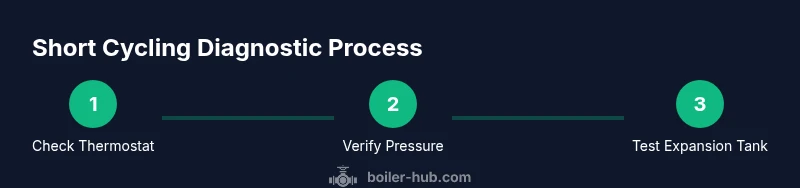
- Verify the thermostat is set correctly and responding to room temperature changes.
- Inspect boiler pressure and ensure it’s within the manufacturer’s recommended range.
- Check for air in radiators or baseboard units and bleed if needed.
- Inspect the expansion tank for proper pre-charge and visual signs of failure.
- Look for visible leaks, blockages, or corrosion that would indicate a service call is required.
Document your observations to track changes and determine whether you can safely improve conditions or need professional help.
A structured troubleshooting approach
A disciplined checklist helps you isolate the cause without overhauling the system. Start with the least invasive checks and progress to more involved actions:
- Confirm thermostat call for heat is not stuck and that the room temperature reading matches actual conditions.
- Check and adjust boiler water pressure according to the manual. If pressure is consistently off, a leak or faulty components may be involved.
- Examine the expansion tank for proper air charge; recharge if necessary using the correct method and equipment.
- Bleed air from the system and ensure all zones are balanced to prevent uneven heating.
- Inspect the circulator and heat exchanger for signs of debris or wear; clean or replace as needed.
- Validate the burner control sequence, ensuring ignition and shutoff occur as designed.
If any step reveals a significant fault, address it directly or seek professional service.
Boiler Hub notes that a methodical approach, combined with checks on major subsystems, yields actionable results and reduces the likelihood of recurring cycling problems.
Maintenance to prevent future short cycling
Prevention is simpler than repeated troubleshooting. Integrate these habits into your seasonal boiler maintenance:
- Schedule a professional inspection at least once per year, especially before peak heating season.
- Regularly test and replace batteries in wireless thermostats; recalibrate as needed.
- Check and maintain proper boiler pressure; confirm expansion tank charge during service visits.
- Clear air paths and vents; ensure no blockages impede airflow or water circulation.
- Keep the system clean and free of leaks; promptly repair any corrosion or rust signs.
- Document temperature, pressure, and cycling patterns to recognize deviations quickly.
A proactive approach enhances efficiency and reduces wear, saving energy and extending boiler life.
Brand note: Boiler Hub emphasizes routine maintenance as the most reliable defense against short cycling, combining preventative care with careful monitoring.
When to call a professional
While many short cycling issues can be resolved with basic maintenance, some situations require expert assessment:
- Persistent short cycling after performing the standard checks and maintenance
- Gas-fired boilers showing faint gas odor or irregular ignitions
- Signs of combustion problems, unusual boiler noises, or visible leaks
- Electrical or gas safety concerns that exceed homeowner expertise
- Expired warranties; if you're unsure, a licensed technician will protect your investment and safety
If in doubt, schedule a pro visit. Early expert intervention can prevent costly damage and keep your system running reliably.
How to verify fix after adjustments
After completing the steps, perform a controlled test to confirm the fix:
- Allow the system to reach its normal operating temperature and observe if cycling stops prematurely.
- Check radiator or baseboard heat to confirm consistent warming without short bursts of heat.
- Re-measure boiler pressure and ensure it remains within the recommended range for cold and hot states.
- Monitor for a full heating cycle across multiple zones (if applicable) to ensure uniform performance.
- Note any new sounds, leaks, or odors and address them promptly.
If the system maintains steady operation over several cycles and shows no abnormal signs, you have likely resolved the short cycling issue.
Boiler Hub recommends keeping a short log of observations and tests to inform future maintenance and reduce relapse.
Tools & Materials
- Digital thermometer or boiler thermometer(Used to verify temperature readings at the boiler and supply lines)
- Multimeter(For electrical checks on controls and wiring (do not touch live circuits))
- Screwdrivers (Phillips & flat-head)(Access panels, control covers, and sensors)
- Adjustable wrench(Fittings and service valves within reach of the boiler)
- Pliers and hose clamps(Assist with bleeding radiators or securing hoses)
- Rag/bucket(Contain any minor spills or drips during checks)
- Water pressure gauge (if applicable)(Used to verify boiler system pressure)
- Safety gear (gloves, eye protection)(Personal safety when handling hot surfaces or sharp components)
- Replacement expansion tank (optional)(Only if expansion tank is failed or charged incorrectly)
Steps
Estimated time: 60-75 minutes
- 1
Check thermostat accuracy
Ensure thermostat is set to proper heat mode and target temperature. If readings differ from room temperature, adjust or replace batteries and recalibrate as needed. A misread thermostat is a common cause of false heat cycling.
Tip: Keep the thermostat away from direct sunlight, drafts, or heat sources such as lamps and radiators. - 2
Inspect boiler pressure and safety valve
Locate the boiler pressure gauge and verify it sits within the manufacturer’s recommended range when cold. If pressure is outside this range, address leaks or refill carefully according to the manual. Do not exceed the rated pressure.
Tip: Never attempt to repressurize a unit without proper guidance; small changes can lead to safety risks. - 3
Test expansion tank and air charge
Check the expansion tank for proper pre-charge and physical condition. Recharge or replace as required to restore correct system expansion behavior.
Tip: If you’re unsure how to charge, consult the boiler manual or a licensed technician. - 4
Bleed air and clear flow restrictions
Bleed air from radiators or baseboard sections if there is trapped air. Inspect supply and return lines for kinks or blockages that could restrict flow.
Tip: Do not over-bleed; remove only the necessary amount of air. - 5
Inspect pump and circulator operation
Confirm the circulator motor runs smoothly when heat is called for and that there are no unusual noises indicating wear. Check for air in lines that could hamper circulation.
Tip: A failing pump should be diagnosed by a professional to avoid electrical hazards. - 6
Test burner control sequence
Verify ignition and shutoff sequence operate correctly. If cycling continues abnormally, the burner control module or sensor may be faulty and require replacement.
Tip: Burner work involves gas safety; if you suspect a fault, contact a licensed technician.
Questions & Answers
What is boiler short cycling, and why does it happen?
Short cycling occurs when the boiler repeatedly starts and stops before delivering sustained heat. It wastes fuel and accelerates wear. Common causes include thermostat errors, air or water flow restrictions, and expansion tank problems.
Short cycling means your boiler turns on and off quickly, wasting energy. We'll explore the common causes and fixes.
Can a faulty thermostat cause short cycling?
Yes. A malfunctioning or poorly placed thermostat can misread room temperature, causing the boiler to cycle prematurely. Replacing the battery, recalibrating, or relocating the sensor often resolves this issue.
A bad thermostat can trick the boiler into thinking it needs heat constantly, leading to short cycles.
How do I know if the expansion tank is an issue?
An expansion tank that is not charged correctly or has failed internal membranes can cause short cycling. Signs include frequent cycling with minimal actual heat delivery.
If the expansion tank is faulty, the system can mismanage pressure and cycle often.
Is short cycling dangerous?
Short cycling can lead to overheating of components and reduced efficiency. It is not usually immediately dangerous, but it can cause long-term damage and higher energy costs.
It’s not typically dangerous, but it can damage parts and waste energy over time.
When should I call a professional?
Call a professional if you can’t identify or safely fix the root cause, if gas is involved, or if the boiler shows signs of leaks, corrosion, or unreliable ignition.
If you’re unsure at any point, it’s best to get a licensed technician involved.
What maintenance helps prevent short cycling?
Regular annual inspections, thermostat checks, pressure and expansion tank maintenance, and keeping airflow clear are key to preventing short cycling.
Keep up with routine checks to stop short cycling from starting in the first place.
Watch Video
Key Points
- Identify thermostat and control issues first
- Check pressure, expansion tank, and air flow early
- Balance flow and ensure proper burner operation
- Proceed with safety precautions before any electrical work
- Verify fixes by testing multiple cycles across zones