How to Set Boiler Temperature: A Homeowner's Guide
Learn how to set boiler temperature safely and efficiently. This step-by-step guide covers hot water and heating temps, safety checks, troubleshooting, and energy-saving tips for homeowners and facility managers.


To set boiler temperature, locate the control panel or thermostat, review recommended ranges for hot water and heating, then adjust gradually. For domestic hot water aim around 120–140°F; for heating, set the boiler supply around 160–190°F depending on outdoor conditions. Save changes, restart if needed, and verify heat within 15–30 minutes.
Why Temperature Control Matters
Understanding how to set boiler temperature is essential for comfort, safety, and energy efficiency. The right numbers reduce temperature swings, minimize wasted fuel, and help prevent scalding with domestic hot water. According to Boiler Hub, staying within proven temp ranges improves both comfort and efficiency, especially in homes with mixed heating and hot-water needs. In this guide we’ll cover the practical steps, terminology, and safety checks you need to confidently adjust temperatures while avoiding common mistakes. The goal is clear: you should be able to dial in safe, reliable heat without overworking the boiler or wasting energy.
Understanding Boiler Temperature Terms
Before you adjust, it helps to know the core terms:
- Domestic hot water (DHW) temperature: the water your taps deliver.
- Heating supply temperature: the hot water sent to radiators or baseboards.
- Return temperature: water returning to the boiler, which affects efficiency and cycling.
- Outdoor reset or weather compensation: advanced controls that adjust boiler temperature based on outdoor temperature.
Grasping these terms makes it easier to interpret manufacturer manuals and avoid misconfigurations. For most homes, the DHW temp is a fixed target while heating temperature adapts to season and weather.
Safety First: Prepare Before You Adjust
Safety is non-negotiable when working with boilers. Always start by turning off the boiler and, if applicable, turning off the power at the appropriate switch or circuit. If you smell gas or detect any ventilation concerns, exit the area and contact your gas provider or emergency services. Have the boiler manual handy and wear protective gloves when handling hot components. If you’re unsure about wiring or electrical work, it’s safest to contact a qualified technician. This preparation minimizes the risk of burns, leaks, or gas-related hazards.
How to Set Boiler Temperature: A Practical Guide
The process varies a bit depending on whether you have a traditional boiler with a dial, a digital control panel, or a combo unit. The general approach remains the same:
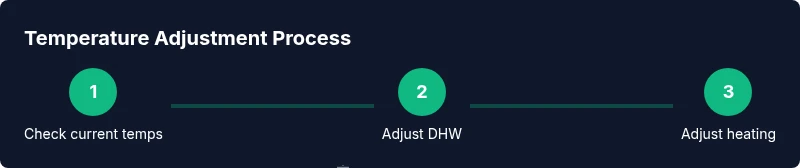
- Determine target ranges: DHW around 120–140°F; heating supply around 160–190°F (adjust for outdoor conditions).
- Access controls: remove the front panel carefully if you must expose the dial or panel; identify separate settings for DHW and heating supply.
- Make conservative changes: adjust in small increments (5–10°F) and wait 15–30 minutes to assess impact before applying another increment.
- Save and test: ensure new settings are saved and verify that both hot water and heating maintain stable temperatures.
If your system uses outdoor reset or weather compensation, enable these features and ensure the baseline is set to a comfortable indoor temperature while still protecting energy use. If you’re unsure which setting to prioritize, start with DHW safety temperature and optimize heating temperature next.
Troubleshooting Common Issues After Adjustment
If you notice fluctuations, cold spots, or unusual boiler cycling after a temperature change, revisit the settings:
- Check the boiler pressure and ensure it’s within the manufacturer’s recommended range; out-of-range pressure can cause cycling or poor heating.
- Inspect circulation: air vents, pump operation, and zone valves should function smoothly; air pockets can disrupt flow and cause temperature imbalance.
- Look for leaks or corrosion around connections; a small leak can silently sap efficiency and alter temperatures over time.
- If the changes don’t produce stable temperatures, consult the manual section on reset procedures or call a professional for a temperature calibration.
Boiler performance can be sensitive to multiple interacting factors; address the simplest potential cause first and progress to more involved diagnostics if needed.
Efficiency Considerations and Modern Upgrades
Temperature settings influence energy use, comfort, and boiler longevity. Consider these efficiency-enhancing ideas:
- Outdoor reset controls: adjust supply temperature based on outdoor temperature to minimize fuel use while preserving comfort.
- High-efficiency boilers: if your unit is older and consistently struggling to maintain comfort, upgrading can yield substantial energy savings.
- Zoning and control strategies: separate temperature controls for living spaces vs. hot water can reduce overshoot and improve comfort.
- Insulation and system maintenance: well-insulated pipes and regular maintenance keep temperatures stable and reduce heat loss.
Incorporating these approaches can help you maintain comfortable temperatures with lower energy bills, especially in climates with wide seasonal variation.
Maintenance Schedule and When to Call a Pro
Regular maintenance is essential for reliable boiler temperature control. A yearly professional service checks for:
- Safe operation, venting, and gas connections (for gas boilers)
- Pressure, temperature calibration, and clean heat exchangers
- Functioning controls, thermostats, and zone valves
If you notice persistent cold spots, unheated zones, or erratic temperature swings despite proper settings, it’s time to call a licensed technician. Pro care is especially important if your boiler shows error codes like high or low limits, unusual noises, or inconsistent water temperatures.
Quick Reference: Temperature Ranges by System Type
- Domestic hot water (DHW): 120–140°F is a common target.
- Heating system (radiators/baseboards): 160–190°F is typical, with adjustments for outdoor conditions.
- Outdoor reset-enabled systems: base temperatures that optimize comfort and efficiency per weather data.
- Higher temperatures generally increase comfort but raise energy use and risk of scalding; lower temperatures may improve efficiency but could reduce comfort in very cold weather.
Always consult the boiler’s manual for the exact recommended ranges for your model and fuel type.
Tools & Materials
- Boiler owner’s manual(Keep for reference to identify model-specific ranges and safety steps)
- Flat-head and Phillips-head screwdrivers(For removing panels and adjusting screws on control dials)
- Digital thermometer or infrared thermometer(To verify supply and DHW temperatures)
- Safety gloves and safety glasses(Protection when handling hot surfaces)
- Notebook or temperature log app(Record changes and outcomes for future reference)
- Basic cleaning rag and solvent(Clean any dust from control panels before opening)
- Leak detection liquid (soapy water)(Check for air leaks after adjustments)
Steps
Estimated time: Total time: 30-60 minutes
- 1
Power down and safety check
Turn off the boiler and switch off the circuit breaker if applicable. If you smell gas or notice anything unsafe, evacuate and call emergency services. This ensures you won’t encounter hot surfaces or electrical shocks during adjustment.
Tip: Always verify you’ve taken the necessary safety precautions before handling controls. - 2
Access temperature controls
Open the front panel if needed and locate separate controls for DHW and heating supply. Identify current settings and take a quick photo or note for reference.
Tip: Document current values before making any changes so you can revert if needed. - 3
Set domestic hot water temperature
If your system uses a dial, rotate in small increments (5°F steps) toward 120–140°F. For digital panels, input the target value and confirm the change. Avoid large jumps.
Tip: Test with a tap after 10–15 minutes to gauge initial comfort. - 4
Set heating supply temperature
Adjust the heating temperature to 160–190°F as a starting point. If you have outdoor reset, set the baseline to your climate and indoor target, then let the system self-adjust.
Tip: In very cold weather, you may need to push toward the higher end of the range for consistent warmth. - 5
Save changes and restart
Save the new values on the control panel and restart the boiler if required by your model. Some digital panels auto-apply after confirmation.
Tip: If there’s a separate 'save' or 'apply' button, press it to ensure changes take effect. - 6
Test and verify
Run hot water and central heating; measure temperatures after 15–30 minutes. Check for even warmth and listen for abnormal sounds. Adjust again if needed in small increments.
Tip: Keep a log of measured temps and comfort feedback for future reference.
Questions & Answers
What is the recommended hot water temperature?
Most homes aim for 120–140°F (49–60°C) for domestic hot water. This range balances comfort and energy use while reducing scald risk. Adjust within this band based on household needs.
Hot water is usually set between 120 and 140 degrees Fahrenheit to balance comfort and safety.
What is the recommended boiler heating temperature?
A typical heating supply temperature ranges from 160–190°F, depending on outdoor temperature and system design. Outdoor reset can optimize this automatically.
For heating, use about 160 to 190 degrees, with adjustments for outdoor conditions.
Can I adjust temperature myself?
Yes, you can adjust temperature yourself following safety steps and the manual. Some systems may require a professional for calibration or complex control changes.
You can adjust it yourself if you follow safety steps and your manual.
How do digital thermostats differ from dial controls?
Digital thermostats offer precise input and logging, while dial controls require approximate adjustments. Both types can achieve accurate temperatures with careful changes.
Digital controls let you input exact temperatures; dials work with approximate settings.
How long does it take to stabilize after changes?
Allow 15–30 minutes for changes to stabilize and then recheck temperatures. Longer cycles may occur in larger systems or when outdoor conditions shift.
Expect 15 to 30 minutes to see stabilization after changes.
What safety steps should I take?
Turn off power, wear protective gear, and avoid touching hot surfaces. If you smell gas or suspect a leak, leave the area and call urgent services.
Always power down first, wear protection, and call for help if you smell gas.
Watch Video
Key Points
- Identify safe targets for hot water and heating temps before adjusting.
- Make small changes and test heat output for stability.
- Document settings and outcomes for future reference.
- Consult a professional if you encounter gas smells, leaks, or persistent instability.