How to Reset Boiler for Hot Water: Step-by-Step Guide
Learn how to safely reset your boiler to restore hot water. This expert guide covers safety checks, the correct reset sequence, troubleshooting, and prevention tips from Boiler Hub.


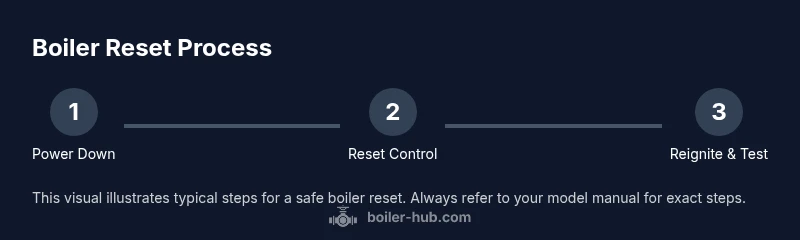
By the end of this guide, you will safely reset your boiler to restore hot water. Start by confirming gas or electrical safety, then locate the boiler’s reset control or service switch per your manual. Follow the exact sequence for your model to restart the burner, and check for hot water. If problems persist, seek professional help.
Why you might need to reset your boiler for hot water
Boilers occasionally enter a temporary fault that blocks hot water without indicating a serious problem. A controlled reset can clear minor sensor glitches, restart the burner, and restore heat when the system has cooled. According to Boiler Hub, many hot-water issues are solved by following manufacturer-reset procedures rather than replacing components. Before you press any buttons, identify the model and locate the manual or the manufacturer’s online guide to ensure you use the correct sequence. In addition, verify that the area around the boiler is safe, the gas supplier is not involved, and you can access an emergency shutoff if needed. This approach minimizes downtime and helps you avoid unnecessary service visits.
Safety prerequisites before resetting
Safety is the first priority when working with boilers. Start by turning off power at the circuit breaker or the boiler’s isolator, then shut off the gas supply if applicable. Wait for the boiler to cool, as internal temperatures can cause burns. Keep flammable objects away and ensure you have clear access to the unit. If you smell gas, hear hissing, or notice any leaks, do not reset—leave the area and contact your gas provider or emergency services. Having a flashlight, gloves, and eye protection on hand helps you work safely and reduces the chance of mistakes during the reset process.
Decision tree: when a reset helps and when it doesn't
A reset is appropriate when the boiler reports a non-hazardous fault such as a flame sensor lockout, a pressure switch fault, or a temporary ignition hiccup. It is not a cure for leaking seals, corroded heat exchangers, low water pressure, or faulty thermostats. If the boiler continues to display error codes after a reset, or if the burner fails to stay lit, the problem likely lies beyond a simple reset. In that case, consult the manual for diagnostic codes or contact Boiler Hub Team for guidance.
What a boiler reset actually does (and does not do)
A reset reinitializes the control logic and restarts the burner cycle, which can clear transient faults and replenish safe operating conditions. It does not replace worn components, fix circulating pump issues, or repair leaks. Understanding this distinction helps set the right expectations: a successful reset should lead to stable hot water, steady flame, and normal boiler cycling. If you notice abnormal noises, water leaks, or persistent outages after the reset, there is likely a deeper issue that needs professional inspection.
Troubleshooting after a reset and signs to watch
After completing the reset, open a hot-water tap and observe the behavior for several minutes. If hot water returns and the boiler cycles normally, note the time and any responding indicators. If the burner cycles off quickly, or if hot water is tepid or inconsistent, re-check safety features and consider a longer-term service plan. Watch for alarm codes, unusual sounds, ice-cold radiators, or pressure fluctuations. If warnings persist, escalate to a professional assessment.
Maintenance tips to reduce future hot-water issues
To minimize the need for resets, perform regular boiler maintenance: clean the combustion chamber, inspect gaskets, test safety valves, and verify thermostat calibration. Schedule annual servicing with a qualified technician and review the user manual for model-specific maintenance tasks. Keep an emergency shutoff accessible and maintain a small log of fault codes and reset attempts. Proper maintenance improves reliability and reduces downtime for hot-water supply.
Tools & Materials
- Insulated safety gloves(Protect hands from burns when touching hot surfaces)
- Safety goggles(Shield eyes from debris and accidental splashes)
- Owner's manual or model-specific guide(Needed to follow correct reset sequence)
- Screwdriver set (Phillips #2 and flathead)(For access panels and control screws)
- Flashlight(Illumination in dim boiler rooms)
- Digital thermometer / boiler thermometer (optional)(Check water temperature after reset)
- Test light or multimeter (optional)(Verify electrical supply is off when required)
Steps
Estimated time: 15-25 minutes
- 1
Power down and isolate the boiler
Turn off the boiler at the wall or power switch, then switch off the circuit breaker. If your setup uses a gas valve, close it to eliminate the gas supply. Wait 5-10 minutes for any residual heat to dissipate and ensure it is safe to touch. This prevents burns and protects electrical components during the reset.
Tip: Always verify the power is truly off using a non-contact tester before handling components. - 2
Identify the reset control
Consult your manual to locate the reset button or sequence for your model. Some boilers require a button press, others need a sequence of actions (like holding a set of buttons). If there is any doubt, do not improvise—model-specific steps are essential for a safe reset.
Tip: Take a quick photo of the control panel for later reference. - 3
Follow the manufacturer reset sequence
Execute the steps exactly as the manual describes. This often involves pressing and holding the reset button for 5-10 seconds until indicators or lights respond. Do not release early or mix steps from different models. A correct sequence ensures the safe re-ignition cycle.
Tip: Note any error codes displayed during the reset; they guide troubleshooting. - 4
Restore power and test hot water
Turn the power back on and restore the gas supply if applicable. Open a hot-water tap slowly and watch the burner ignition and flame stability. Allow several minutes for the system to re-establish normal operation. If you smell gas, switch off and contact your gas provider immediately.
Tip: Run the hot water for at least a few minutes to verify consistent heat. - 5
Monitor burner behavior after reset
Listen for normal cycling and look for stable flame. If the boiler short-cycles, or if heat is delayed, re-check for air locks, sediment buildup, or sensor faults. Record any abnormal indicators and codes to support future service visits.
Tip: Keep a small log of cycle times and water temperature for several uses. - 6
Document results and plan next steps
Document the date, model, reset outcome, and any codes observed. If hot water is unstable or the issue recurs, schedule a professional inspection rather than repeatedly resetting. A pro can check pressure, heat exchanger condition, and circulating parts.
Tip: If problems persist, contact Boiler Hub Team for guidance and next steps.
Questions & Answers
What should I do before attempting to reset my boiler for hot water?
Check for gas smell, turn off power at the breaker, and read the manual for model-specific steps. Ensure the area around the boiler is safe and accessible. If unsafe conditions exist, wait for professional service.
Before resetting, turn off power and gas, check for leaks, and consult the manual for your model.
Why isn't resetting fixing the hot water issue?
A reset resolves temporary control faults but won’t fix worn components, leaks, or flow problems. If the boiler cycles abnormally after a reset, you likely have a deeper issue that requires inspection.
If reset doesn’t help, there may be a bigger problem needing professional assessment.
Is it safe to reset a boiler if I am unsure of the model?
If you don’t know the model, avoid guessing the sequence. Refer to the manual or contact the manufacturer or a technician for model-specific instructions.
If you're unsure of your model, don’t guess—consult the manual or a pro.
How long should I wait after resetting before testing hot water?
After a reset, allow the boiler to re-ignite and stabilize for a few minutes, then test hot water by running a tap.
Give it a few minutes to re-ignite, then test the hot water.
What are common reasons for loss of hot water after a reset?
Thermostat faults, air in lines, low water pressure, or pump issues can prevent hot water after a reset. Persistent problems usually indicate a component fault that needs service.
Common causes include thermostat faults and air locks.
When should I contact Boiler Hub Team or a professional?
If you see leaks, persistent error codes, re-triggered resets, or a gas smell, stop and contact a professional. Recurrent failures warrant a diagnostic service.
Call a pro if you see leaks or persistent errors.
Watch Video
Key Points
- Identify safety steps and manual-specific resets before acting
- Follow model-specific reset steps to avoid damage
- Test hot water flow after reset to confirm success
- If issues persist, contact a professional
- Regular maintenance reduces the need for resets