How to Put Water in a Boiler: Safe Step-by-Step Guide
A practical, safety-focused guide from Boiler Hub on how to put water in a boiler, including safety checks, tools, steps, and troubleshooting. Learn to fill correctly to maintain pressure and reliability without risking damage or injury.


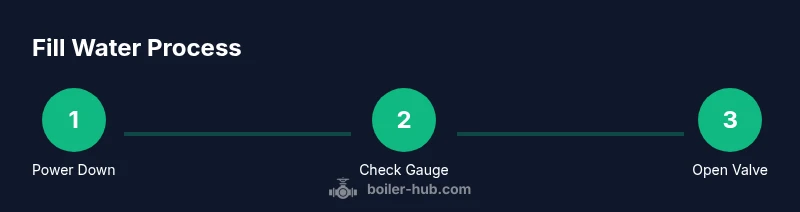
To safely put water in your boiler, first power down the unit and isolate fuel and electrical supplies. Locate the fill valve or expansion tank, then open the valve slowly while watching the pressure gauge. Stop at the manufacturer’s target level, recheck all connections, and restart the boiler. Always follow your manual and wear protective gear. If you can't identify the fill valve, consult the boiler diagram or contact a technician.
Understanding boiler water basics
The phrase "how to put water in boiler" refers to adding water to the system to maintain pressure and ensure safe operation. Boilers rely on a careful balance of water, heat, and pressure, and maintaining correct water levels helps prevent overheating, air pockets, and component wear. According to Boiler Hub, proper water management improves efficiency and prolongs boiler life. This section explains what water does in a boiler, how the level is sensed, and why over- or under-filling can cause system faults. By understanding the basics, homeowners and facility managers can approach filling with confidence and safety, reducing the likelihood of unplanned outages.
Safety and prerequisites before filling
Safety is non-negotiable when working on a boiler. Before touching any controls, switch off the power at the boiler or main disconnect, shut off gas if applicable, and ensure the area is well-ventilated. Allow the system to cool if it has been running hot; hot surfaces and steam can cause severe burns. Wear protective gear: heat-resistant gloves, safety glasses, and sturdy footwear. Keep children and pets away, and never bypass safety valves or pressure relief devices. If at any point the system shows signs of leakage, corrosion, or uncertain readings, pause and consult a professional. Boiler Hub emphasizes that following model-specific safety instructions reduces risk substantially.
Different filling methods: manual, auto-fill, and expansion tank
Boilers can be filled via several methods, depending on the configuration. Manual fill uses a dedicated valve to add water, typically when the system has lost pressure or after maintenance. Auto-fill systems maintain a preset pressure by adding water automatically, often found in newer installations. Some systems rely on an expansion tank to accommodate thermal expansion, in which case you may not manually fill through a valve as often. Understanding your setup helps you choose the correct approach and prevents accidental overfill.
Step-by-step overview: what you will do
This section provides a high-level map of the actions you’ll take to put water into the boiler. You’ll verify safety, locate the fill mechanism, check current pressure, prepare your water source, and perform a careful fill while monitoring the gauge. After reaching the target level, you’ll recheck for leaks, bleed any air if the system has bleed valves, and restart the boiler for a short test run. The actual, detailed steps are in the Step-by-Step block below.
How to monitor pressure and avoid overfill
Water level is closely tied to boiler pressure. After initiating the fill, monitor the pressure gauge and stop as soon as you approach the target range indicated by your boiler manual. Do not rely on sight alone; use the gauge readings and, if present, the automatic fill indicator. If you notice the pressure rising rapidly or if the gauge fluctuates erratically, stop, shut off the fill valve, and inspect for leaks or faulty pressure-regulating equipment. Consistent monitoring reduces the risk of damage.
Restarting the boiler after filling and verifying operation
Once the water level and pressure are within the recommended range, close the fill valve and restore power and gas to the boiler. Re-establish normal operating conditions and run the boiler through a brief test cycle. Listen for unusual noises, watch for leaks, and verify that there is proper hot-water flow. If the system does not reach normal operation, or if error codes appear, consult your manual or call a technician.
Common mistakes and how to avoid them
Common errors include filling with the boiler hot, opening the fill valve too quickly, overfilling beyond the target pressure, and neglecting to re-check safety devices after filling. To prevent these, always confirm the unit is cool, open valves slowly, verify gauge readings carefully, and inspect for leaks or corrosion. Keeping a small log of fill events helps track the system’s behavior over time, which Boiler Hub recommends for proactive maintenance.
Authority sources and further reading
For readers seeking additional safety guidelines and best practices, refer to authoritative sources listed below. These resources provide industry-standard safety practices and boiler operation insights. They offer supplementary information to complement this guide and help you understand boiler maintenance at a deeper level.
Authority Sources
- https://www.energy.gov/
- https://www.osha.gov/
- https://www.nist.gov/
Notes: Always cross-check with your boiler manufacturer’s documentation for model-specific instructions.
Tools & Materials
- Boiler owner's manual(Model-specific instructions and pressure targets)
- Protective gloves(Heat-resistant, slip-resistant)
- Safety goggles(Protect eyes from splashes or steam)
- Flashlight(Illumination to see valves and gauges clearly)
- Container to collect water or bleed water(For drainage if necessary and to observe water quality)
Steps
Estimated time: 45-60 minutes
- 1
Power down and isolate
Turn off the boiler at the control panel. If applicable, switch off the gas supply and disconnect electrical power at the service disconnect. Allow the system to cool before touching any components.
Tip: Give the unit 10-15 minutes to cool; hot surfaces can cause burns. - 2
Locate fill valve and expansion components
Find the fill valve or manual fill connection. If your boiler uses an expansion tank, locate it and verify its status. Consult the manual if you are unsure where these parts are located.
Tip: If you’re unsure, use a flashlight to inspect valve labels and diagrams. - 3
Check current pressure
Read the boiler’s pressure gauge while the system is off. Note the current reading and compare it to the manufacturer’s recommended range. Do not proceed if readings are unclear or the gauge is damaged.
Tip: Take a photo of the gauge for reference during re-commissioning. - 4
Prepare water source and valve
Prepare a clean water source. If your boiler uses treated water, ensure the source matches local code recommendations. Have the valve ready and verify any quick-release or bleed valves are closed before opening the fill valve.
Tip: Keep the container or bucket ready to catch any incidental spills. - 5
Open fill valve slowly
Very slowly open the fill valve to introduce water. Do not rush; a rapid fill can cause water hammer or pressure spikes. Stop immediately if you hear banging or see abnormal gauge movement.
Tip: Open a quarter-turn and pause, then continue gradually. - 6
Monitor and stop at target level
Watch the pressure gauge as the system fills. Stop filling when the gauge reaches the target range specified by the manual. Close the valve and re-check connections for leaks.
Tip: If the gauge doesn’t move, investigate for blockages or faulty sensors. - 7
Restart boiler and verify operation
Restore power and gas, then run the boiler through a quick cycle. Check for steady operation, proper hot-water output, and any unusual sounds or leaks. Recheck pressure after the system stabilizes.
Tip: Keep monitoring for the first 5-10 minutes of operation.
Questions & Answers
Can I add water to a boiler that is hot?
No. Wait for the boiler to cool to a safe temperature, then proceed. Filling when hot increases the risk of burns and thermal shock.
Do not add water while the boiler is hot; allow it to cool and then follow the steps safely.
How do I know how much water to add?
Follow the target pressure range shown on the boiler’s gauge or in the user manual. Do not exceed the recommended level, and verify after filling that there are no leaks.
Fill until the gauge shows the recommended range, then recheck for leaks.
What happens if I overfill the boiler?
Overfilling can cause pressure relief and inefficient operation, potentially triggering safety systems. If you suspect overfill, shut off the fill valve and consult the manual or a professional.
Overfilling can trigger safety valves and cause issues; stop and assess.
Is it safe to top up water with a tap water source?
Using treated or consistent-quality water is generally advised. Check your system’s guidelines and local code; some areas require softened or distilled water to prevent mineral buildup.
Use the water type your boiler manufacturer recommends to avoid mineral buildup.
What if there is no manual fill valve on my boiler?
Some boilers rely on an expansion tank and building pressure. In that case, you should consult the manual or contact a licensed technician for guidance.
If there’s no fill valve, refer to the manual or call a pro.
Watch Video
Key Points
- Know your boiler’s fill method and targets.
- Always work with the boiler off and cooled down.
- Fill slowly to avoid surges and water hammer.
- Monitor the gauge and stop at the manufacturer’s target.
- Restart and test to confirm safe operation.