How to Prime an Oil Boiler: A Practical Guide
Learn how to prime an oil boiler safely with a practical, step-by-step approach. This Boiler Hub guide covers tools, procedures, safety tips, troubleshooting, and maintenance for reliable startup.


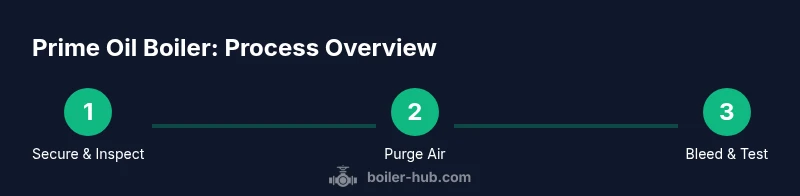
This guide shows you how to prime an oil boiler to ensure reliable ignition and a clean startup. You’ll verify safety, prepare tools, purge air from the fuel lines, prime the pump, bleed the system, and test ignition. Follow these steps carefully, and consult a professional if you’re unsure.
Safety first before you prime an oil boiler
According to Boiler Hub, safety is the foundation of any priming operation. Begin by powering down the boiler and isolating the fuel supply to prevent accidental ignition. Wear appropriate PPE—safety glasses, gloves, and long sleeves—and keep a clear, well-ventilated workspace. Check for any signs of fuel leaks, damaged wiring, or corrosion on access panels. If you smell strong oil odors, do not proceed; ventilate the area and call a professional. A brief safety checklist in advance saves time and reduces the risk of injury during priming.
In addition to personal protection, confirm that carbon monoxide detectors are functioning and that there is a safe path to exit the space. Ensure that children and pets are away from the area. If your boiler is located in a confined space or a boiler room with limited ventilation, consider postponing priming until ventilation is improved. Remember, priming is a maintenance-like task that warrants careful attention to safety details.
Understanding priming: what it means for an oil burner
Priming an oil boiler means removing air from the fuel lines so oil can reach the burner and ignite cleanly. Air in lines can cause delayed ignition, pulsing flames, or complete failure to start. A properly primed system reduces smoke, odor, and fuel waste. Boiler Hub analysis shows that most priming issues originate from trapped air in the pump or bleeder valves, especially after extended downtime or a fuel supply interruption.
To grasp the process, visualize the fuel path: from the storage tank, through the delivery line, into the pump, up to the burner, and finally into the nozzle. Any air gap in this chain can interrupt flow. The goal is to fill the lines with oil and expel air until a steady stream of fuel emerges from the bleed valve when you purge. This ensures the burner will light and run normally once power is restored.
If you recently replaced the fuel filter or made repairs to the line, you should re-prime to eliminate any newly introduced air. A systematic approach reduces the chance of startup problems and improves long-term boiler performance.
Tools and materials you’ll need before starting
As with any service task, gather your tools and materials before you begin. Having everything on hand minimizes interruptions and helps you stay methodical. The essentials include PPE, a clean work surface, and the following items:
- Oil boiler manual (essential for model-specific instructions) and maintenance notes
- PPE: safety glasses, heat-resistant gloves, long sleeves, and closed-toe shoes
- Screwdrivers (flat and Phillips) and a small adjustable wrench
- A proper fuel shut-off valve key or wrench
- Bleed kit or purge valve wrench and a clear container for catching oil
- Rags or absorbent pads for spills and cleanup
- A flashlight or headlamp and a battery-powered blower or fan for ventilation
- Fire extinguisher suitable for oil fires (Class B)
Optional items that can help but are not strictly required:
- Replacement nozzle or nozzle-cleaning tools
- Oil line lube or thread-sealant per manufacturer guidance
- A battery tester to verify controls are responsive before ignition
Review your boiler’s manual to confirm specific valve locations and safety requirements. If you feel uncertain about any step, pause and consult a licensed technician.
Step-by-step priming procedure (air purge, pump fill, bleed lines)
This section presents a practical sequence you can follow in a typical oil boiler setup. Adapt steps to your model as needed based on the manufacturer’s instructions.
-
Step 1 — Stop and secure: Shut off power to the boiler and close the fuel supply valve. Why: Prevents fuel from entering the lines while you work and eliminates ignition risk during the priming process. Estimated time: 2–3 minutes. Tip: Use a flashlight to locate the shut-off valve and verify it’s fully closed before proceeding.
-
Step 2 — Locate purge points: Identify the purge valve or bleed screws at the pump and near the burner. Why: These are used to expel air from the system. Estimated time: 3–5 minutes. Tip: Have a container ready to catch returning oil to avoid spills.
-
Step 3 — Purge and bleed: Open the purge valve slowly and observe the fuel until clear oil (no air) flows out. Close the valve once a steady, bubble-free stream is established. Why: Removes trapped air that can prevent ignition. Estimated time: 5–10 minutes. Tip: If air continues to bubble, tighten fittings and re-purge from the pump toward the burner.
-
Step 4 — Prime the pump and lines: With the purge valve closed, energize the oil pump for 20–60 seconds to fill the pump housing with oil. Why: Ensures the pump is full of fuel and ready to deliver oil to the burner. Estimated time: 1–2 minutes. Tip: If your pump has a visible sight glass, confirm full oil fill before continuing.
-
Step 5 — Re-bleed from the nozzle: Purge again starting at the nozzle to confirm no air pockets remain in the immediate burner circuit. Why: Prevents erratic ignition and smoke. Estimated time: 5–8 minutes. Tip: If oil appears discolored or dirty, replace the fuel filter per manufacturer guidance.
-
Step 6 — Restore power and test ignition: Reconnect the power, reopen the fuel valve, set the thermostat to call for heat, and observe ignition. Why: Verifies that the priming operation was successful and the burner starts cleanly. Estimated time: 1–2 minutes for ignition, plus a 2–5 minute startup observation. Tip: If ignition fails, evacuate and recheck purge steps or call a professional.
-
Step 7 — Check for leaks and perform a short run: After ignition, inspect all connections for leaks and allow the boiler to run through a short cycle. Why: Confirms system integrity and reliable operation. Estimated time: 5–15 minutes. Tip: Keep a spill kit handy and monitor the floor for any signs of fuel seepage during the test run.
Common issues and troubleshooting during priming
Even with careful preparation, issues can arise. Understanding common symptoms helps you respond quickly without risking safety or equipment.
- No ignition after priming: Reconfirm power and fuel valve positions, re-purge from pump to nozzle, and verify the burner’s ignition electrode is clean and correctly positioned. If still no ignition, the control module may need testing by a technician.
- Uneven flame or smoke: This often signals air trapped in lines or a partially clogged nozzle. Re-purge and inspect filters. Replace worn nozzles per manufacturer recommendations.
- Fuel odor near the boiler: A strong odor usually indicates a leak. Do not operate the boiler; shut down power and fuel, ventilate, and call a service technician. Always address any fuel smell promptly.
- Oil leaks after start: Tighten fittings and inspect seals around the pump, valve connections, and burner assembly. If leaks persist, de-energize the system and seek professional help.
- Frequent air ingress after downtime: Consider an air separator or bleed valve upgrade, or replace aging fuel lines that are prone to drawing air. Regular maintenance reduces recurrence.
When in doubt, err on the side of safety and contact a licensed boiler technician. Priming is a precise process that depends on your model and installation specifics.
Maintenance and safety follow-up after priming
Successful priming is not the end of the story. A routine maintenance plan helps keep your oil boiler reliable and efficient.
- Schedule a professional service annually to inspect the burner, nozzle, electrodes, and control system. Regular checks catch wear before performance declines or leaks develop.
- Test safety devices regularly, including the high-limit switch and CO detectors. A functioning safety net protects occupants and the equipment.
- Monitor fuel supply and quality. Use clean, filtered oil and replace filters as recommended by the boiler manufacturer. Dirty oil can degrade combustion and increase risk of buildup.
- Keep the surrounding area clean and free of flammable materials. A tidy boiler room reduces fire risk and makes inspection easier.
- Maintain fuel lines, purge valves, and fittings. Look for corrosion, cracks, or signs of leaks during routine checks. Address issues promptly to avoid future priming complications.
Incorporating these practices strengthens your boiler’s longevity and reduces the likelihood of startup problems in the future. The investment in proactive maintenance pays off with lower energy waste and fewer emergency visits.
Boiler Hub emphasizes that homeowners who pair careful priming with ongoing maintenance see more reliable starts and longer equipment life. A disciplined approach to priming and maintenance is a cornerstone of safe, efficient heating.
Authority sources and further reading
For deeper understanding and safety standards, consult reputable sources. The following references provide guidelines on boiler operation, maintenance, and safety best practices.
- U.S. Department of Energy: https://www.energy.gov
- U.S. Environmental Protection Agency: https://www.epa.gov
- Occupational Safety and Health Administration: https://www.osha.gov
Always refer to your specific boiler model’s manual for exact procedures and safety requirements. Boiler Hub advises using model-specific instructions and seeking professional assistance when required to ensure compliance and safety.
Tools & Materials
- Oil boiler manual(Keep on-site for model-specific instructions and safety procedures.)
- PPE kit(Safety glasses, insulated gloves, long sleeves, non-slip footwear.)
- Wrench set (metric)(For fuel line fittings and purge valve components.)
- Screwdrivers (flathead & Phillips)(Access panels and valve adjustments.)
- Fuel shut-off valve key(Essential to safely isolate fuel supply.)
- Bleed kit or purge valve wrench(Used to purge air from lines.)
- Container for oil(Catch oil during bleeding to prevent spills.)
- Rags or absorbent pads(Cleanup of spills and drips.)
- Flashlight or headlamp(Illumination for dim boiler rooms.)
- Fire extinguisher (Class B)(Preparedness for oil-fuel fires.)
- Ventilation aid (fan)(Helps air movement in enclosed spaces.)
Steps
Estimated time: 45–75 minutes
- 1
Secure safety and power
Shut off power to the boiler and close the fuel supply valve. This prevents accidental ignition and fuel flow while you work. Verify the area is well-ventilated and free of ignition sources.
Tip: Double-check all shutoffs with the boiler off before proceeding. - 2
Identify purge points
Locate purge valve or bleed screws at the pump and burner. These are your access points to expel air from the system.
Tip: Keep a clear container ready to catch any exiting oil. - 3
Purge air from the system
Open the purge valve slowly and watch for a steady stream of oil with no air bubbles. Close the valve once air-free oil flows out consistently.
Tip: If air bubbles persist, re-seal fittings and re-purge from closest to the pump outward. - 4
Prime the pump and lines
With purge closed, energize the oil pump for 20–60 seconds to fill the pump housing. This helps ensure the motor pushes oil rather than air.
Tip: If your pump has a sight glass, confirm full oil fill before continuing. - 5
Re-bleed near the nozzle
Purge again from the nozzle area to remove any residual air within the burner circuit. This reduces ignition delay and smoke.
Tip: A second purge often catches trapped air missed the first time. - 6
Restore power and test ignition
Reconnect power, reopen the fuel valve, set the thermostat to call for heat, and observe ignition. If ignition fails, re-evaluate purge steps or call a technician.
Tip: Only attempt ignition after a thorough purge and leak check.
Questions & Answers
What does priming an oil boiler mean?
Priming means removing air from the fuel lines so oil can reach the burner and ignite reliably. It improves startup and reduces smoke or odors caused by air pockets.
Priming is simply removing air from the fuel line so the oil can reach the burner and ignite properly.
Why won’t my oil boiler prime after downtime?
Downtime can allow air to accumulate in the lines or filters. Recheck shutoffs, purge valves, and bleed points; inspect fuel filters and replace if clogged.
Downtime can introduce air into the lines, so rechecking and purging typically fixes it.
Is priming safe for a DIY homeowner?
Priming should be attempted by someone comfortable with boiler systems and who follows the manufacturer’s instructions. If you’re unsure, hire a licensed technician to avoid safety risks.
If you’re unsure about any step, it’s safer to call a professional.
How long does priming usually take?
Most priming tasks take 30–75 minutes depending on the system and any needed purges. Plan for a thorough check of lines and nozzles.
Usually between half an hour and an hour, depending on your setup.
What safety checks should I perform after priming?
Inspect for fuel leaks, verify the electrical connections, test CO detectors, and run a short burner cycle to confirm proper ignition and combustion.
After priming, check for leaks and run a quick test to ensure everything starts correctly.
What if ignition still fails after priming?
If ignition fails after purging and reseating components, contact a licensed boiler technician to diagnose control faults, faulty igniter, or burner issues.
If it still won’t light, a professional should check electrical and control systems.
Watch Video
Key Points
- Prime oil boilers safely with power and fuel isolated first.
- Purging removes air; ensure a continuous, air-free oil flow before ignition.
- Bleed from pump to nozzle to eliminate air pockets in the line.
- Test the burner after a brief run to confirm proper operation.
- Boiler Hub advises combining priming with regular maintenance for best reliability.