How to Get Your Boiler Out of Red: Step-by-Step Troubleshooting
A practical, safety-first guide to move a boiler from red status to green. Learn troubleshooting steps, warnings, and when to call a professional.


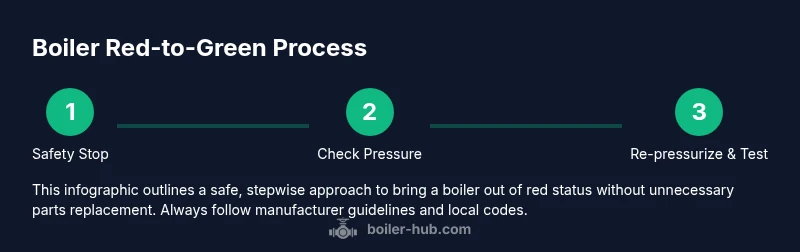
To bring a boiler out of red, start with safety checks, confirm the fault type, and follow a structured diagnostic flow: verify power and gas supplies, check pressure, inspect the expansion vessel, bleed air if needed, and re-pressurize carefully. If red indicators persist, escalate to a professional.
Why the boiler shows red indicators and why it matters
A red status on your boiler is a warning sign that something is not operating within normal ranges. It can signal low pressure, overheating, a faulty sensor, air trapped in the system, or clogged passages. Ignoring it raises the risk of component damage, inefficient heating, or unsafe gas conditions. According to Boiler Hub, addressing red indicators promptly reduces risk and cost, and helps extend boiler life. The Boiler Hub team found that homeowners who follow a structured diagnostic approach recover faster and avoid costly part replacements. In this guide, we cover how to interpret red signals, safe first steps, and when to escalate to a professional.
Interpreting red indicators: pressure vs temperature vs fault codes
Boilers communicate status through several signals: pressure gauges, temperature alarms, and fault codes displayed on a digital panel. A red light is not universal; it varies by model and manufacturer. Check your manual to map light patterns to problems. In many homes, a red pressure warning means the system pressure is outside the safe range—either too low or too high. Understanding the difference helps you target the fix without guessing and reduces the chance of introducing new issues.
Safety first: do this before touching the boiler
Before touching the boiler, switch off the power at the dedicated switch or fuse and, if safe to do so, shut off the gas valve. Allow the unit to cool if it has been running; hot surfaces and pressurized fluids can cause burns. Do not bypass safety devices or perform makeshift repairs. If you notice a gas smell or hissing, leave the area and contact emergency services and a licensed technician immediately.
Diagnosing common causes without professional tools
Common red-status causes include low water pressure, trapped air, a failed expansion vessel, blockage in heat exchangers, scale buildup, or a faulty sensor. Start with the basics: verify the boiler’s pressure against the manufacturer’s recommended range (often around 1–1.5 bar when cold). Listen for unusual noises, check for visible leaks, and note any fault codes. This section explains a safe, methodical approach to identify the most probable culprits.
Re-pressurizing safely: bring your boiler back to green
If the pressure is low, re-pressurizing must be done carefully following the boiler’s manual. Use the filling loop (if your model includes one) to add water until the gauge sits within the recommended range. Avoid over-pressurizing, which can trigger a new red warning and stress the system. Recheck for leaks after pressurizing and keep the area dry to prevent slips and corrosion.
What to do if the pressure is too high or red persists
High pressure can be as problematic as low pressure. If the gauge shows excessive pressure, bleed radiators to release some water and air, then recheck the gauge. If the red light remains after bleeding, inspect for a closed pressure relief valve or a stuck vent. Persistent red indicators may indicate more complex issues requiring professional diagnostics and safe handling.
When to call a professional and what to expect
If you cannot safely determine the fault or if you smell gas, turn off the boiler and contact a licensed gas engineer immediately. A professional will verify gas safety, inspect components like the expansion vessel, heat exchanger, and pressure relief valve, and perform necessary repairs or part replacements. Expect a diagnostic visit to include pressure tests, leak checks, and a review of fault codes.
Preventing red status in the future
Regular maintenance, including annual service and timely replacement of worn parts, can prevent many red-status incidents. Keep records of readings (pressure, temperature) and note any recurring patterns. Install or verify that an expansion vessel is functioning and that radiators are bled and balanced to minimize trapped air. Keeping your boiler in a maintenance schedule reduces the chance of unexpected red warnings.
Quick maintenance routines you can perform safely
Small, routine tasks like bleeding radiators, checking pressure monthly, and verifying that the expansion tank is not waterlogged can keep your boiler healthy. Always follow the manufacturer’s guidelines and use proper PPE (gloves and eye protection). If you’re unsure, consult a professional rather than taking risky shortcuts.
Tools & Materials
- Adjustable wrench(For valve connections and fittings; set size depending on model)
- Screwdriver set (PH0, PH2)(Use appropriate bit for panel screws)
- Boiler pressure gauge / filling key(Essential for checking and adjusting pressure)
- Gas detector(Optional, helpful if you’re unsure about gas leaks)
- Gloves and eye protection(Protect hands from hot surfaces and sharp edges)
- Towel or absorbent cloth(Catches drips during bleeding or venting)
- Owner’s manual(Model-specific instructions and safety notes)
Steps
Estimated time: 30-60 minutes
- 1
Power down and ensure safety
Switch off the boiler at the wall or fuse box and, if accessible, shut the gas supply. Confirm the area is cool and free of leaks. This minimizes risk of burns or sudden releases of pressurized water.
Tip: If you smell gas or hear a hiss near the boiler, evacuate and call emergency services immediately. - 2
Check the pressure gauge
Read the current pressure on the boiler gauge. Compare with the manufacturer’s recommended range (often 1–1.5 bar when cold). If it’s outside this band, note the direction of the deviation before making adjustments.
Tip: Document the reading for future reference and to help a professional diagnose recurring issues. - 3
Inspect the expansion vessel and air vents
Look for signs of a failed expansion vessel or trapped air creating stubborn red warnings. If there’s obvious water at the air vents or you hear air escaping, do not force components — continue to step-by-step guidance or seek pro help.
Tip: Gently touch the vessel; a soft, spongy feel can indicate failure. - 4
Re-pressurize safely if low
Connect the filling loop, if present, and gradually add water until the gauge sits within the safe range. Do not exceed the top limit, and close the loop securely once done.
Tip: Bleed a radiator after re-pressurizing to see if readings stabilize and no new air is trapped. - 5
Bleed radiators to remove air
Using a radiator key, vent air from each radiator starting from the top floor down. Listen for a steady trickle of water and a drop in pressure as air escapes.
Tip: Have a cloth ready to catch water, which can rust floors and walls if left to drip. - 6
Test and observe
Rerun the boiler cycle and observe for any red indicators returning. If the system stabilizes to a steady green or blue light, note readings. If red returns, proceed to professional service.
Tip: Keep a log of readings and times to help a technician diagnose repeating patterns.
Questions & Answers
What does a red boiler indicator mean?
A red indicator signals an abnormal condition or safety-related fault. It can involve pressure, temperature, fault codes, or leaks. Check the manual for your model to interpret the specific pattern, then follow a step-by-step diagnostic process.
A red indicator means something is not right with the boiler. Check pressure, temperature, and codes, then follow a careful diagnostic flow or call a professional if unsure.
Can I re-pressurize the boiler myself?
Yes, if your boiler supports a filling loop and you follow the manufacturer’s instructions carefully. Do not exceed the recommended pressure and monitor for leaks during the process.
You can re-pressurize using the filling loop, but stick to the manual and avoid over-pressurizing.
What is an expansion vessel and why could it cause red status?
The expansion vessel accommodates pressure changes in the boiler system. If it fails, pressure can rise or fall unexpectedly, triggering red warnings. A professional can determine if replacement is needed.
The expansion vessel absorbs pressure changes; if it fails, readings go off and the boiler may show red warnings.
When should I call a professional?
Call a professional if you smell gas, if pressure cannot be stabilized, or if fault codes indicate sensor or safety-device issues. A licensed technician will verify safety and perform necessary repairs.
Call a pro if you can’t safely diagnose or stabilize the boiler, or if you smell gas.
Is red always a sign of a major problem?
Not always; red can indicate simple issues like trapped air or low pressure. However, persistent red indicators or gas smells require professional assessment to avoid risks.
Red can mean a minor issue or a serious fault; when in doubt, get a professional check.
How long does a typical red-status fix take?
A straightforward re-pressurization and bleed routine can take 30–60 minutes, plus time to test. More complex faults may require longer service visits.
Most quick fixes take about 30 to 60 minutes, with longer visits if parts need replacement.
Watch Video
Key Points
- Identify red status causes before acting.
- Prioritize safety and gas considerations above all.
- Use a structured diagnostic flow to reduce unnecessary parts replacements.
- Re-pressurize and bleed carefully, then re-test.
- Know when to call a professional for complex faults.