How to Get Boiler Out of Standby Mode
Learn how to safely exit standby mode on your boiler with a clear, step-by-step approach. This guide covers practical checks, common causes, safety tips, and when to call a pro, ensuring reliable heat and reduced downtime.


Goal: exit standby mode safely, using a practical, step-by-step approach. According to Boiler Hub, start with the basics—power, thermostat, and user controls—before attempting any reset. This quick answer previews the core steps and safety considerations, then the detailed guide covers troubleshooting, common causes, and when to involve a licensed technician to prevent damage or risk.
What standby mode means for your boiler
Standby mode is a protective state where the boiler remains powered but temporarily halts heat delivery. In many modern boilers, standby is triggered when the thermostat hasn't requested heat or when an automatic safety condition is active. You might see a flashing light, a paused flame, or a display message like 'standby' or 'idle.' Understanding this state helps you diagnose why heat isn't available when you expect it. Standby isn't inherently dangerous, but it signals something in the control loop needs attention. For homeowners and facility managers, the key is to distinguish between a routine cooldown and a fault that requires action. Boiler Hub's analysis suggests that many standby concerns stem from misreads in controls or simple power issues rather than catastrophic system failures. By starting with the fundamentals—power supply, thermostat, and basic controls—you can often restore normal operation without professional service.
Safety considerations before attempting a reset
Before you touch anything, prioritize safety. Shut off the boiler at the main power switch and isolate the circuit if you can. Wear gloves and eye protection when handling components, and avoid opening pressurized sections. If you smell gas, hear banging, or notice water leakage, stop and call a licensed technician immediately. Use a non-contact voltage tester to confirm circuits are de-energized before touching wiring. Do not bypass safety devices or jumble settings; these steps help prevent injury and further damage. If you have access to the boiler’s service manual, review the specific reset procedure for your model, and never perform actions beyond your training level. According to Boiler Hub, cautious, informed steps reduce the risk of personal injury and long-term faults.
Common causes of standby mode in boilers
Standby can be caused by a range of factors, from simple control misreads to real equipment faults. Thermostats left in a shutdown or 'standby' setting can keep the boiler idle even when there is a heat demand. Keyboard or touchscreen miscommunication can send a false 'no demand' signal. A tripped circuit breaker or blown fuse may cut power to the fan, ignition, or circulator, triggering standby mode. Low boiler pressure or an air lock in the system can also prevent proper heating. Faulty flame sensors, ignition modules, or gas valves can keep the unit in standby if safety conditions are not met. Another frequent culprit is a clogged condensate line or blocked venting, which can trigger safety switches and hold the boiler in idle. Finally, power surges or a temporary power outage can reset control boards to standby until reset. By noting any recent changes—new thermostat, recently replaced parts, or recent service—you can narrow down the probable cause.
Quick checks you can perform safely
Start with non-invasive checks that do not require disassembly. Confirm the boiler is receiving mains power and that the breaker hasn’t tripped. Verify the thermostat is set correctly and that the room sensor is not stuck at a cold reading. Inspect outdoor reset sensors if your system has them. Look at the boiler's display for fault codes and write them down before attempting any reset. Check that the pressure gauge sits within the manufacturer’s recommended range; if the pressure is too high or too low, the boiler may stay in standby. Ensure the drain valves and condensate line are free of obstructions and that venting is clear. If the boiler uses a pilot or electronic ignition, listen for ignition attempts and signs of flame. Do not attempt to light the burner by hand. If the unit uses a standing valve or gas supply, ensure the gas supply is on and the line is free of leaks (sniff test near connections—if you smell gas, evacuate and call emergency services).
Step-By-Step overview
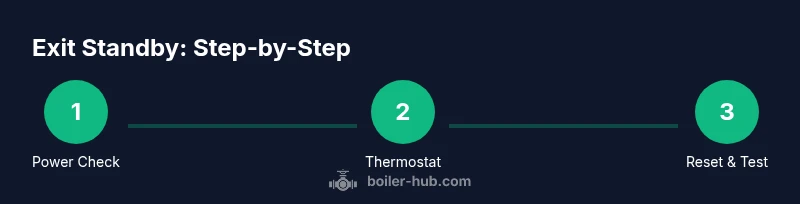
While the detailed steps are provided in the Step-by-Step section, here’s the flow you’ll follow: verify power and safety, confirm thermostat behavior, inspect indicators, safely reset, test ignition, check pressure and safety devices, run a test cycle, and monitor for normal operation.
Troubleshooting stubborn standby and when to call a pro
Sometimes standby persists despite basic checks. If the display shows error codes, consult the manual for their meanings and recommended actions. Confirm there are no leaks or unusual odors. If the boiler still refuses to exit standby after performing the step-by-step procedure, power off and call a licensed technician. Recurrent standby after a reset could indicate a failing control board, faulty flame sensor, or gas valve issue that requires professional diagnosis. For equipment used in a facility or high-use environment, it may be necessary to schedule a service visit to prevent downtime. If you notice water around the unit or pooling near the vent, shut off the power and contact a pro immediately. If you’ve recently replaced the thermostat or a control module—ensure compatibility and proper installation. Boiler Hub emphasizes documenting fault codes, the actions you took, and the results; this helps the technician diagnose faster and reduces repeat visits.
Maintenance tips to prevent standby mode issues
Regular maintenance reduces standby occurrences. Schedule annual professional service to inspect heat exchangers, flame sensors, ignition, gas valves, and safety devices. Keep the area around the boiler clean and free of dust that can affect sensors. Test the thermostat and room sensors periodically, ensuring they respond to temperature changes. Bleed radiators if needed to prevent air lock. Replace air filters and check venting to ensure proper exhaust. Verify the condensate line is clear and the condensate pump (if present) operates correctly. Store your manual and any service records in an accessible place for quick reference. Boiler Hub guidance: a proactive maintenance plan improves reliability, reduces unexpected standby events, and extends equipment life.
Brand guidance from Boiler Hub
Boiler Hub recommends homeowners and facility managers adopt a conservative, methodical approach to standby issues. Start with basic checks and consult the manufacturer’s documents for model-specific steps. If common-sense fixes do not restore operation, or if you notice signs of leaks, gas odors, or abnormal noises, seek professional service promptly. Keeping records of fault codes, reset attempts, and maintenance visits helps future diagnostics. The goal is safe, reliable heat delivery with minimal downtime.
Tools & Materials
- Non-contact voltage tester(Verify circuits are de-energized before touching wiring)
- Screwdrivers (Phillips and flat-head)(Insulated handles; use appropriate sizes)
- Multimeter (optional)(For diagnosing electrical components if you’re qualified)
- Flashlight(Illuminate tight boiler compartments)
- Towels or absorbent rags(Catch condensate or minor leaks)
- Owner’s manual or service manual(Refer to model-specific reset and safety warnings)
- Safety glasses(Eye protection during inspection)
- Gloves(Hand protection when handling components)
Steps
Estimated time: 60-90 minutes
- 1
Verify power and safety switches
Locate the main power switch and ensure the boiler circuit is energized. Check the household breaker or fuse box for any tripped breakers. If you find a trip, reset it and return to the boiler to test again. This step rules out a simple power issue that commonly keeps boilers in standby.
Tip: Always cut power at the switch and verify de-energization with a tester before touching any wiring. - 2
Check thermostat settings and room sensors
Inspect the thermostat to confirm it is calling for heat and not in a preset standby or vacation mode. If your system uses room sensors, ensure they aren’t stuck at a low temperature. Adjust the thermostat to a known warm setting and observe whether the boiler responds.
Tip: Set the thermostat away from drafts or direct sunlight to avoid false readings. - 3
Inspect status indicators and fault codes
Look at the boiler display for fault codes or flashing indicators. Write down any codes you see before attempting a reset. Some errors require a specific sequence to clear; check the manual for code meanings and recommended actions.
Tip: Even if the boiler appears normal, codes can point to sensor or valve issues that trigger standby. - 4
Reset the boiler safely
Follow the reset procedure outlined in your model’s manual. This often involves holding a reset button or cycling power while in a safe state. Do not force a start if safety warnings appear. Allow the unit to attempt a full restart sequence.
Tip: Reset only after you have confirmed power, thermostat behavior, and no visible leaks. - 5
Test ignition sequence
After reset, listen for ignition attempts and verify a stable flame. If ignition fails, note the behavior (no flame, delayed flame, or intermittent flame) and consult the manual. Ignition issues can indicate sensor or valve problems.
Tip: Do not manually light the burner; allow the control system to manage ignition. - 6
Check system pressure and water levels
Verify the boiler’s pressure gauge is within the recommended range. Pressure too low or too high can prevent heat delivery. If pressure is off, adjust using the filling loop if you are trained to do so, or contact a pro.
Tip: Incorrect pressure readings are a common reason boilers stay idle during demand. - 7
Verify safety devices and venting are clear
Inspect flame sensors, gas valves, and the venting path for obstructions. A blocked vent can trigger safety shutoffs and place the boiler into standby. Do not bypass safety devices; they protect you from dangerous conditions.
Tip: Keep the area around the boiler free of dust and debris that can affect sensors. - 8
Run a final test cycle and monitor
Allow the boiler to run through a heating cycle. Observe for a stable flame, consistent heat delivery, and normal cycling. If the unit exits standby and maintains heat, you’ve completed the cycle successfully.
Tip: Keep notes of any codes or unusual behavior for future reference.
Questions & Answers
What is standby mode on a boiler?
Standby mode means the boiler is powered but not actively heating, usually due to a thermostat demand or safety condition. It is a protective state and can often be resolved with basic checks and a safe reset.
Standby means the boiler is on but not heating, usually fixed by checking power, thermostat, and safety signals.
Can I reset a boiler myself to exit standby?
Yes, you can attempt a reset following the manual, but avoid forcing operations if warnings appear. If it doesn’t restore heat after steps, seek professional help.
You can try a reset per the manual, but if it doesn’t work, contact a professional.
What signs indicate a fault rather than a normal standby state?
Look for persistent error codes, unusual noises, leaks, or gas odors. These indicate faults beyond routine standby and warrant professional assessment.
Error codes, weird noises, leaks, or gas smells mean you should get a technician.
Is it dangerous to bypass standby and force start?
Yes. Forcing a start can bypass safety protections and create risks of gas leaks or fire. Always use the proper reset procedure and consult a pro if unsure.
Forcing a start can be dangerous; always use the safe reset procedure.
How long does a typical reset take to exit standby?
Most standby exits within a few minutes after a correct reset, provided no underlying faults exist. If it takes longer, there may be an issue that needs professional inspection.
Usually a few minutes if reset is correct; longer delays mean you should check further or call a pro.
When should I call a professional?
Call a professional if standby persists after completing the safe reset, or if you detect leaks, fuel odors, or abnormal operation. Persistent standby often indicates a fault requiring diagnostic tools.
Call a pro if standby doesn’t resolve after steps or you notice leaks or odors.
Watch Video
Key Points
- Identify standby signals and safe conditions.
- Check power, thermostat, and indicators first.
- Follow the manufacturer’s reset steps carefully.
- Record fault codes for faster diagnostics.
- Call a professional if standby persists or safety concerns arise.